Showing posts with label Connecticut. Show all posts

Tuesday, June 18, 2013

Women's Restaurants

This is a fantastic post on women's restaurants that I found at Restaurant-ing Through History, one of my favorite blogs. Reproduced with the author's permission.

Women's Restaurants

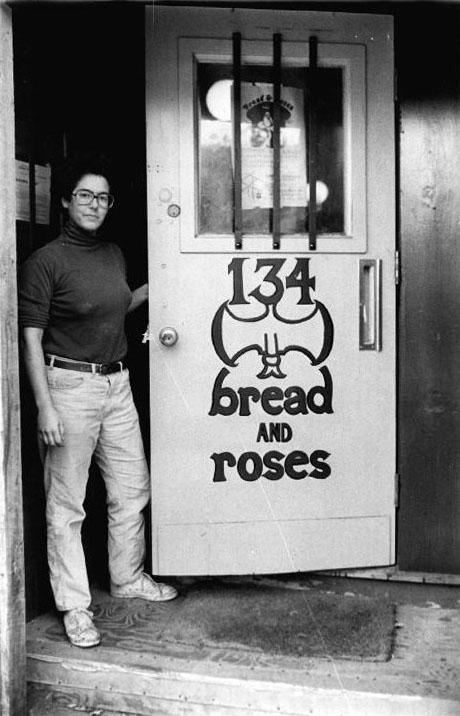
feministBreadandRosesBarbaraFried1976

Not all restaurants have been purely, or even mainly, commercial ventures. This was particularly true of women’s suffrage eating places and those of the 1970s feminist movement.

Although the women’s restaurants of these two periods were quite different in some ways, they shared a dedication to furthering women’s causes and giving women spaces of their own in which to eat meals, hold meetings, and in the 1970s, to enjoy music and poetry by women.

SuffrageLunchBoston1918

In the 1910s most major U.S. cities had at least one suffrage restaurant, tea room, or lunch room sponsored by an organization such as the National American Woman Suffrage Association (NAWSA).

As was true of later feminist restaurants, those of the suffrage era tended to be small and undercapitalized. An exception was the suffrage restaurant financed by the wealthy socialite Alva Belmont in NYC. In terms of patronage, it was almost certainly the most successful women’s restaurant of either era. It reportedly served 900 meals per day from a low-priced menu on which most items were 5 or 10 cents and consisted of soup, fish cakes, baked beans, and home-made pie.

Suffrage restaurants admitted men and welcomed the opportunity to ply them with leaflets and home-made soups, salads, and fritters that would incline them to support the cause. An aged Philadelphia activist recalled in 1988, “I worked at a suffrage tea room. We lured men in, for a good, cheap business lunch. Then you could hand them literature and talk.” In the NYC restaurant operated by NAWSA in 1911, it was impossible to ignore the suffrage issue since every dish, glass, and napkin bore script saying Votes for Women.

suffrageRestaurant1912

Though dedicated to women’s causes, women’s restaurants were not free of conflict. Many suffragists objected to how Alva Belmont ruled with an iron fist, brusquely ordering servers around until they walked out on strike, followed by the dishwashers. Belmont was ridiculed when she brought in her butler and footman to fill the gap. Her footman quit too. Some feminist restaurants experienced discord over cooperative management and, especially, whether or not to serve men.

The first feminist restaurant, NYC’s Mother Courage, was founded in April of 1972. (Its co-founder Dolores Alexander discussed it in 2004-2005 interviews.) Others established in the 1970s included Susan B. Restaurant, Chicago; Bread & Roses, Cambridge MA; The Brick Hut, Berkeley CA; Los Angeles Women’s Saloon and Parlor, Hollywood CA; and Bloodroot, Bridgeport CT). Undoubtedly there were more, especially in college towns. In the 1980s a number of women’s coffeehouses appeared, but they were performance spaces more than eating places.

FeministBloodroot1981

As part of the counterculture, 1970s feminist restaurants typically aimed at a broad set of goals. Women’s equal position in society was paramount but it was embedded in a project of establishing a more peaceful and egalitarian world. Feminist restaurants rotated jobs and paid everyone the same wages. They raised capital by small donations from friends. Staffs were entirely female and women also did most of the renovating. Their decor was spare, with exposed brick walls, mismatched furniture, and chalkboard menus. They served simple peasant-style food, usually prepared from scratch. Some served wine and beer. More often than not menus were vegetarian, or at least beef-less. The L. A. Women’s Saloon and Parlor supported farm workers and would not serve grapes or lettuce. The Brick Hut boycotted Florida orange juice during the anti-gay campaign of spokesperson Anita Bryant. The Women’s Saloon avoided diet plates and sodas, deeming them insulting to large-sized women.

Many proponents of feminist restaurants felt that women were often treated poorly in restaurants, many of which regarded men as their prime customers. Feminist restaurants made a point of presenting women dining with men with the check and wine to sample. But for many women patrons, perhaps especially lesbians, the enjoyment of a non-hostile space was more significant.

At some point each feminist restaurant confronted the touchy question of whether they would serve men. Considerable acrimony erupted around this question at the Susan B. Restaurant in Chicago and Bread & Roses in Cambridge, resulting in the former restaurant’s closure after only a few months. At Bread & Roses a co-founder exercised non-consensus managerial power and fired a server who made men and some heterosexual women feel unwelcome, setting off rounds of group meetings. The restaurant, opened in 1974, was put up for sale and in 1978 became the short-lived “women only” Amaranth restaurant and performance space.

Today Bloodroot may be the sole survivor of the feminist restaurant era.

© Jan Whitaker, 2013

Saturday, September 22, 2012

Terrell's Cafe for the Ladies

Colony Street - Meriden, Connecticut
Terrell's Cafe for the Ladies

Location: 10 Colony Street, Meriden, Connecticut, USA

Opened: June 1913

Closed: ?

Notice that like nearly all ladies' cafes, this was located in a "marginal" commercial space (in this case the second floor). But then it was an afterthought after creating a restaurant for men.

From the Meriden Daily Journal, June 7, 1913:

TERRELL'S CAFE FOR THE LADIES

Terrell's cafe on Colony street, which has long been noted about the state of the excellence of the cuisine and service, has inaugurated an innovation in opening a ladies' cafe on the second floor of the Silver City Realty company building, 10 Colony street.

For a long time there has been a demand by the ladies of Meriden for a place where they could go and secure the same excellent service that the men have been able to get and to meet this demand the upper floor of the building has been thoroughly refinished and refurnished and made as up to date and attractive as any dining room in the state.

There are large tables and small ones in the big well lighted room which faces Colony street and beyond that there are smaller rooms for parties. All the rooms are panelled in oak
and are lighted by chandeliers as well as soft table lamps.

10 Colony Street today
One of the best chefs in the state is employed at the Terrell cafe and he is an expert at serving novel dishes that appeal to discerning palates. Trained waiters give prompt service. All the delicacies of the market will be served and the cost will be found quite reasonable.

These dining rooms are reached by the main stairway to the block and are removed from the noise and bustle and yet with the outlook on Colony street are right in the heart of the city.

Special attention will be paid to private parties up to the number thirty, if arrangements are made in advance. Knowing the thorough manner in which this place has always been run, it can be safely
said that this innovation will be warmly welcomed.

Monday, August 27, 2012

Women-only trout stream


A Mistress of the Gentle Art
from A Woman's Trout Fishing in
Yellowstone Park (1897)

Women-Only Trout Stream

Location: Connecticut, USA

Opened/Closed: 1932

This definitely falls under the category of quirky uncategorized womyn's space.

From the Calgary Daily Herald, August 11, 1932:

TROUT STREAM WILL BE FOR WOMEN ONLY

HARTFORD, Conn., Aug. 11.--(AP)--Connecticut women are to have their own trout stream, from which husbands and brothers will be barred. Fish and Game Commissioner Thomas H. Beck on Wednesday announced the state department plans to lease a stream on which women exclusively may fish. 

"The ladies have taken an increased interest in practically all forms of outdoor sports," he said. "Connecticut has nearly 200 miles of state-leased trout streams for its sportsmen. Now we intent to do something for the anglerettes."

So far I have yet to find any additional information on whether the women-only trout stream was actually established, and if so, where it was located. If it was established, it would also be fascinating to know how "anglerettes" felt about it and whether it was a popular place for women to go. Did "anglerettes" lobby for their own fishing space, or was this an idea randomly devised by Mr. Beck?  Did this experiment last past 1932, and if so for how long? Lots of interesting questions....

Thursday, May 24, 2012

Canton Restaurant

Canton Restaurant

Location: 11 Bank Street, New London, Connecticut, USA

Opened/Closed: c. 1917

This is the first Chinese-American restaurant I have found that was "essentially a Ladies' Restaurant." Recall that during this time period, many "regular" restaurants banned unescorted women (i.e. women not escorted by men).  Today, the former Canton Restaurant space is occupied by Klingman Travel, Inc.

From The Day, April 12, 1917:

Essentially a Ladies' Restaurant

Ladies, with or without escorts, will find the new Canton Restaurant a refined and ideal eating place.

Both Chinese and American menus are temptingly served. A most quiet and home-like atmosphere prevails.

Try Chop Suey.

11 Bank Street today
LOOK FOR THE ELECTRIC SIGN.

The Canton Restaurant
11 Bank Street.
                                        
RESERVATIONS MADE FOR PARTIES.

Tuesday, April 24, 2012

Ladies dining room, Hof Brau Haus

Hofbrau Haus matchbook cover
Ladies dining room, Hof Brau Haus

Location: 39 Church Street (Crown and Church Streets), New Haven, Connecticut, USA

Opened: At least as early as 1909

Closed: Probably around 1967

If you're a regular Lost reader, you may have the impression that all the ladies dining rooms of old were wasp-y, fussy affairs--even if lovely to gaze at in a formal sense. I'll admit it: most look like the kind of dining rooms where you'd live in mortal terror of picking up the wrong spoon. Where you could never indulge in a hearty laugh, at least not without courting Social Ruin. As for breaking out in song? NEVER!
A cozy nook in the Ladies Dining Room, Hof Brau Haus

But when we look at photos of the ladies dining room at New Haven's Hof Brau Haus, we feel instantly at ease. It's not hard to imagine having all your best gal pals arrayed around you, with big steins of beer for all. As for spoons? Who cares about spoons! Laugh and sing to your heart's content. Let every true lover salute her sweetheart. Let's drink! (Cue up the German beer drinking mood music here. And here are the lyrics if you'd like to bellow along.)

Ladies Dining Room and Fireplace, Hof Brau Haus

There must be THOUSANDS of restaurants called the Hofbrau Haus (or some variation thereof), so it's hard to sort through all the information overload. But it seems the New Haven Hof Brau Haus was owned, at least initially, by August L. Janssen, who also owned the Hofbrau Haus in New York at Broadway and Thirtieth Street from 1898 to 1938. When he died in 1939, his obituary mentioned that he also had a restaurant in New Haven, but doesn't provide the name or address. But an advertisement in the New York Evening Telegram from February 1909 verifies that the New Haven Hof Brau Haus at 39 Church Steet was a "branch" of the Broadway Hofbrau Haus.


39 Church Street today
We also know the Hof Brau Haus was open at least as late as 1967 because it had some liquor license problems that were reported in the press. But I doubt the ladies dining room was open that long. At least not as a womyn's space. In fact, I seriously doubt if any physical remnants of the ladies dining room are left anymore, as at last report, the building was occupied by a pest control company and seven or so other tenants. 

So you're still hoping "those bright eyes will shine/ Lovingly, longingly soon into mine!"?

Good luck with that, 'cause it ain't gonna be here.

Sunday, November 20, 2011

Annhurst College

Annhurst College (c. 1965)
Annhurst College

Location: Putnam (South Woodstock), Connecticut, USA

Opened: Founded in 1940, officially dedicated as Ker-Anna Junior College on September 23, 1941. Name changed to Annhurst College two years later.

Closed: Began admitting men in fall 1972, closed in 1980.

Ker-Anna Junior College was founded in 1940 by Mother Louis du Sacré-Coeur, D.H.S., the Provincial of the American Province of the Daughters of the Holy Spirit. As the name implies, it was a small Catholic college with a career focus. And it was for women only. The college was dedicated one year later, with the name being changed to Annhurst College two years after that. It was apparently around that time that it transitioned to a four-year Catholic women's liberal arts college. Annhurst was accredited in December 1956.
Interfaith service, Annhurst College (early 1970s)

Like many small Catholic women's liberal arts colleges in the late 1960s, it appears that Annhurst fell prey to declining enrollment. The decision to admit men in the fall of 1972, however, accomplished little in terms of reversing that trend. By the time Annhurst College was closed in 1980, only 25 of its approximately 400 students were male.

The 200-acre rural campus was eventually sold to Data General Corporation, one of the first minicomputer firms from the late 1960s. Data General was bought out by EMC Corporation in 1999.

The college still maintains an active alumnae base, with a reunion held as recently as September 2011.

Tuesday, April 5, 2011

Litchfield Female Academy


Litchfield Female Academy (1792-1833)
Litchfield Female Academy

Location: Litchfield, Connecticut, USA

Founded: 1792

Closed: 1833

From the Litchfield Historical Society:

THE LITCHFIELD FEMALE ACADEMY was one of a small group of early schools that played a critical role in shaping later educational, social and economic opportunities for women in the United States. Through her innovative curriculum, the school’s founder Sarah Pierce transformed the lives of the more than 3,000 women who attended the school. Over its forty-one year history, from 1792-1833, the Litchfield Female Academy attracted students from fifteen states and territories, Canada, Ireland and the West Indies.

The academic curriculum at the Female Academy reflected Sarah Pierce’s belief that women and men were intellectually equal. Pierce continuously improved and expanded her academic curriculum, offering many subjects rarely available to women, including logic, chemistry, botany and mathematics. At the same time, Pierce experimented with innovative ways to unite the academic and ornamental subjects. Students drew and painted maps and made charts of historical events to reinforce geography and history lessons.

Students also illustrated poetry, literature, and mythological and biblical readings with elaborate embroideries and detailed watercolor paintings. Botany and natural history lessons were often illustrated with watercolor drawings.