Showing posts with label Los Angeles. Show all posts

Monday, October 22, 2018

Women's Beer Forum

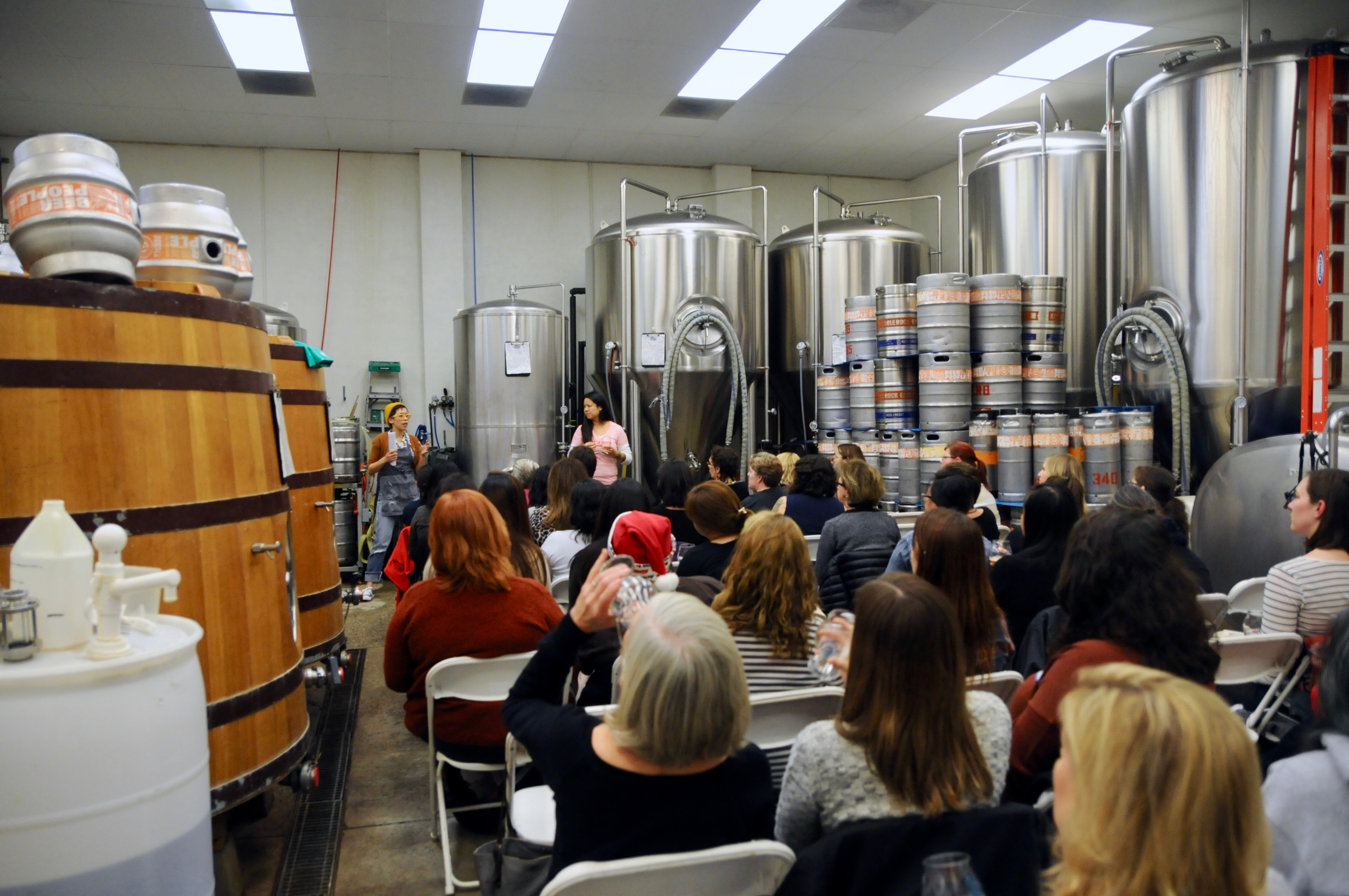
A group of women in a brewery.
Women's Beer Forum
Women's Beer Forum

Location: Los Angeles, California, USA

Opened: 2011

Closed: 2018

It's true. The boys are even afraid of you sharing a brew with your gal pals. God only knows what you're talking about or you're planning. They need to be there to monitor!

By Beth Demmon

Oct 19 2018, 2:34pm

Women-Only Craft Beer Forum Shut Down By Men’s Rights Activist
Ting Su, co-founder of Eagle Rock Brewery and host of the event, now finds herself needing to raise money for a legal defense fund.

The Women’s Beer Forum, hosted by Los Angeles-based Eagle Rock Brewery, is the latest victim in a long line of so-called “gender-based discrimination” lawsuits initiated by various men’s rights activists (MRAs), who are lashing out events and promotions designed for women.

According to its GoFundMe page, the monthly meetup—started by Eagle Rock co-founder Ting Su—was created in March 2011 after Su witnessed women get “pigeonholed by their male counterparts into drinking only specific beer styles. And when women asked me (a fellow woman behind the bar) about beer-style recommendations," Su continues, "some men would interject by sharing what they thought women should drink. After seeing this so frequently I felt compelled to create an environment that was less male-dominated than anything else in the beer world.”

The group’s overall goal was “to serve as an educational platform for more women interested in learning about beer, tasting through different beer styles, and being with a community of other women who enjoy good beer.” In short, it was a group created to serve as a counterbalance to a culture in which roughly 70 percent of craft beer drinkers are men.

It's far from the only group with this goal; the national women’s organization Pink Boots Society, with over a thousand members across North America, was also designed to “assist, inspire and encourage women beer industry professionals to advance their careers through education.”

Aggressive exclusionary tactics to keep men out were never used, Su says. In fact, men often participated and even presented at the meetups in the past. But in November 2017, a self-described MRA contacted Eagle Rock Brewery regarding the upcoming forum and was told it was for women only. That’s when the threats began.

“He then proceeded to demand thousands of dollars from us, while also threatening a discrimination complaint through the government if we refused to pay. Since he had never purchased admission through our online sales portal, we were unaware about his request to attend the Women’s Beer Forum. We apologized about the miscommunication and offered him an opportunity to learn about the same flight of beers provided at the event for the same ticket price. He declined the educational opportunity and instead filed a claim through the Department of Fair Employment and Housing (DFEH),” explains Su on the GoFundMe page.

At the advice of her attorney, Su declined to name the activist. However, public court records and other media reports identify the man as Steve Frye, who once sued Donald Trump for being sexist against men.

See the rest here

Wednesday, July 11, 2018

Redz

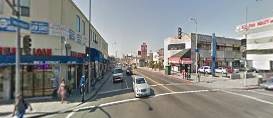
The former Redz --2218 East First Street
Redz

Location: 2218 East First Street, Los Angeles, California, USA

Open: Late 1950s

Closed: 2015


From the Los Angeles Conservancy

Located in Boyle Heights, Redz is estimated to have first opened in the late 1950s and operated until 2015. For over fifty years, this popular lesbian bar catered to a predominantly Mexican and Mexican American clientele.

Over the course of its history, the bar's name evolved from Redheads to Reds to, most recently, Redz. It opened at a time when working-class lesbian bars were on the rise around Los Angeles, particularly in Westlake and North Hollywood. It represented an important intersection of race, class, gender, and sexual identity.

Though the bar closed its doors in 2015 and its appearance has been altered, it continues to represent an important story within Los Angeles' lesbian community.

Here's a great photo of the Redz from the LA Eastside blog. The blogger is clearly not a lesbian, as lesbian existence is clearly invisible to this individual: 

"I think someone said this was a gay paisa bar but I don’t know the picture of the hot girl is throwing me off." 

'Cause all "gays" are men, ya know. 


Photo of Redz Bar - Los Angeles, CA, United States. During your taco crawl stop for a beer with Chucky and the Grim Reaper.

And, of course, lesbian bars almost always have THAT yelp review. The one where some straight person decides to be intrusive, then gets bent out of shape about something or other. In this case, it was a straight girl using her boyfriend as "a shield" against, well, whatever it was that she needed shielding against. From Maggie in 2013:

[W]e come across Redz Bar which is a couple blocks down from Mariachi Plaza and I know it's open because there's some loud paisa music blasting from the shut door. I see a ferocious, heavy woman in a bright blue dress walk out with her music box and I realize I missed the cabaret show on Sundays that start at 8:30.

The bar is mysteriously yet cautiously dark, with Spanish music ranging from Reggaeton to Enrique Iglesias playing from a record player. I look up, and the ceiling is covered in records with glimmers of light shining from the tacky disco ball. I expect the usual looks from middle aged Mexican men staring down a gringa who so happens to love her Micheladas. I use my guy best friend as a shield to repel any sort of contact because I'm here for a drink, but a conversation with the best friend is out the door because the music is ear numbingly loud.

It turns out that Maggie is so unbelievably dense that she manages to convince herself that this is an "underground brothel." She just can't believe that the bartender was refusing to serve this man who was sitting next to (harassing) this "promiscuous, young woman wearing a very skimpy dress." This just doesn't make sense!

Thursday, January 29, 2015

Paradise Club

Los Angeles (1950s)
Paradise Club

Location: Los Angeles, California, USA

Opened/Closed: 1950s

First saw mention of the Paradise Club in Martin Turnbull's list of old Hollywood Places. Unfortunately, he doesn't say much:

Paradise Club – lesbian venue (60/89)

Turnbull says learned about the Paradise Club from the book Gay LA by Stuart Timmons and Lillian Faderman (2006). This source reports that the Paradise Club arose in the 1950s--along with several other lesbian bars--and that it was a place "where butch-and femme couples less fashionable that those at the Gypsy Room could dance." (We'll put the Gypsy Room on the list of places we'll get to at another time).

In Odd Girls and Twilight Lovers, Faderman includes the Paradise Club in a list that includes three other LA lesbian bars from the 50s. She observes that "the customers were young women who were supermarket clerks, waitresses, factory workers, beauty operators, prostitutes. They were almost invariably elaborately made up, dressed in high heels and skirts or capris, or totally without makeup, in pegged, fly-front pants, black penny loafers, and a ducktail haircut. A couple would consist of one of each. Dress was the indicator of whom one may or may not flirt."

Depressing aside. If you google "Paradise Club" and "Los Angeles" together without any other terms, you get...a "gentlemen's club."
  

Saturday, January 17, 2015

The Big House

The Big House
Hollywood Boulevard (1927)

Location: Hollywood Boulevard, Los Angeles, California

Opened/Closed: Early 1930s

I first saw mention of The Big House in Martin Turnbull's list of historic Hollywood Places:

The Big House – Lesbian meeting place, Hollywood Boulevard. (59/96)

So that was an intriguing start. I found out more in an essay by Jim Kepner called "Gay Los Angeles: The Early Days":

The Big House, a lesbian club serving only fruit juice, opened briefly in Hollywood in the final years of Prohibition, but police ripped it apart, allegedly looking for liquor, because its lesbian owners refused to pay off. All bar owners were expected to pay protection to every policeman in sight. Some of its owners then ran the elegant Lake View on West 7th for a decade, (primarily lesbian, but with a fair percent of gay men and film people) getting competition later from the rougher If Club and Open Door at 7th and Vermont—beer bars where the clientele dressed down and bloody fights occurred at the drop of a hat.

The Big House is also mentioned in passing in Axel Madsen's The Sewing Circle: Sappho's Leading Ladies, but no new information was provided.

Wednesday, April 9, 2014

The Planet

"The Planet" (from The L Word)
The Planet

Location: Presumably somewhere in West Hollywood, but the actual façade used in the filming was located in Vancouver, Canada.

Opened: January 18, 2004

Closed: March 11, 2009

From time to time, just for the heck of it, we post on a fictional womyn's space.

The Planet is one of those places, having served as the hangout for the various characters of The L Word, the infamous " television drama series portraying the lives of a group of lesbian, bisexual, straight and transgender people and their friends, connections, family and lovers in the trendy Greater Los Angeles, California city of West Hollywood"--as Wikipedia (rather awkwardly) describes it.

Initially I wanted to somehow summarize the role that The Planet played in the characters' lives, but I quickly discovered that the task was overwhelming. Especially for someone who had only viewed a couple of episodes, and never did care for the series much. So those of you who are fans, you can fill in the details from your memories.

According to Grace Chu, the Planet was actually inspired by a real-life place in Los Angeles:

The Abbey
The Abbey, originally established as a gay coffee shop in the early 1990s, is currently a gay bar and restaurant that transforms into a club on the weekends. Local L.A. lore has it that it was the inspiration behind The Planet on The L Word.

However, it has also been asserted that the Urth Caffe is the real-life inspiration.
Urth Caffe

"The Planet" in Second Life
In 2007, The Planet became what was probably one of the first lesbian places to assume a virtual existence in Second Life. It would be interesting to know if any other womyn's spaces have that honor.


Monday, March 31, 2014

Women-only self-defense classes

Glendale's Commission on the Status of Women holds
self-defense classes in April on city property
for women and girls in honor of
Sexual Assault Awareness Month.

Women-only self-defense classes

Location: Glendale, California, USA

Closed: April 2014?

So the Men's "rights" (supremacy) groups are even threatened by a privately funded self-defense class for women. Never mind that there are all kinds of sports and fighting options that are just for men. Can't let the ladies learn to fight back on their own, can we?

If you can manage to read the gag-inducing comments, it's really about the menfolk simultaneously denying and promoting sexual violence against women. But that's no surprise. Standard issue propaganda for the Men's Rights dudes.

From the Los Angeles Times:

Men's group objects to women's self-defense classes in Glendale


March 28, 2014, 4:17 p.m.

A men's group is objecting to Glendale offering free self-defense classes to women only, saying the city is violating federal and state civil rights laws that protect against sexual discrimination.

The National Coalition for Men outlined its opposition in a letter sent this month to city officials, the Glendale News-Press reported.

For years, Glendale's Commission on the Status of Women has held self-defense classes in April on city property for women and girls in honor of Sexual Assault Awareness Month.

This is the first time the National Coalition for Men, which was established in 1977, has sent a letter asking the city to open the classes to men and boys.

Harry Crouch, president of the San Diego-based nonprofit that aims to end gender-based stereotypes, said his organization was only recently made aware of the classes.

According to the letter, the classes, which are set to take place in the Glendale Police Department's community room twice next month, "violate a host of federal and California anti-discrimination laws."

"Such female-exclusive or male-exclusive actions by government and private actors violate the equal protection clauses of the U.S. Constitution and California Constitution," the letter states.

"It always astounds me that some of our governmental agencies who are charged with protecting us from violations of law simply acquiesce to things like this," Crouch said, adding anyone can be a victim of sexual assault.

In the United States, about 10% of all sexual assault victims are male, according to statistics provided by the Rape, Abuse and Incest National Network.

Sexual assault includes sexual touching, forced penetration and other crimes. Since receiving the letter, city officials have done preliminary research into the matter and have found that there may be federal law that permits the self-defense classes for women, but more research into state law is planned.

After the research is complete, officials intend to send a response to the National Coalition for Men as well as review the class structure, if necessary.

The classes are paid for by fundraising by the Commission on the Status of Women, said Senior Assistant City Atty. Lucy Varpetian.

Friday, March 21, 2014

Tess's Cafe Internationale

8711 Sunset Boulevard today (insert is female
impersonator Rae Bourbon)
Tess's Café Internationale

Location: 8711 Sunset Boulevard, Los Angeles, California, USA

Opened: 1936

Closed: 1942

Martin Turnbull is brief and to the point:

Tess’s Café Internationale – Lesbian nightclub on Sunset Boulevard (60/47 & 87)

Fortunately, there is a more detailed description (somewhat modified and edited here) in Lillian Faderman's Gay L.A.: A History of Sexual Outlaws, Power Politics, and Lipstick Lesbians.

Columbia record by
Miss Jimmie Reynard
In Los Angeles before World War II there were only a few places that catered primarily to lesbians, and they were very different from many bars that emerged in the years after the war. The prewar bars were usually in the tradition of the upscale nightclub, and they promoted an exotic glamour, much like the lesbian bars of Weimar Berlin.

Miss Jimmy Reynard
Tess's (called in its various iterations Tess's Continental and Tess's Café International) was owned by Tess--a woman who dressed in basic black, pearls, and a great deal of makeup--and her partner Sylvia--who looked like Radcliffe Hall and always carried around a long cigarette holder. Tess's featured male impersonators such as Tommy Williams and Jimmy Renard, tall broad-shouldered women singers who wore tuxes and bow ties and had tenor voices. Gay women who frequented Tess's remember still Jimmy Renard's rendition of "Tonight We Love" and the evening that Tommy Williams brought Marlene Dietrich to Tess's and sang to her.
Miss Tommy Williams

Unlike nightclubs that had a large gay male clientele and featured female impersonators, Tess's suffered neither raids nor closings by the police because the phenomenon of the lesbian was not yet taken very seriously in 1930s Los Angeles.

According to Playground of the Stars, Tess's was one of about 30 Los Angeles area bars and nightclubs that was made off-limits to sailors by the U.S. Navy. This was in June 1942. Once again (in a somewhat modified and edited account) is what they say about it:

“These taverns and bars are not safe or proper places for servicemen to patronize,” a Naval commander told the Los Angeles Times. “Firm handling is necessary to eliminate that undesirable fringe of the industry.” The precise nature of the unsafe and improper activities going on in these night spots was left unstated — but it must have been pretty bad if the Navy felt the need to protect sailors from it, especially since the Navy was sending these same men off to risk their lives in the Midway, Guadalcanal and other death traps in the Pacific.

Miss Jimmy Reynard at
Mona's Club 440 in San Francisco
And here's a little more about Tess's itself:

Café Internationale was owned and operated by Elmer and Tess Wheeler and catered to women. As the 1940 guidebook, “How to Sin in Hollywood” put it:

When Your Urge’s Mauve, [go to] the Café International on Sunset Boulevard. The location offered supper, drinks, and the ability to watch boy-girls who necked and sulked and little girl customers who… look like boys.


Marlene Dietrich

Café Internationale offered cross-dressing performers, but these singers were women dressed in male drag — two who were quite well-known then were billed as Tommy Williams and Jimmy Renard.

As a result of the Navy ban, state authorities revoked the liquor licenses for Café Internationale.  Elmer Wheeler sued in 1942 to have the license reinstated, but he died that December and the club closed for good. His widow Tess opened another club later and became a fixture, along with her partner Sylvia Reiff in the burgeoning Los Angeles lesbian scene after the war.


Thursday, March 20, 2014

Canyon Club

Topanga Canyon (1950s)
Canyon Club

Location: Topanga Canyon between Malibu and Pacific Palisades, Los Angeles, California, USA

Opened/Closed: 1940s -1960s

From Remembering LA’s Earliest Lesbian Bars:

Canyon Club – Located in Topanga Canyon between Malibu and Pacific Palisades, this was a private membership club complete with a swimming pool that attracted “women who looked like women” (which today would be known as “lipstick lesbians”). Drawing a more professional crowd who couldn’t risk being arrested in a police raid, women gladly paid the $20 yearly membership fee. If the police did drive up, management would flash the lights, indicating women dancing with women should trade partners with the men dancing with men. Same-sex dancing was illegal in Los Angeles County until the 1970s.

But if you look at other sources, it not necessarily clear that the Canyon Club was exclusively (or even predominantly) lesbian. From an  LA Gay History site:

Canyon Club

Located in Los Angeles' Topanga Canyon area, mixed gay and lesbian club (c.1940's-50-s) who, if they saw the Vice Squad pulling up, would flash the lights which was the signal to swap dance partners to someone of the opposite sex.


Martin Turnbull says something similar:

Canyon Club – in Topanga Canyon, mixed gay and lesbian club (1940s? 1950s?) who, if they saw the Vice Squad pulling up, would flash the lights which was the signal to swap dance partners to someone of the opposite sex. (60/83)

Here is some of one gay man's recollection of the Canyon Club:

Los Angeles, when I moved there in 1968, was a vastly different city for gays and lesbians. We had our own bars and restaurants, but they were subject to frequent, random, and unprovoked harassment under the cold, beady eyes of our rabidly homophobic police chief. The routine (and often mass) arrest of gays for various trumped up charges--most often "lewd and lascivious conduct" was a lucrative source of income for the city and did not end until a gay man was beaten to death by the police in a routine bar raid.

One of the things gays were forbidden to do was to touch while dancing. I don't mean "grope" or "fondle"...I mean touch. We were allowed to disco (only in our own bars, of course), but slow dancing, where we actually held our partner, would result in arrest. As a result I and several of my friends joined the Canyon Club...a members-only club located 15 or so miles from my home, high up in a remote and rugged canyon, and reached only by a narrow, winding road. That more people were not killed coming down from the club after Last Call was a miracle.

The club was owned by a former L.A. policeman confined to a wheelchair for some reason, who disliked gays but overlooked his prejudice because of the money he made from us. It was a large, sprawling place with a couple of bar areas, a huge dance floor, and a swimming pool open only during the day on weekends. You entered the club through a small vestibule, where you showed your membership at the desk, and were then buzzed through a locked door into the club itself.

As part of the police department's equal-opportunity discrimination policy, not even the Canyon Club was safe from occasional harassment, but because the owner was an ex-cop, it was more for show than anything else. Whenever the police would arrive, the person at the reception desk would press a button which flashed a red light throughout the interior of the club. Immediately, dancing gay and lesbian couples would switch partners with their opposite-sex counterparts, and by the time the police meandered through the door to look around, all they saw was men dancing with women. I somehow suspect they were not fooled, but they had done their duty in letting the faggots and dykes know who had the power. 'Ya gotta let those queers and perverts know who's boss, 'ya know.

But the Canyon Club, whatever its inconveniences, was a safe place for us to go, and to be able to actually touch one another while dancing. I am a lousy dancer, and always avoid it whenever possible, but I would try it at the Canyon Club, especially with my friend Larry Couch, who always let me lead. I  always had a crush on Larry, but because his partner, Arnold, was also my close friend, holding him while dancing was about as close as I could hope to get.

Of course Lillian Faderman mentions the Canyon Club in her work. In Gay L.A.: A History of Sexual Outlaws, Power Politics, and Lipstick Lesbians, a number of her narrators mention the "flashing red-light signal."

However, one woman who went often to the Canyon Club says, "The guy who owned it was a cop, and the police never showed up"; she speculates, "Maybe he flashed the lights to add atmosphere. Maybe it was just a game."

But Jinx Beers in Memoirs of an Old Dyke doesn't recall that Canyon Club was much of a lesbian place at all:

Then came the Canyon Club located up in the hills off Topanga Canyon. I never actually attended the club myself, but understand it was mostly for the boys with one night a week for women-only.

So take your pick: lesbian, mixed, or gay men. Without a time machine, it's hard to tell....

Monday, February 10, 2014

Star Room

Corner of Main and El Segundo today
Star Room

Location: Corner of Main and El Segundo, Los Angeles, California, USA

Opened: Mid 1950s

Closed: Open at least as late as 1968

From Remembering LA’s Earliest Lesbian Bars:

Star Room – Located between Watts and Gardena in an unincorporated portion of Los Angeles County, this was a “cruising bar” that attracted a more pink-collar clientele (teachers, secretaries, nurses, etc). Opened in the mid 1950s, owner Jo Heston had to marry a man in order to buy the bar because laws at that time didn’t allow women to own bars. The laws also prevented Heston from pouring liquor, so the bar had male bartenders.

The Star Room is also mention in Lillian Faderman's Odd Girls and Twilight Lovers: A History of Lesbian Life in Twentieth Century America (1991):

At the Star Room, a lesbian bar on the outskirts of Los Angeles, women could dance but not too close. The manager would scrutinize the dance floor periodically with flashlight in hand. There had to be enough distance between a couple so that a beam from the flashlight could pass between them. In that way the owner hoped to avoid charges of disorderly conduct should there be any undercover agents among the patrons.

In Daniel Winunwe Rivers' Radical Relations: Lesbian Mothers, Gay Fathers, and Their Children in the United States (2013), we hear of a more supportive role that the Star Room played.

Barbara and Pearl were both married mothers--and PTA presidents--when they met in 1958. They fell in love, and embarked on a long-term secret affair. It was not until 1968, when their children were old enough to dodge a custody battle, that they decided to leave their husbands. It was then that Barbara

...moved into a room in the back of the Star Room, a lesbian bar in Los Angeles on the corner of Main and El Segundo. It was there, in a tough neighborhood, living in the back of a lesbian bar, that Barbara had her "life turned around."

Monday, October 14, 2013

The Black Watch


LA Downtown Rain 1940s
Downtown Los Angeles (1940s)
The Black Watch

Location: Los Angeles, California, USA

Opened/Closed: 1940s

Almost no information is readily available on the Black Watch. The only reference I have found to it is in Martin Turnbull's Hollywood Places:

The Black Watch – downtown L.A. (lesbian bar, listed in the 1949 Gay Girl’s Guide)

But it is certainly a very cool name. Very noirish. 

Wednesday, August 28, 2013

Joani Presents

Joani Presents
Joani Presents

Location: 6413 Lankershim Boulevard, North Hollywood, California, USA

Opened: 1961

Closed: 1973

From Remembering LA's Earliest Lesbian Bars:

Joani Presents – Located in North Hollywood at 6413 Lankershim Boulevard, this bar was owned by Joan Hannan, who was most famous for playing the drummer in the all-girl band in the 1959 Marilyn Monroe film “Some Like it Hot.” Attracting many classes of women, the bar was popular throughout the 1960s and 1970s, only closing when Hannan and her partner moved to Humboldt County.

You can find out more about Georgia (Joan) Hannan here. Seems that back in 1958, Joan was playing with a band in Palm Springs. It was probably an "all-girl band" as Joan formed many of these over the years. Somebody in Hollywood must have seen her perform, as she was soon contacted about playing a drummer in a movie. And the rest is history.  

In a 2011 interview, Joan described some of her experiences on the set:

“Monroe was standing beside her drum set as a scene was set up, Hannan said, and remarked in her famously breathy voice: ‘I just love the drums. I wish you’d teach me to play.’

Hannan was speechless. In that moment, she was as starstruck as Monroe seemed nervous.

Joan Hannan
‘She was a sweet, sweet person,’ Hannan said about the star. ‘She was not dumb at all. Always late? Yes.’

Hannan counts the film among her career highlights. But it was not without challenges.

Getting the part required acting in a way that made her uncomfortable. She knew from prior experience performing with bands on USO tours that an “extremely feminine” drummer was wanted.

‘I was forced to be a heterosexual woman,’ said Hannan, who is a lesbian. ‘I had to constantly flirt.’

You can see a little bit of Joan in this clip, though she's mostly in the back and in shadow. 
Joan Hannan in her
later years

Joan died last year at the age of 83. According to her obituary, she "passed away peacefully at home on April 13, 2012 in the arms of her partner. "

Jeanne Cordova has this memory of Joani Presents:

On the outskirts of feminism in ’72, I stopped at a traffic signal next to a dyke bar in North Hollywood. The car in back of me repeatedly bumped my fender. Furious, I jumped out of my car, marched back, and leaned my flattop into the driver’s window demanding, “You blind, drunk, or just stupid, Mister? How about staying off my fender?”
His beer-glazed eyes registered me. “Fuck you, bull dyke!” He jabbed a fist in my face.
“Don’t you just wish…” I laughed.
Just then the light turned green and I rushed back to my car. Sweeping around the corner and into the parking lot of Joanie Presents, I parked. As I walked toward the bar, I gulped. Archie Bunker had followed me. He was coming at me with a crowbar.
The goddess was with me that night. The man thundered past me and smashed his crowbar into my car’s rear window.
 
The Boy Mechanic captured this photo of the former Joani Presents.


The former Joani Presents
The Boy Mechanic is an excellent documentary source on lesbian bars over the years. If you've never checked out the project, please do. 

Tuesday, June 18, 2013

Women's Restaurants

This is a fantastic post on women's restaurants that I found at Restaurant-ing Through History, one of my favorite blogs. Reproduced with the author's permission.

Women's Restaurants

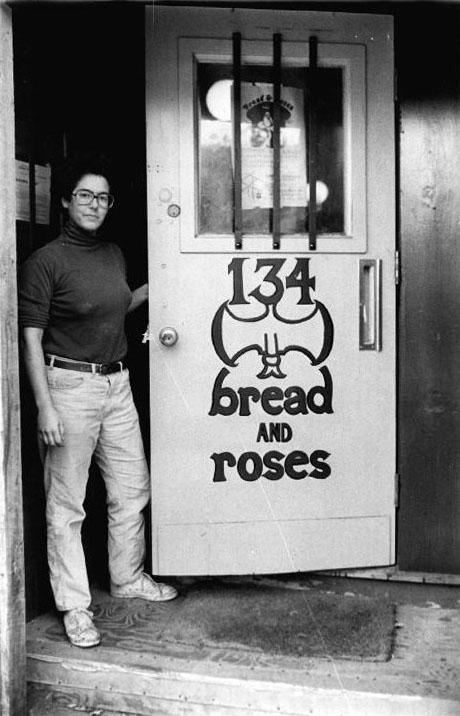
feministBreadandRosesBarbaraFried1976

Not all restaurants have been purely, or even mainly, commercial ventures. This was particularly true of women’s suffrage eating places and those of the 1970s feminist movement.

Although the women’s restaurants of these two periods were quite different in some ways, they shared a dedication to furthering women’s causes and giving women spaces of their own in which to eat meals, hold meetings, and in the 1970s, to enjoy music and poetry by women.

SuffrageLunchBoston1918

In the 1910s most major U.S. cities had at least one suffrage restaurant, tea room, or lunch room sponsored by an organization such as the National American Woman Suffrage Association (NAWSA).

As was true of later feminist restaurants, those of the suffrage era tended to be small and undercapitalized. An exception was the suffrage restaurant financed by the wealthy socialite Alva Belmont in NYC. In terms of patronage, it was almost certainly the most successful women’s restaurant of either era. It reportedly served 900 meals per day from a low-priced menu on which most items were 5 or 10 cents and consisted of soup, fish cakes, baked beans, and home-made pie.

Suffrage restaurants admitted men and welcomed the opportunity to ply them with leaflets and home-made soups, salads, and fritters that would incline them to support the cause. An aged Philadelphia activist recalled in 1988, “I worked at a suffrage tea room. We lured men in, for a good, cheap business lunch. Then you could hand them literature and talk.” In the NYC restaurant operated by NAWSA in 1911, it was impossible to ignore the suffrage issue since every dish, glass, and napkin bore script saying Votes for Women.

suffrageRestaurant1912

Though dedicated to women’s causes, women’s restaurants were not free of conflict. Many suffragists objected to how Alva Belmont ruled with an iron fist, brusquely ordering servers around until they walked out on strike, followed by the dishwashers. Belmont was ridiculed when she brought in her butler and footman to fill the gap. Her footman quit too. Some feminist restaurants experienced discord over cooperative management and, especially, whether or not to serve men.

The first feminist restaurant, NYC’s Mother Courage, was founded in April of 1972. (Its co-founder Dolores Alexander discussed it in 2004-2005 interviews.) Others established in the 1970s included Susan B. Restaurant, Chicago; Bread & Roses, Cambridge MA; The Brick Hut, Berkeley CA; Los Angeles Women’s Saloon and Parlor, Hollywood CA; and Bloodroot, Bridgeport CT). Undoubtedly there were more, especially in college towns. In the 1980s a number of women’s coffeehouses appeared, but they were performance spaces more than eating places.

FeministBloodroot1981

As part of the counterculture, 1970s feminist restaurants typically aimed at a broad set of goals. Women’s equal position in society was paramount but it was embedded in a project of establishing a more peaceful and egalitarian world. Feminist restaurants rotated jobs and paid everyone the same wages. They raised capital by small donations from friends. Staffs were entirely female and women also did most of the renovating. Their decor was spare, with exposed brick walls, mismatched furniture, and chalkboard menus. They served simple peasant-style food, usually prepared from scratch. Some served wine and beer. More often than not menus were vegetarian, or at least beef-less. The L. A. Women’s Saloon and Parlor supported farm workers and would not serve grapes or lettuce. The Brick Hut boycotted Florida orange juice during the anti-gay campaign of spokesperson Anita Bryant. The Women’s Saloon avoided diet plates and sodas, deeming them insulting to large-sized women.

Many proponents of feminist restaurants felt that women were often treated poorly in restaurants, many of which regarded men as their prime customers. Feminist restaurants made a point of presenting women dining with men with the check and wine to sample. But for many women patrons, perhaps especially lesbians, the enjoyment of a non-hostile space was more significant.

At some point each feminist restaurant confronted the touchy question of whether they would serve men. Considerable acrimony erupted around this question at the Susan B. Restaurant in Chicago and Bread & Roses in Cambridge, resulting in the former restaurant’s closure after only a few months. At Bread & Roses a co-founder exercised non-consensus managerial power and fired a server who made men and some heterosexual women feel unwelcome, setting off rounds of group meetings. The restaurant, opened in 1974, was put up for sale and in 1978 became the short-lived “women only” Amaranth restaurant and performance space.

Today Bloodroot may be the sole survivor of the feminist restaurant era.

© Jan Whitaker, 2013

Monday, June 10, 2013

Falcon Hollywood


Falcon Hollywood

Location: 7213 Sunset Boulevard, Hollywood, California, USA

Opened: 2006

Closed: 2012

Falcon was one of those places that operated as a restauant during the day, before switching to an swanky club at night.

It was also identified--but inconsistently--as a lesbian bar. Especially when various celebrities stopped by. Like Tara Reid in July 2008 or Paris Hilton in January 2008.

The vast majority of customer reviews are pretty generic discussions of the food or the general ambience and service. One of the (very) few reviews that allude to this being a lesbian place is from yelp, March 2009:

Falcon exterior


Falcon interior


So I showed up Sunday for Lword night. I was pleasantly surprised to find that no one was wearing cargo shorts.
Some how in Az at any given lesbian club/bar/eventyou just have a sea of cargo shorts.

Come on people brush your hair at least.

Gotta say everyone put effort into there looks which is nice to see. I dont care about looks or anyhting but I swear the lesbians in az are soo frumpy. Not only that but the are very stand offish.
If you go to somewhere and see another lesbian they will stare you down like they want to beat your ass. In LA I notice they nod or smile like normal people. Anyway, this place was small but really cool great seating, my only complaint is that the dj was playing 10 yr old bad techno, I mean bad. It was easy to order a drink no wait.

Everyone was friendly..
THE END :)

Wednesday, June 5, 2013

Green Door

Green Door Bar (August 1955)
Green Door 

Location: Lankershim Boulevard, North Hollywood, California, USA

Opened/Closed: Around 1955

This must have been an archivist's fondest fantasy come true. One day, some photos inexplicably arrive--and they're of a local lesbian bar from nearly 60 years ago. Not only that, they document a bar that had been more or less erased from the record, totally unknown! 

The story is reported in a great article called Remembering LA's Earliest Lesbian Bars:

Recently, the [June Mazer] archive received a donation of several photographs dated August 1955, taken at a bar called the Green Door on Lankershim Boulevard in North Hollywood. The donation is notable, [Angela] Brinskele, [the archive's communication director] said, because LGBT historians had never heard of the Green Door. Furthermore, the photos show women freely posing, which was rare in a time of police harassment.

The article also identifies several other early lesbian bars in LA--some of which we have discussed here at Lost Womyn's Space, some not. Great material to mine for future posts. Stay tuned!

Wednesday, May 1, 2013

The Palms Bar

The Palms Bar
The Palms Bar 

Location: 8572 Santa Monica Boulevard, West Hollywood, California, USA

Opened: Around 1968

Closed: 2013

The latest fatality in the great Lesbian Bar Die-Off: 

From Out in the 562:


West Hollywood lesbian bar The Palms to close
Posted on  by Phillip Zonkel

The venerable lesbian bar – which has seen Melissa Etheridge, Ellen DeGeneres and even Jim Morrison walk through the front door – will be ending its more than 46 years on Santa Monica Boulevard, according to a Sunday post on its Facebook page. It’s last call for West Hollywood watering hole The Palms Bar.

“Dear Patrons, The Palms Bar located at 8572 Santa Monica Blvd in West Hollywood will be closing it’s doors within the next couple of months. For no other reason than the new property owners have decided to redevelop the property. We are currently in the process of looking for a new location to re-open and will keep you all informed of when and where that will be.”

The Palms is one of the few WeHo locales catering to lesbians, though several bars in recent years have started lesbian nights.

“We thank all those who have remained with us throughout the years. We are grateful to those who have become our friends, our family, lovers, confidants and even our ex’s. We think of the happiness through 46 plus years that the Palms has brought to people, the laughter and love. We will remember those we have lost,” the post said.

“Even though we are saddened by this closure we bear in mind that buildings are made from stone and wood and the true happiness and joy come from the lives of the people inside,” the post said.

The Palms will have an official closing party and share the details on its Facebook page.

Saturday, December 22, 2012

If Club

South Vermont Avenue & West 8th Street today
If Club

Location: 810 South Vermont Avenue, Los Angeles, California, USA

Opened/Closed: 1940s-1960s

According to Gay L.A. by Lillian Faderman and Stuart Timmons, the If Club was a working-class lesbian bar that started in the 1940s, but continued to "flourish" into the 1950s:  

Terry DeCrescenzo, who had been a social worker, remembers that when she walked into the If Club, "a stereotypical dyke bar," as she describes it, the butches there called to each other, "Here comes a dish of ice cream." She was terrified. "I was in there for eight minutes," she says.

810 South Vermont Avenue today
Faderman and Timmons state that police harassment directed towards lesbians increased dramatically over the 1950s at the If Club and other Los Angeles area lesbian bars. An African-American woman named Meko reported that she and her friends were regularly "hauled in" by the LAPD just for standing outside the If Club. 

In a GLBTQ Encylopedia article by Dan Luckenbill, we're told that the If Club was not necessarily supportive of the early efforts aimed at lesbian networking and organizing:

9th and Vermont (c. 1948)
Alan Weeks Collection
In 1947, Vice Versa, a newsletter featuring reviews, articles, and editorials on lesbian life, was created in Los Angeles by a secretary who still prefers not to use her real name. The name she later chose was Lisa Ben, an anagram of lesbian. She called her writing for women "America's gayest magazine," the first written by lesbians and for lesbians. She produced only nine issues of Vice Versa, typing two originals of each with carbons. She learned that she could not mail them and even had difficulty distributing them by hand in lesbian bars such as the If Club.

A People's Guide to Los Angeles  informs us that from the late 1940s through the mid-1960s, this block of Vermont Avenue was home to "two working-class, racially mixed lesbian bars: the If Cafe (also known as the If Club) and the Open Door." The Open Door was located at 831 South Vermont Avenue:

"Crowd of butch girls, men in 40s, others from area," read the description for the If Cafe in 1966 in the Barfly gay guide; for the Open Door, the same guide noted simply, "Same crowd as at If Cafe." The  clientele of both bars was Black, white, and Latina, demonstrating that Queer life in Los Angeles did not exist only in white and affluent areas but was also embedded in working-class communities of color. 

Women at these clubs developed a strong, oppositional community, with their own styles and slang; for example, butch Black women termed themselves "hard dressers." Women's experiences at the If Cafe and Open Door also remind us that homophobic and racist police practices overlapped in postwar Los Angeles. Police frequently raided the bars and arrested the patrons, charging women either with "masquerading"--that is, wearing men's clothing--or prostitution. While some lesbians did work as prostitutes, many such charges were false and were used simply to harass and criminalize women who did not meet dominant and sexual norms. Black women, who were already more likely to be perceived as "loose" or "deviant" by the dominant culture, faced increased risk of arrest for lesbian behavior. The If Cafe and Open Door stayed open for years and produced a vibrant culture that carried over into activism and community life among lesbians of color in subsequent decades.     

Martin Turnbull also mentions the If Club in his list of Hollywood Places. He simply describes it as a "working class/industrial/butch lesbian hang out" from the 1930s.