Showing posts with label Illinois. Show all posts

Saturday, June 11, 2016

Women-only cars on Chicago CTA?

That this conversation is even taking place in the USA is fascinating. Liberals have told us for years that these things can't be done (that's discriminatory!) and shouldn't be done, because, you know, we need more (male) education! And this women-only thing is only done in "backwards" countries! Oh, and Not All Men Are Like That (NAMALT)!

Uh huh.

And that's when it was brought up at all, which was almost never. It was practically taboo to even bring up the topic for discussion.

Adult males need to be taught that it's not nice to rape or grope women? Frankly if they never got the message growing up, I doubt they're going to get it now. So let's looks into real-life solutions that help women now.

And isn't it paradoxical that as womyn's spaces that used to seem non-controversial and benign--restrooms, locker rooms, domestic violence shelters--are increasingly threatened with elimination, we're seeing a RESURGENCE of interest in women-only public transportation options because of, shhh, male violence. The same thing we're not allowed to talk about when it comes to male voyeurs, cross-dressers, pedophiles and the like invading restrooms.

From Chicago Reader:

April 12, 2016

Could woman-only el cars prevent sexual harassment on the CTA?
It's worked in Mumbai and Tokyo, but the CTA says education is a better strategy.

By John Greenfield @greenfieldjohn

Last month, in the wake of hundreds of reported sexual assaults on New Year's Eve in Cologne, a German commuter train line announced it would offer railcars reserved for women and children.

Crowded transit systems in Japan, Indonesia, India, Egypt, Mexico, and Brazil already feature women-only rail cars in order to prevent harassment and assaults.

In response to that news, last week NPR commentator Rhitu Chatterjee wrote glowingly of the ladies' cars in her hometown of Delhi.

"It would be wonderful if men learned to accept women's presence in public spaces without feeling the need to harass them," Chatterjee wrote. "But until they do, the women's car is one good way for us to assert our right to public spaces."

Indonesian women board a women-only carriage of a commuter train on the outskirt of Jakarta, Indonesia. - IRWIN FEDRIANSYAH/AP
Indonesian women board a women-only carriage of a
commuter train on the outskirt of Jakarta, Indonesia.
  • Irwin Fedriansyah/AP
  • Her op-ed got me thinking about whether female-only cars might be a strategy to combat sexual intimidation and violence on the CTA.

    In 2015 there were eight reported sexual assaults on the CTA—a category that includes everything from groping to rape—according to spokesman Jeff Tolman.

    He characterized that as "extremely few instances," considering that 516 million rides were taken last year.

    While lesser offenses often aren't reported to the CTA or police, stories female friends and colleagues shared with me by for this article suggest that inappropriate behavior is all too common on the system.

    Jane, a 43-year-old urban planner (who like many women I spoke to asked that we not use her real name), reported that men have catcalled and exposed themselves to her on the el on multiple occasions.

    Alice, a 53-year-old legal assistant, told me she's tall and assertive enough to intimidate would-be offenders, but has petite friends who've endured so much harassment that they only ride the train alone at rush hour, or not at all.

    One of them is Blanca Robledo-Atwood, a Colombian-born graphic designer who's four-feet-11.

    One evening she was riding the Red Line when a tall, beefy guy sat down next to her and whispered in her ear, "You are so beautiful—I want to be your friend."

    After trying in vain to ignore his advances, she spoke loudly to him in Spanish, which he didn't seem to understand. "He got embarrassed and tried to hide," she recalls.

    Still, she feared the man would follow her off the train.

    After that she stopped riding the el by herself at night.

    The man who tried to hit on 34-year-old nonprofit worker Ellen on the Blue Line's Jackson platform at 2 AM was less polite.

    After she made it clear she wasn't interested, he snarled, "Well I'm a nice guy, but I hope your boyfriend continues to beat and rape you."

    Ellen held her ground in the ensuing shouting match, but she now thinks that was unwise.

    "I could have gotten stabbed that night-who knows," she says. After that she largely switched to commuting by bicycle.

    "I get high anxiety sometimes when I enter CTA trains, no matter how much I think I'm a strong and badass woman, and it pisses me off to feel that way."

    Brittany, 28, survived a sexual assault that occurred while she was riding the Blue Line out to Oak Park on a Tuesday afternoon in May 2014.

    As the train crawled through a slow zone west of the Kedzie-Homan station, a large man approached her in the otherwise empty car.

    The assailant held her down and attempted to rape her.

    She was able to snap his photo as he fled. (A few months later police apprehended the man, who'd been attacking other women for years, she says. He's now doing jail time.)

    Brittany rides the el less often nowadays, and when she does she tries to sit in the front car, with the driver.

    "I still have major issues taking trains," she says.

    Brittany and a few other women I spoke with thought women-only cars could be an effective way to address harassment and assault on the CTA, if the policy could be properly enforced.

    "I've heard enough of these stories that I think many women would welcome a female-only car," said the legal assistant.

    But there's skepticism as to whether such an approach is necessary in Chicago, even from transportation experts who take harassment seriously.

    “Putting men in a train car separate from me will not stop them from harassing me when we exit the train.” —Courage Project founder Kara Crutcher­

    Lauren Dean is an urban planning student at UIC who since 2011 has been doing research on the ladies' compartments of the Mumbai railway system.

    Gender-separated cars are crucial in India, she says, because "the crowding on the train makes it very easy for male commuters to grope or rub up against women who don't have any means of escape and often can't actually identify their assailant in such a huge crowd."

    In Chicago, street harassment is "absolutely an issue for female commuters," Dean says.

    But she adds that the physical space on the Mumbai trains is totally different—it's common for 14 to 16 passengers to be crammed into a single square meter of floor space.

    "Even at its most crowded, the CTA doesn't handle that kind of crushing passenger density," Dean says.

    The CTA's Tolman notes that 23,000 security cameras have been installed throughout the system in recent years to serve as a crime deterrent and aid police in catching offenders.

    But he dismisses the possibility of female el compartments in Chicago by pointing out that "no transit system in the United States uses women-only cars."

    Instead, the agency is addressing the problem through a new informational campaign.

    "If It's Unwanted, It's Harassment" warns would-be offenders that abusive behavior will not be tolerated.

    The centerpiece of the campaign is a new line of rail and bus advertisements encouraging riders who see a fellow passenger being hassled to speak up, contact CTA personnel via an onboard intercom, or call 911 if there's an immediate safety threat.

    But some of the credit for the new initiative should go to the Courage Campaign, a grassroots organization launched in 2014 by Uptown resident Kara Crutcher to fight harassment on the CTA.

    Last year the group successfully lobbied the agency to shift its focus from simply asking victims to report incidents to preventing abusive behavior by raising awareness of the problem.

    "We're happy to see a couple of CTA ads up regarding harassment," Crutcher said. "It is definitely a step in the right direction. . . . Personally, I hope that we can work with them to produce more educational ads, but we shall see."

    As for female-only cars, while Crutcher says these could provide a safe space for women suffering from post-harassment PTSD, she argues they're a Band-Aid solution that doesn't get to the root of the problem.

    "A cultural shift must occur," she says. "We must recognize and respect each other everywhere, but especially in these public spaces. . . . Putting men in a train car separate from me will not stop them from harassing me when we exit the train. But education, antistreet harassment advocacy, and courage might."

    John Greenfield edits the transportation news website Streetsblog Chicago.

    Tuesday, May 10, 2016

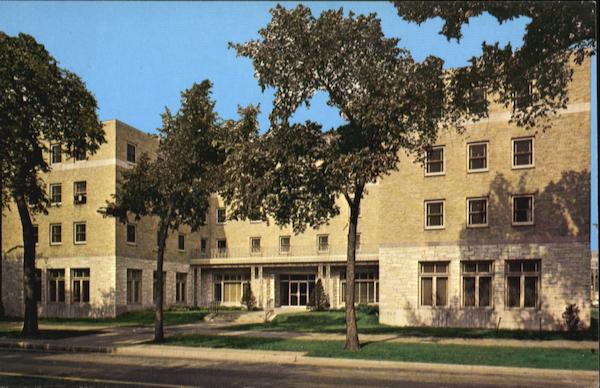
    Eleanor Residence for Working Women and Students

    Parkway Eleanor Club, 1550 North Dearborn Parkway Chicago Illinois
    Former Eleanor Residence for Working Women
    and Students
    Eleanor Residence for Working Women and Students

    Location: 1550 N. Dearborn Parkway, Chicago, Illinois, USA

    Opened: 1898

    Closed: 2001


    We're often told that the loss of womyn's space is some inevitable result of "progress." The Cool Girls, we are told, don't even want these things anymore!
    But by reading carefully between the lines, we see that the real story is typically one of betrayal and selling out to more powerful interests (usually money, especially moneyed males). And notice that once again, the opinions of the women most affected by these decisions are decisively ignored. That these spaces are meaningful to womyn is just not even deemed worthy of notice. And notice all the mysterious "research" showing women didn't want this residence, but they couldn't find even one woman to interview who agreed!
    This particular womyn's space, the Eleanor Residence, was lost over 15 years ago, but all those themes are here.
    Funny how the loss of all these "old-fashioned" women's residences over the last decades of the 20th century has paved the way for women losing spaces that would have been unthinkable just a few years ago--bathrooms, locker rooms, sports teams. And we are still being told we're out of step with the times, fuddy-duddy, hysterical, or right-wing if we object.

    From the Chicago Tribune:

    Door closes on an era
    For 103 years, Eleanor residences provided group homes and built-in friendship for single women.
    With the sale of the last one--on prime Gold Coast land--the board hopes to help even more women and girls.

    October 03, 2001|By Barbara Brotman, Tribune staff writer.

    Kathleen Darley walked through the lobby of the Eleanor Residence with the elegant posture of the ballet dancer she is. Spotting Susan Rodriguez, she gave her two thumbs up.
    "You got it?" Rodriguez asked eagerly.
    "I think so," Darley said.
    Rodriguez grinned. "Oh, we've got to celebrate tonight."


    Darley had just had a promising audition for her dream job, a role in the Joffrey Ballet's "Nutcracker," which she later learned that she had indeed won. And inside this dormitory-like building on the Gold Coast, she had just received one of the benefits of the Eleanor Residence: the support of other women.
    For 103 years, Eleanor residences have provided inexpensive, dormitory-style housing for single women in Chicago. In its heyday in the early 1900s, Eleanor was a vast social organization. There were Eleanor banking facilities; an Eleanor League for girls; an Eleanor monthly magazine; and an Eleanor Camp in Lake Geneva.
    Though originally intended for young women starting careers, the residence came to serve newly divorced and widowed women, visiting students and women re-entering the work force.
    But the residences' era came to an end Sunday, with the closing of the only remaining facility, the Eleanor Residence for Working Women and Students at 1550 N. Dearborn Pkwy. Darley and
    Rodriguez were among the last residents.
    In June, the board of the Eleanor Women's Foundation voted to end its role as a provider of housing, and become a grant-making philanthropy. It decided to close the last residence, sell the prime Gold Coast real estate [emphasis added], and use the proceeds to support programs for women and girls.
    The sale is being conducted through the real estate firm of Newcastle Limited, which is evaluating the sealed bids that have come in.
    Where single women once could not sign their own names on leases, now they routinely get their own apartments, said Susan Leinwohl, the foundation's executive director and an Eleanor resident in the 1960s.
    "We've maintained a fairly decent occupancy, but demand has generally been decreasing," she said. "We feel that we can provide much more service to women and girls with the money that we will receive from the sale of the building. This is such a wonderful thing; I am really excited about this."
    Closing brings sadness, anger
    The women who lived at the Eleanor, on the other hand, were saddened.
    "You have a built-in support system here. I have friends I'll know forever," said Darley, 21, a Texan who decided to begin her dance career in Chicago rather than New York partly because of the Eleanor.
    And because the Eleanor provided two meals a day--room and board was $21 a day--it freed her to devote herself to dancing. "You move into a new city, and you just don't have a lot of time and energy for cleaning house and making an apartment," she said.

    "I was devastated" to hear of the closing, said Linda Keller, 37, a courtroom Spanish interpreter who lives downtown. She stayed at the Eleanor from 1997 to 1999 when she moved back to Chicago from Spain, and while there established the "Happy Table," where residents dined by candlelight and spoke only of upbeat matters.
    "It was such an opportunity for women," she said. "It was unique. It was a microcosm. You gathered women of all races, walks of life, social strata and educational status, and we learned from each other."
    Some of the residents were furious about the closing.
    "This place is really needed," said Rodriguez, 48, a nail technician known professionally as Fergie, who moved to the Eleanor when her 26-year marriage abruptly ended.
    She thinks the board members don't understand how many women make low incomes and find themselves in desperate need of a temporary place to live.
    "These women all drive BMWs and Audis," she said. "I don't think they realize what it's like to be out there."
    Stephanie Ponn, 28, who works in sales and fundraising for the Chicago Sinfonietta, said she felt betrayed by the Eleanor board.
    "They want to give the impression that these are all professional women here," she said. "But there are vulnerable women here--a woman who came here after a divorce and was starting life over again, women who were abused, women who are getting over mental problems. They knowingly took these women in and said, `You can stay here for two years,'" and then closed the residence.
    "Maybe they want to help women, but I think they've been very hypocritical with the women here."
    She found an apartment, as did Rodriguez and Darley, but worries that she may have to take on an additional or different job to afford it.
    The board's point of view
    Leinwohl said the board made every effort to help residents find other housing. The Eleanor Residence gave them free room and board for the month of September, and allowed them to take the room's furniture if they wanted. The board gave residents and employees three months' notice, she said, and brought in an apartment rental agency to help the women find new living quarters. Women who preferred communal living were referred to the Three Arts Club, a similar facility a few blocks away. (The Three Arts Club is specifically for women artists; at present, it has no openings until January.)


    The Eleanor Women's Foundation deliberately tried to screen out women who were unable to live independently, she said.
    "We are not set up to handle social service type of problems," she said. "Our advertising has always been clear: We are a residence for working women and students." It was also clear, she said, that this was not a permanent housing option; after two years, women had to move out.
    "People are somewhat disgruntled; change is difficult," she said. "But the Eleanor really and truly has an obligation to serve as many women in Chicago as they can. I understand those feelings, but I'm pleased we can move forward."
    The Eleanor board is not abandoning women, but changing in order to serve more of them, she said.
    Only 1.4 percent of philanthropic funds in Chicago go to programs specifically for women and girls, according to a 1992 survey by Chicago Women in Philanthropy; the Eleanor Women's Foundation hopes that the proceeds from the property's sale can add significantly to those funds.
    "We have to be the best possible stewards of our money," Leinwohl said. "If there were a real need for this [type of housing], the YWCAs would still be in this business." The YWCA of Metropolitan Chicago closed its last residence in 1972.
    Before making the decision, the foundation spent a year and a half examining the needs of the women it was serving.
    "Our research tended to show that women wanted other kinds of options for housing," Leinwohl said. "They wanted their own kitchens; their own bathroom facilities; and this is a little touchy, but they wanted [to be allowed to have] men in their room."
    The rule prohibiting men above the first floor was a holdover from the Eleanor Clubs' early days.
    Darley, who had actually heard the Eleanor was a convent, liked it because it allowed her to wander around in her pajamas freely; her parents loved it.
    The tearoom days
    The Eleanor Clubs were founded in 1898 by Ina Law Robertson, a Washington state school principal who moved to Chicago to attend graduate school at the University of Chicago. She thought young working women new to the city needed help making the transition from rural to urban life. She named her organization Eleanor after Eleanor Law, a friend whose wealthy brother had willed his estate to Law and Robertson for philanthropic purposes--Robertson took "Law" as her middle name out of respect for James Law. She also liked the name Eleanor because it means "light" in Greek.
    Eleanor was a way of life. In 1916, according to the book "Women Building Chicago 1790-1990, A Biographical Dictionary," the Central Eleanor Club's tearoom downtown served 58,000 people; more than 2,000 young women took classes there in gymnastics, folk dancing, millinery and English. By 1920, the club occupied nearly an entire floor in the Stevens Building in the Loop.
    At one point, there were six residential Eleanor Clubs in the city. The Gold Coast building, built specifically as an Eleanor residence, opened in 1956 as the Parkway Eleanor Club.
    Leinwohl lived there from 1963 to 1965, when the young women there wore gloves and pillbox hats to interviews, and began reading Betty Friedan's "The Feminine Mystique."
    "I absolutely loved it," she said. "I loved it better than my college experience. I met a wider range of interesting people. . . . Oh, it was so much fun."
    But she believes that by becoming a philanthropic organization, the Eleanor Women's Foundation is honoring the spirit of its founder.
    "She saw a need in her time. Well, we see needs that are not being met today," she said. "We're coming full circle, but in a different direction.

    Wednesday, July 15, 2015

    Bookie Joint for Women

    Bookie Joint for Women

    Location: 5057 Lake Park Avenue, Chicago, Illinois, USA

    Opened: Between 1928-1930

    Closed: 1938


    One of the odder women-only spaces we've ever posted on.

    From the Chicago Tribune's Dangerous dames and good-time gals:

    
    Emeline Poshil and Bernice Sheppard (1938)


    Miss Emeline Poshil, 51, left, and Miss Bernice Sheppard, 25, at the State's Attorney's Office after both were arrested for owning and operating a bookie for women on Oct. 19, 1938. According to the Chicago Tribune, Miss Sheppard was looking after the place, located at 5057 Lake Park Avenue, for her mother Mae, who was out watching a horse that she owned at the track. The Sheppard mother and daughter team, along with Poshil who was a clerk, had run the bookie for women for eight or ten years. "The ladies were nibbling jelly rolls and sipping soft drinks and coffee," according to the newspaper, when State's Attorney axmen came busting into the betting establishment for discriminating women. Detective Daniel Moriarty and his fellow axmen were ill at ease arresting the women with Moriarty later saying "I was a little embarrassed." The headline read "Axmen Toast Ladies With A Bang Up Party; Axmen Wreck Handbook Run By Women." — Chicago Tribune historical photo, Feb. 27, 2014

    Friday, May 8, 2015

    Augie's on 20th

    Augie's on 20th 
    Augie's on 20th


    Location: 313-315 20th Street, Rock Island, Illinois, USA

    Opened/Closed: 2013-2014?

    Here's the clubfly description of Augie's on 20th:

    Type: Lesbian Bar
    In a nutshell: Notorious as a hangout for girls, save for the 1am-3am timeslot (which is occasionally packed with younger guys fresh from the Davenport LGBT strip). Some guys during the day...the venue feeds off of the neighboring bookstore and two strip clubs, which often makes for an eclectic mix of characters...

    Interesting description, in that it illustrates how an identified women's space is frequently overrun by men (both gay and straight)--even though they have their own spaces where lesbians are typically not welcomed and certainly not respected even if they are admitted (e.g. gay male bars, strip clubs).

    Clubfly states that Augie's is "closed," but with no date.

    But as we see so often, clubfly will often identify a bar as "lesbian"--when no other bar guide or website does so.

    So I suspect that this was a space that was provisionally staked out by marginalized lesbians who had no other place to go, but was never actively "dedicated" to them.

    On Facebook for example, Augie's is simply described as a "barbeque restaurant" and "bar." Unfortunately, this kind of camouflage and/or ambiguity is not uncommon even with "dedicated" lesbian bars, even in the supposedly liberated 21st century. Here, Augie's status is described as "may be permanently closed." There is just one post, and that one is dated November 2013.

    Clubplanet mentions an Augie's, Inc. at this location. However, once again there is nothing in the description to suggest that this is a gay/queer bar, much less a lesbian one:

    Remodeled interior at 313 20th Street
    Augie's Inc - Of the city’s hundreds and hundreds of bars, Augie's Inc fits right in the middle of the bell curve – a place to hit with your buddies on the way to your ultimate destination. Not the ideal spot for fabulous, drunken debauchery, but it’s a good as place as any to pre-drink.

    Foursquare also lists an Augie's, and does describe it as a "gay bar." They say nothing else about it though. So what that means in terms of the women is anybody's guess. It certainly further suggests, however, that the place was not actively centered or openly identified as lesbian space.

    Here we see that the building at 313 20th Street with its "Beautifully remodeled Bar" was put up for sale over a year ago. We also find out that the property was previously known as the Lucky Shamrock Bar (c. 2011-2012) In April 2015, it was purchased by the owner of Jaded Gypsy Tattoo.

    Sunday, January 4, 2015

    Monroe Restaurant Ladies Cafe

    Monroe Restaurant Ladies Café
    From the Chicago Eagle, November 8, 1895


    Location: 118 and 120 Monroe Street, Chicago, Illinois, USA

    Opened/Closed: 1895

    This ad appears in the Chicago Eagle for November 9, 1895. In many ways this is a typical ladies café, in that the ladies café is located on the second floor--generally considered inferior square footage from a commercial point of view. If this is a typical ladies café (which I suspect it was), male escorts were more than welcome in the ladies café--and may in fact have represented a majority of the patrons. However, rest assured that the Gentlemen's Café did not admit ladies, escorted or not.

    The place existed less than three years after this ad appeared, as it burned to the ground in March 1898.

    Wednesday, November 6, 2013

    Petunia's

    Petunia's
    2559 North Southport today


    Location: 2559 North Southport, Chicago, Illinois, USA

    Opened/Closed: Mid to late 1970s

    So far, all I'm finding are random references to Petunia's.

    St. Sukie de la Croix's Gay Chicago Timeline for June 1978 mentions that Petunia's was a lesbian bar that was holding a cookout to benefit Gay and Lesbian Pride Week.

    Two years earlier, in 1976, it was also reported that Petunia's  was the "site of a benefit for the choir of Good Shepherd Parish, MCC. The funds raised will send Chicago's "voice" to the Universal Fellowship of Metropolitan Community Church's annual general conference in Washington D.C."

    So it is clear that Petunia's was community-minded--like a lot of the old-time lesbian bars of that  period.

    In a Chicago Gay History interview/survey with Paula Walowitz, she identifies the following as a "defining moment" in her life:

    Going to my first lesbian bar (Petunia’s circa 1976) with another bi-curious friend and just standing against the wall all night, trembling and watching women.

    There is also this random memory from Out & Proud in Chicago:

    I went to northeastern, I think in the summer of '79, there was four of us, four women. I don't know how we got onto it, but we began to think about gay stuff, and had heard about these lesbian bars. I remember walking in-- it was petunia's on southport-- and I couldn't believe how many there were, that I knew, from school.
    
    Mary York dead at 52. Notes from a 2007 interview
    Mary York
    And finally, in a 2007 interview with lesbian attorney Mary York, we see the following reminiscences:
    

    'I'm sorry to say, I spent so much time in the bars, as far back as 1977, 1976 when I was in college … we used to come down to Chicago and we'd go to Petunia's, Marilynn's, Lost & Found, Augies, CK's. … [ There ] were a lot of women's bars at that time and that was the community. The stereotypes, the roles, the gender roles were much more defined. Then, women were either butch or femme. … Because I was younger I really didn't get involved in it too much and I wasn't a part of it but I certainly recognized it and saw it.'

    (By the way, all of the other lesbian bars mentioned above have posts here at Lost Womyn's Space.)

    Tuesday, October 15, 2013

    Women & Children First

    Women & Children First
    Women & Children First 

    Location: 5233 North Clark Street, Chicago, Illinois, USA

    Opened: 1979

    Closed: 2013

    Women & Children First isn't officially lost yet, but it is certainly in danger, despite the owners' reassurances. 

    From the Windy City Times: 

    Longtime feminist bookstore for sale
    by Ross Forman, Windy City Times 2013-10-07

    There's a "For Sale" sign hanging at Women & Children First, the lesbian-owned bookstore that has been a Chicago fixture for about 34 years ago and in the Andersonville neighborhood since 1990.

    The 3,400-square-foot store is "debt-free, and has a great staff, a committed manager, and a dedicated publicist," Women & Children First said in an ad in Bookselling This Week. The store is "in the heart of Andersonville, a thriving neighborhood of indie retailers and restaurants, just north of Wrigley Field. Great community support in a diverse neighborhood. Increased sales in the past two years."

    Ann Christophersen and Linda Bubon
    Linda Bubon, 62, said the decision to sell the bookstore, which she co-owns with Ann Christophersen, 64, has been gradual, something they have been considering for about a year.

    "For a while, we were talking with an employee who was interested in taking over the store. Her situation has changed somewhat," thus that will not materialize, Bubon said.

    Their for-sale announcement was done around the Heartland Fall Forum, Bubon said. The event was held Oct. 3-5 in Chicago, and is a venue for booksellers, publishers, and all those who work in the bookselling industry to get together to strengthen and celebrate independent bookselling throughout the Greater Midwest, according to the event's website.


    "We don't see this as a fast transition," Bubon said. "We really would like to sell the store to like-minded feminists who want to keep it going as a feminist and children's bookstore, appreciate what we've created, the alliances we've made … someone, or multiple owners, who will continue with fresh ideas."

    There is no timetable for when a sale has to be completed, Bubon said. "There's no emergency, no crisis. Both of us are just recognizing our limitations, and it's due to nothing but age.

    "Both of us still care deeply about the store, and we'd even like to continue working part-time [after selling ownership]. But we'd like to see a younger owner, or owners, so they can take the store into the future."

    Bubon said the store has had "small, but significant, increases in sales the last two years."


    She did not state the asking-price for the store. 


    Bubon confirmed that they will not simply close the bookstore if no new owners are finalized. "I just don't think that's a possibility," she said. "The store is thriving, loved in Andersonville, in the gay community. We have already had several interested parties come forward, and we are meeting with interested parties over the next few weeks.


    "I don't think there's any chance that we'd close it."

    Nor will they sell to someone not interested in continuing the bookstore.

    "Ann and I have talked about this at length, and we're quite on the same page: Women & Children First needs to continue as Women & Children First," Bubon said.

    Lynn Mooney has been the manager at Women & Children First since last January, and her role includes training employees, part of the ordering, publicity, and more.

    "There isn't a ton of money to be made in book selling, but there is a satisfaction that one has an influence over the next generation. And that satisfaction is something you cannot buy," Bubon said. "There are plenty of people who still want to read physical books [as opposed to reading on a Kindle or similar device.]"

    Bubon said, in retirement, she is considering expanding her work on the local theatre scene and maybe also involved in politics, perhaps to lobby for important issues that affect free speech, she said.

    Tuesday, July 9, 2013

    T's Bar and Restaurant

    T's Bar and Restaurant interior
    T's Bar and Grill 

    Location: 5025 North Clark Street, Chicago, Illinois, USA

    Opened: 2001

    Closed: March 2013

    Here's an undated review of T's from Chicago Reader:

    T's is a little of everything: a casual neighborhood bar, a sports bar (if there's a game on), and the closest thing Chicago's got to a lesbian bar. It's not exactly a beer bar, especially given the recent explosion of places with extensive tap lists, but they do specialize in double pints and variations on the Black & Tan like the Black & Blue (Blue Moon and Guinness) and the Black Magic (Magic Hat and Guinness). The food's better than average for a watering hole, with plenty of vegetarian and healthy options—balanced by stuff like garlic mayo fries and mozzarella sticks for those whose arteries need a little clogging.

    "The closest thing Chicago's got to a lesbian bar"? But not not a real bonafide lesbian bar? 

    More research was obviously necessary. 

    It seems that T's conformed to a very old pattern commonly seen in women's spaces and lesbian spaces in particular: the "front" was dominated by the straights/gay males, while the "backroom" was conceded to the lesbians. 
    T's Bar and Restaurant

    Yelp has a variety of customer reviews which confirm this spatial arrangement to one degree or another.

    From R.J. W., May 2007:

    The perfect neighborhood bar in a great eclectic neighborhood.  From biker chicks to folks with kids, this is the perfect melting pot....

    They have a girl's bar in back.  But I always felt welcomed. No attitude is the perfect description of T's.


    From Erika G., June 2008:

    Great place, great energy.The back bar was girls, girls, girls, but the other areas were mixed with all sorts of people. I got sort of a "beach bar" vibe from the back part, not sure why - but I really liked it, and will be back. The drinks were well poured, and the nibbles of food I snuck from two of the people in our party - well, I want to come back for more of that!!

    From Yvonne B., February 2012: 

    T's definitely holds it's own as a restaurant and bar. In fact, the surprisingly good food lands T's in the top 10% of it's class. Solid. What sets it apart (at least in my mind), is that it's my favorite lezzie hang-out.

    Complete with good eats, yummy drinks, and a pool table, what more could a girl ask for? Oh yeah - that's right. Women! It's just a relaxed place to go and it seems as if everyone loves it. Although I haven't necessarily seen kiddos at T's, I've definitely seen all other types....

    The front portion of T's has an expansive bar, but it definitely feels more like a restaurant with the good lighting from the large windows. The back portion is a spacious den: another bar, dim lighting, pool table, and a juke box to play some Melissa Etheridge as many times as you can afford.


    From Iliana C., October 2008:

    Great lesbian bar!  Walking by it we thought it was just a restaurant but then you get to the back and see the lovely sea of lesbians and alcohol.  I was told this was the place to be on Saturdays.  I wish they had a place like this in California.

    Of course, there were always the complainers: 

    From Kellie K., July 2009:

    T's is just that.  It's a place that I often forget about.  Not because it's forgettable, however it's not really memorable either.  I will say that it's significant to have a decent place in the neighborhood for the girl-girl crowd to congregate.  With that said, T's is also friendly and welcoming for everyone.  The typical crowd at T's tends to be clique-ish, but I don't fault the place for that at all.

    From Shannon K., October 2012: 

    It's a lesbian bar, which as a lesbian I adore, but what I didn't adore was the bitchy ass lesbians who didn't want to share the pool table. I was informed the table was theirs for their night. Um ok. Who said so? Am I missing an unwritten (or written) rule that says first lesbians to claim the table own said table for the remainder of the night? Please advise.

    From Nhung T., September 2011:

    I have no idea why some Chicagons recommended this bar. Literally on a Sunday night it was full of Lesbians and it was dead. I have nothing against them because I have a few gay/lesbians friends, but I wanted to mingle. Get to know the crowd and have some fun. It was so low keyed, literally we took one shot, stayed for a little bit and just left.

    But there were also loyal fans: 

    From Stephanie H., August 2009:

    T's is a friendly, laid back neighborhood, predominantly lesbian bar/restaurant. There's a pool table, a large outdoor seating area, a great jukebox, excellent food (turkey burgers!), and cuties running amok. What more could you want?

    Chicago Bar Project also gave T's a great review: 

    There aren't enough good things that I can say about T's Bar & Restaurant. I'm usually not a huge fan of gay bars and come from a city unlike Chicago where they're all pretty much the same and geared towards gay men. Instead, T's is all about the ladies! Whether you're there to play or just observe, you will not be disappointed with the selection.

    Located at the southeast corner of Clark Street and Winnemac Avenue in Andersonville, T's is a lesbian's dream when it comes to eye candy—I swear that all of the city's attractive lesbians can be found at T's on any night of the week. T's front room is used as the restaurant area and also has a full-size bar. The back room sports a jukebox, pool table, smaller bar, and some tables but is mostly an open space meant for the crowds that pack the place on weekends. In summer months T's offers a huge outdoor patio that is often packed full, leaving the inside of T's almost empty. On any given night, and especially weekends, T's is typically 90% women with 10% being the gay men who love them. However, the quality of food attracts straight couples during the quieter weekday nights when T's mostly acts as a restaurant.

    Unfortunately, T's ran into problems paying the rent, and they were evicted by their landlord earlier this year. See here and here. 

    Tuesday, June 26, 2012

    Monticello College

    Monticello Ladies Seminary (Monticello College) (1890)
    Monticello College

    Location: Godfrey, Illinois, USA

    Founded: 1838

    Closed: Last Monticello class graduated in 1971; first coed Lewis and Clark Community College class began in 1970, the same year the Monticello campus was purchased

    Monticello College was a two-year college for women. It was founded by Captain Benjamin Godfrey, a native New Englander, who arrived in the southern Illinois area in 1832. Captain Godfrey, the father of eight daughters, was an advocate of higher education for women and made a large donation of funds and land for the college. (I imagine that Mrs. Godfrey was far too burdened by pregnancy and childcare to take much of an interest either way.) Monticello Female Seminary, later renamed Monticello College, was established in 1838.  

    Not surprisingly, a man (The Reverend Theron Baldwin of Yale) was selected as the first headmaster. But two women, Philomena Fobes and and Harriet Haskell, are credited as the ones who were "influential in establishing the fine reputation enjoyed by the school."

    Here is a description of the early campus:

    The 110-by-44-foot seminary building was five stories high, including the basement. The basement was divided into a dining room and recitation rooms. The second story was divided into a library, recitation, and family rooms. The next two floors contained forty rooms. Each one of these rooms was made for two young ladies to live in them. The fifth story was divided into painting and music rooms. The 45-by-70-foot south wing contained two large halls and twenty-two rooms that were centrally heated and illuminated by gas. Also located on the thirty-acre campus was a cottage near the seminary, designed as a boarding house for mothers who wished to be with their daughters. The cottage also served as a place for guests to stay.

    In 1888, these original buildings were destroyed by fire.

    Though sometimes dismissed as a "finishing school," Monticello offered coursework in advanced mathematics, chemistry, astronomy, geology, mineralogy, logic, and political economy--as well as the the obligatory offerings in art, music, and needlework. Monticello enjoyed tremendous alumnae loyalty. But by the 1960s, the rising popularity of coeducation, combined with low enrollment, lead to Monticello's demise. As Kristen Brueckner has reported,

    In 1965 young women came here from thirty-six states and three foreign countries to make the annual enrollment of 392. Many girls who enrolled followed their mothers, grandmothers, and great-grandmothers to Monticello. In the 1960s enrollment dropped due to a waning interest in separate schools for boys and girls, and the seminary was forced to close in 1975.

    Elsewhere it is reported that the campus was sold to Lewis and Clark Community College in 1970, with coed classes beginning that year. The last Monticello class graduated in 1971.

    No doubt it would be tempting to write-off Monticelllo's graduates as little more than decorative young ladies, but that would be wrong. As we have seen before, even the most conservative or conventional of womyn's spaces have a way of creating strong and independent women--even if that is not their expressed intent. 

    One Monticello alumna was a member of Annette Daisy's Amazons, who were intent on setting up an all-woman town in Oklahoma back in the 1890s. As the press announced at the time (and with evident alarm), "Each of the young women is armed with a rifle and a revolver, and as a whole they are fully capable of taking care of themselves." Can't get less ladylike than that!

    Saturday, March 3, 2012

    Augie & C.K.'s

    3726 North Broadway today
    Augie & C.K.'s

    Location: 3726 North Broadway, Chicago, Illinois, USA

    Opened: September 1979

    Closed: 1980s

    Augie's and C.K.'s were once separate Chicago lesbian bars that later merged into one. According to Sukie de la Croix, C.K.'s first opened at 1425 West Diversey around August 1974, but apparently moved to 2417 North Milwaukee by January 1979. Augie's also opened in 1974 at 3729 North Halstead.

    Sukie also interviews two women--Joyce and Maria--about their memories of these places. We first hear from Joyce and her memories of Augie & CK's, which, as noted above, opened in September 1979:

    "I used to go to CK and Augie´s, but I would get there very late in the evening. I worked in a place where we wore long black evening gowns and I would be in such a hurry to get to CK and Augie´s that I wouldn´t even change out of my gown. I´d hop in a cab and get down there half an hour, or sometimes 15 minutes, before they were going to close, and they´d still charge me a cover charge. Finally, after a while, I stopped going, because usually at that hour the gals that were in there were pretty well hooked up, and if you saw somebody really together you were afraid to go over and say anything to them, unless you knew them, or unless you knew someone who could introduce you. Women´s bars are not easy to get acquainted, you´re liable to get in a big fight."

    Maria informs us that C.K.'s was the first gay bar she ever visited. We also hear about the butch-femme scene that still existed there, even in the mid 1970s:

    "CK´s on Diversey, and it was before CK and Augie were together. I have a strong memory of walking into the bar. At that time, which I think was 䚚, there was a short period when you could drink at 19. They changed the law, and I was in that age group. So the first time I walked into CK´s I was alone. I had found out about the bar from a friend of mine in junior college. I walked into the bar and I was very nervous, and a woman at the door took a step back and she looked me up and down and she said, ´Well, what are you, a butch or a femme?´ And all I could say without losing a beat was, ´Well, I´m 19.´ And she put her arm around me, patted my back and said in a really patronizing way, ´Maybe next year when you´re older, you´ll have to decide.´ I never did decide. But she said that within earshot of the other women, so she was using me to make a joke. The other women were her audience. I later learned that the woman tended bar there and her style was to be very sarcastic. After a while people liked her humor, but if you were a stranger and walked in, it was more alienating than comforting. Her name was Phyllis."

    And here are more memories from Maria:

    "I was first introduced to that bar by a classmate; Judy was her name. Judy wore a black T—shirt to school with two women on it, and it was the first time I saw a T—shirt of that kind. It was clearly two women, I don´t think they were kissing but it was an outline of two women on her T—shirt and it was from Augie´s bar on Halsted. That was before I went to Augie´s.

    "What I would like to say is that the thing about Augie´s and CK´s was the bars were small. At that time, women didn´t go out as much, so if you went out you were bound to run into the people you knew, because everyone was going to the same places. So there were groups of women who knew each other and there was a feeling of comfort about that, an extra closeness that I don´t see in the bars now. Some of it had to do with the technology; there weren´t videos at the time so there was a lot more conversation.

    "At Augie´s there was a woman named Ellen who used to sing and play guitar there. She would change the names of songs. You have to remember I was 19 or 20, and this was the first time I heard a woman singing Neil Diamond´s ´Solitary Man,´ and she would change the name to ´I´ll be what I am, a solitary woman.´"

    As it turns out, C.K.'s also played a pivotal political role in Chicago's gay and lesbian history--though not necessarily for right and honorable reasons. Back in the 1970s, it became a flash point for the hard-fought struggle against racial discrimination in Chicago's gay and lesbian bars. Tracy Behm in Out and Proud in Chicago (2008) explains:

    When African-American lesbian activist Pat McCombs saw her Black and Latina friends face this [racial] bias in December 1974 at C.K.'s lesbian bar by being asked for more than white customers, she fought back in the way she had learned as a civil-rights activist--both in the streets and in the courts. She and others formed the Black Lesbians Discrimination Investigation Committee, picketing in front of C.K.'s, 1425 W. Diversey Pkwy. She called for a boycott, putting out posters and getting white lesbian attorney Renee Hanover to help. White lesbians also joined the picket lines, and the state liquor commission investigated.

    On March 10, 1975, the Illinois Liquor Control Commission gave the bar a citation, according to The Chicago Gay Crusader, requiring owner Carol Cappa to appear before the commission to "show cause why her license should not be suspended or revoked." The commission dismissed the citation April 15 after Kappa and Hanover entered into an agreement for the complainants, calling for Kappa to serve all customers equally and to clearly post her identification policies.

    As Behm goes on to state, "the carding policies at C.K's (which later merged with Augie's to become Augie & C.K.'s at 3726 N. Broadway, now the site of the bar Charlie's Chicago) were not unique. Dozens of gay bars over the years have been accused of keeping out people based on race or gender, having a 'quota' so as not to tip the balance in their bar."

    Still, when Chicago Gay History interviewed the Cuban lesbian writer Achy Obejas, she identified Augie & C.K.'s as one of her favorite bars, though she did acknowledge that racial acceptance at this particular venue was one of the "key issues" she faced when first coming out:

    Racism – a bunch of places, like Augie’s, banned people of color. It was a nightmare. General acceptance – this was back in the late ‘70s, early ‘80s.

    On a more upbeat note, boimagazine tells us that Augie & C.K.'s was a "popular lesbian bar with the likes of DJ Charles Perkins, Sandy and Lora Branch in the DJ booth."

    We also learn that Augie & C.K.'s once fielded a bowling team at Marigold Bowl, located at 828 West Grace Street.

    There is still time to get in on Augie & C.K.'s first-ever reunion! According to the Windy City Times, it will be held on May 12, 2012, at the the L26 Restaurant and Lounge in the Chicago South Loop Hotel, 11 West 26th Street, 7 p.m.-3 a.m. All raffle proceeds will go to breast-cancer awareness.

    Sunday, January 8, 2012

    Tiny and Ruby's Gay Spot

    Tiny and Ruby's Gay Spot

    Location: 2711 South Wentworth Avenue, Chicago, Illinois, USA

    Opened: early 1950s

    Closed: 1958

    I first found out about Tiny and Ruby's here:

    The trumpeter Ernestine “Tiny” Davis and her partner, the drummer Ruby Lucas, ran the 1950s lesbian bar Tiny and Ruby’s Gay Spot (2711 S. Wentworth Ave.); it was demolished to make way for the Dan Ryan Expressway.

    Fortunately, there's more information than that. This brief bio on Tiny Davis is from Matt and Andrej Koymaski:

    "Tiny" (Ernestine) Davis (August 5, 1907 - 1994) U.S.A.
     
    Little is known of Davis' early life and thus her career is where most get acquainted with her. In 1937, the Piney Woods Country Life School of Mississippi founded the 16-piece band known as "The International Sweethearts of Rhythm". The purpose of the band was to financially support the school, which educated the poor and orphaned black children in that state. But in 1941, the International Sweethearts of Rhythm severed their ties with the Piney Woods Country Life School, moved to Virginia and recruited seasoned professionals to join their band.
     
    The International Sweethearts of Rhythm pushed the fevered audience to new levels as Edna Williams, Willie Mae Wong, and Ruby Lucas upped the ante on the song "Swing Shift." The Sweethearts were unique in that it was both all females as well as a racially integrated group. Latina, Asian, Caucasian, Black, Indian and Puerto Rican women came together and created music that more than held its own in the Swing Era: the musicians and the music they played was admired by their peers, including the likes of Count Basie and Louis Armstrong.
     
    The International Sweethearts of Rhythm played big band jazz that cooks. The Jubilee Sessions, originally recorded for radio broadcasts aimed toward America's black soldiers serving during 1943 to 1946, provide a rare opportunity to hear these women play. The Sweethearts didn't get as much exposure to mainstream audiences in the South as the all-white, male big bands of their day because of their racial make-up and the atmosphere of violent racism in that region. When they did tour the Deep South, the three or four white women in the group would paint their faces dark so the police would not remove them from the bandstand and arrest them.
     
    While their exposure to white audiences was somewhat limited, they were extremely popular with black audiences. The All-girl band singer Tiny Davis and her partner since 1948, Ruby Lucas, owned Tiny and Ruby's Gay Spot in Chicago during the 1950s. In 1988, a short film entitled Tiny & Ruby: Hell Divin' Women was made as a tribute to Davis, and her lesbian partner of 40 years, drummer Ruby Lucas.

    Out and Proud in Chicago tells us a little more about the club itself.

    IN THE 1950s, TRUMPETER TINY DAVIS AND PARTNER RUBY Lucas opened "Tiny and Ruby's Gay Spot" at 2711 S. Wentworth Ave.--"light, white, brown, and yellow," the femmes and the daddies all came to see Tiny use her tongue "like Pops, and better than Bix." Tiny had been a star performer with a wartime all-girl band, the International Sweethearts of Rhythm. A 1986 documentary, Tiny & Ruby--Hell Divin' Women, profiled the couple. Ruby was Tiny's partner for 40 years and was herself a drummer and pianist.

    From Florence Hamlish Levinsohn, we further discover that their decision to open the club was due to the disappearance of post-war work for women jazz musicians:

    After World War II, work for women became scarce, and women musicians were not immune. Tiny and Ruby decided to establish a permanent gig for themselves, and in the early 50s they opened a club, Tiny and Ruby's Gay Spot, on South Wentworth Avenue. After their property went to the city for the Dan Ryan Expressway in 1958, the two women went back to playing other people's clubs. They played at Big Mike's in Old Town, the Brass Rail in the Loop, and other clubs in and around Chicago until Tiny's arthritis put them out of business.

    Check out this
    video clip. Amazing stuff!

    And check out this clip of the International Sweethearts of Rhythm from 1946. Wonder who the sax soloist is. I'm totally smitten....

    The Twelve-Thirty Club

    1230 North Clybourn today
    The Twelve-Thirty Club

    Location: 1230 North Clybourn Avenue, Chicago, Illinois, USA

    Opened: 1933, perhaps earlier?

    Closed: Ordered closed December 27, 1934/gone by early 1935

    Sometimes called the 1230, the Twelve-Thirty Club is usually mentioned in the same breath with the Roselle Inn. Both were Chicago "women's cross-dressing clubs" or lesbian bars which were closed on the same day by mayoral decree. From the Chicago History Museum blog:

    Although 1933 marked the end of Prohibition, the Pansy Craze continued for almost another decade. But even as speakeasies were allowed to reclaim their status as bars, many queer–friendly spaces were shut down. The Ballyhoo Café, Dill Pickle Club, and two establishments frequented by lesbians, the Twelve Thirty Club and Roselle Inn, all closed in the mid-1930s. In October 1935, the Cabin Inn and the De Luxe Café were raided by the Chicago Police, who insisted that the drag queens “Put on pants or go to jail.” By the time Chicago entered the 1940s, the congeniality of Prohibition had past: a sharp line had been drawn between gay and lesbian bars and straight establishments.

    Once again, both clubs are mentioned here:

    After 1920 women who occasionally wore men's clothing and those who passed as men began to socialize more openly in cafes and night clubs. In Chicago two night clubs, the Roselle Club, run by Eleanor Shelly, and the Twelve-thirty Club, run by Becky Blumfield, were closed by the police during the 1930s because "women in male attire were nightly patrons of the places". Many of the couples who frequented these clubs had been married to each other by a black minister on Chicago's South Side.

    And also in this article on Chicago's "Gay 30s" by Lucinda Fleeson:

    Still, reformers demanded that Mayor Edward J. Kelly clean up nightlife, and they campaigned against strippers and female impersonators. Early in 1935, police padlocked the K-9 Club and the Ballyhoo. Two lesbian cafés, the Twelve-Thirty club, at 1230 Clybourn Avenue, and the Roselle Inn, at 1251 North Clark Street, were shut. In October 1935, police raided two State Street nightspots, the Cabin Inn and the De Luxe Cafe. "Put on pants or go to jail," police ordered the drag queens. For a while the black-and-tan cafés were allowed to continue their drag shows, but then they, too, were shut down. Police raided the Halloween Balls at the Coliseum. By 1935 Mayor Kelly had eliminated gay nightlife.

     Lastly, there is this reference:

    1230 was a women's cross-dressing club in the early 20th century.  it was one of three clubs chicago mayor ed kelly ordered closed on december 27, 1934.

    Not surprisingly, the Twelve-Thirty's twin sister, the Roselle Inn, was one of the other clubs cited in that shut down order.

    As can be seen in the photo above, all physical remains of the Twelve-Thirty Club have been obliterated.