Showing posts with label women's hotel. Show all posts

Tuesday, May 10, 2016

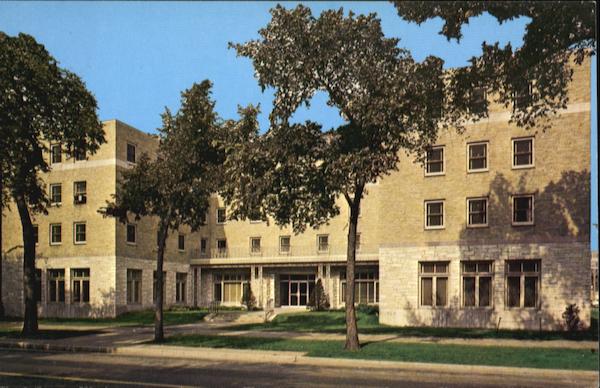
Eleanor Residence for Working Women and Students

Parkway Eleanor Club, 1550 North Dearborn Parkway Chicago Illinois
Former Eleanor Residence for Working Women
and Students
Eleanor Residence for Working Women and Students

Location: 1550 N. Dearborn Parkway, Chicago, Illinois, USA

Opened: 1898

Closed: 2001


We're often told that the loss of womyn's space is some inevitable result of "progress." The Cool Girls, we are told, don't even want these things anymore!
But by reading carefully between the lines, we see that the real story is typically one of betrayal and selling out to more powerful interests (usually money, especially moneyed males). And notice that once again, the opinions of the women most affected by these decisions are decisively ignored. That these spaces are meaningful to womyn is just not even deemed worthy of notice. And notice all the mysterious "research" showing women didn't want this residence, but they couldn't find even one woman to interview who agreed!
This particular womyn's space, the Eleanor Residence, was lost over 15 years ago, but all those themes are here.
Funny how the loss of all these "old-fashioned" women's residences over the last decades of the 20th century has paved the way for women losing spaces that would have been unthinkable just a few years ago--bathrooms, locker rooms, sports teams. And we are still being told we're out of step with the times, fuddy-duddy, hysterical, or right-wing if we object.

From the Chicago Tribune:

Door closes on an era
For 103 years, Eleanor residences provided group homes and built-in friendship for single women.
With the sale of the last one--on prime Gold Coast land--the board hopes to help even more women and girls.

October 03, 2001|By Barbara Brotman, Tribune staff writer.

Kathleen Darley walked through the lobby of the Eleanor Residence with the elegant posture of the ballet dancer she is. Spotting Susan Rodriguez, she gave her two thumbs up.
"You got it?" Rodriguez asked eagerly.
"I think so," Darley said.
Rodriguez grinned. "Oh, we've got to celebrate tonight."


Darley had just had a promising audition for her dream job, a role in the Joffrey Ballet's "Nutcracker," which she later learned that she had indeed won. And inside this dormitory-like building on the Gold Coast, she had just received one of the benefits of the Eleanor Residence: the support of other women.
For 103 years, Eleanor residences have provided inexpensive, dormitory-style housing for single women in Chicago. In its heyday in the early 1900s, Eleanor was a vast social organization. There were Eleanor banking facilities; an Eleanor League for girls; an Eleanor monthly magazine; and an Eleanor Camp in Lake Geneva.
Though originally intended for young women starting careers, the residence came to serve newly divorced and widowed women, visiting students and women re-entering the work force.
But the residences' era came to an end Sunday, with the closing of the only remaining facility, the Eleanor Residence for Working Women and Students at 1550 N. Dearborn Pkwy. Darley and
Rodriguez were among the last residents.
In June, the board of the Eleanor Women's Foundation voted to end its role as a provider of housing, and become a grant-making philanthropy. It decided to close the last residence, sell the prime Gold Coast real estate [emphasis added], and use the proceeds to support programs for women and girls.
The sale is being conducted through the real estate firm of Newcastle Limited, which is evaluating the sealed bids that have come in.
Where single women once could not sign their own names on leases, now they routinely get their own apartments, said Susan Leinwohl, the foundation's executive director and an Eleanor resident in the 1960s.
"We've maintained a fairly decent occupancy, but demand has generally been decreasing," she said. "We feel that we can provide much more service to women and girls with the money that we will receive from the sale of the building. This is such a wonderful thing; I am really excited about this."
Closing brings sadness, anger
The women who lived at the Eleanor, on the other hand, were saddened.
"You have a built-in support system here. I have friends I'll know forever," said Darley, 21, a Texan who decided to begin her dance career in Chicago rather than New York partly because of the Eleanor.
And because the Eleanor provided two meals a day--room and board was $21 a day--it freed her to devote herself to dancing. "You move into a new city, and you just don't have a lot of time and energy for cleaning house and making an apartment," she said.

"I was devastated" to hear of the closing, said Linda Keller, 37, a courtroom Spanish interpreter who lives downtown. She stayed at the Eleanor from 1997 to 1999 when she moved back to Chicago from Spain, and while there established the "Happy Table," where residents dined by candlelight and spoke only of upbeat matters.
"It was such an opportunity for women," she said. "It was unique. It was a microcosm. You gathered women of all races, walks of life, social strata and educational status, and we learned from each other."
Some of the residents were furious about the closing.
"This place is really needed," said Rodriguez, 48, a nail technician known professionally as Fergie, who moved to the Eleanor when her 26-year marriage abruptly ended.
She thinks the board members don't understand how many women make low incomes and find themselves in desperate need of a temporary place to live.
"These women all drive BMWs and Audis," she said. "I don't think they realize what it's like to be out there."
Stephanie Ponn, 28, who works in sales and fundraising for the Chicago Sinfonietta, said she felt betrayed by the Eleanor board.
"They want to give the impression that these are all professional women here," she said. "But there are vulnerable women here--a woman who came here after a divorce and was starting life over again, women who were abused, women who are getting over mental problems. They knowingly took these women in and said, `You can stay here for two years,'" and then closed the residence.
"Maybe they want to help women, but I think they've been very hypocritical with the women here."
She found an apartment, as did Rodriguez and Darley, but worries that she may have to take on an additional or different job to afford it.
The board's point of view
Leinwohl said the board made every effort to help residents find other housing. The Eleanor Residence gave them free room and board for the month of September, and allowed them to take the room's furniture if they wanted. The board gave residents and employees three months' notice, she said, and brought in an apartment rental agency to help the women find new living quarters. Women who preferred communal living were referred to the Three Arts Club, a similar facility a few blocks away. (The Three Arts Club is specifically for women artists; at present, it has no openings until January.)


The Eleanor Women's Foundation deliberately tried to screen out women who were unable to live independently, she said.
"We are not set up to handle social service type of problems," she said. "Our advertising has always been clear: We are a residence for working women and students." It was also clear, she said, that this was not a permanent housing option; after two years, women had to move out.
"People are somewhat disgruntled; change is difficult," she said. "But the Eleanor really and truly has an obligation to serve as many women in Chicago as they can. I understand those feelings, but I'm pleased we can move forward."
The Eleanor board is not abandoning women, but changing in order to serve more of them, she said.
Only 1.4 percent of philanthropic funds in Chicago go to programs specifically for women and girls, according to a 1992 survey by Chicago Women in Philanthropy; the Eleanor Women's Foundation hopes that the proceeds from the property's sale can add significantly to those funds.
"We have to be the best possible stewards of our money," Leinwohl said. "If there were a real need for this [type of housing], the YWCAs would still be in this business." The YWCA of Metropolitan Chicago closed its last residence in 1972.
Before making the decision, the foundation spent a year and a half examining the needs of the women it was serving.
"Our research tended to show that women wanted other kinds of options for housing," Leinwohl said. "They wanted their own kitchens; their own bathroom facilities; and this is a little touchy, but they wanted [to be allowed to have] men in their room."
The rule prohibiting men above the first floor was a holdover from the Eleanor Clubs' early days.
Darley, who had actually heard the Eleanor was a convent, liked it because it allowed her to wander around in her pajamas freely; her parents loved it.
The tearoom days
The Eleanor Clubs were founded in 1898 by Ina Law Robertson, a Washington state school principal who moved to Chicago to attend graduate school at the University of Chicago. She thought young working women new to the city needed help making the transition from rural to urban life. She named her organization Eleanor after Eleanor Law, a friend whose wealthy brother had willed his estate to Law and Robertson for philanthropic purposes--Robertson took "Law" as her middle name out of respect for James Law. She also liked the name Eleanor because it means "light" in Greek.
Eleanor was a way of life. In 1916, according to the book "Women Building Chicago 1790-1990, A Biographical Dictionary," the Central Eleanor Club's tearoom downtown served 58,000 people; more than 2,000 young women took classes there in gymnastics, folk dancing, millinery and English. By 1920, the club occupied nearly an entire floor in the Stevens Building in the Loop.
At one point, there were six residential Eleanor Clubs in the city. The Gold Coast building, built specifically as an Eleanor residence, opened in 1956 as the Parkway Eleanor Club.
Leinwohl lived there from 1963 to 1965, when the young women there wore gloves and pillbox hats to interviews, and began reading Betty Friedan's "The Feminine Mystique."
"I absolutely loved it," she said. "I loved it better than my college experience. I met a wider range of interesting people. . . . Oh, it was so much fun."
But she believes that by becoming a philanthropic organization, the Eleanor Women's Foundation is honoring the spirit of its founder.
"She saw a need in her time. Well, we see needs that are not being met today," she said. "We're coming full circle, but in a different direction.

Thursday, June 26, 2014

Women-only hotel floors in Denmark

Bella Skye Hotel
Women-only hotel floors

Location: Denmark

Opened: Spring 2011

Closed: Spring 2014

Well, it seems that men's rights advocates and their allies are even opposed to something as innocuous as pink hotel rooms for women travelers. The whole matter may seem rather silly on the surface, but they took it seriously enough to file a lawsuit. Which just goes to show you, even with all the problems in this world, how deeply intimidated and threatened they are about womyn's space.
Any womyn's space.

Even if it's just a bunch of corporate women travelers temporarily congregating on the same hotel floor. Even if the same men don't want or don't need large hairdryers. Even if the hotel offers "ladies style" rooms for men elsewhere. Even if up until now, no men had expressed any interest whatsoever in staying on the ladies floor.

Doesn't matter. It still must be stopped! (By the way, last time I checked, there were NO lesbian bars remaining in Denmark. But there were plenty of bars and events that continued to cater to gay men exclusively.) But never mind all that.

And never mind that this has nothing to do with the objections that 2nd-wave feminists initially raised about men-only spaces. The only reason they had any concern at all is that many of these spaces were important centers of power, where important business and political decisions were made, and women were being locked out. Otherwise, I don't know any feminists who insist of crashing all-male hunting parties or other meaningless male gatherings. But notice that the attitudes do NOT go the other way.

From CNBC:

Women-only hotel floor ruled illegal, discriminatory
Harriet Baskas, Special to CNBC


An anti-discrimination ruling by a Danish court may put a crimp in a trend toward women-only hotel floors that offer extra security along with amenities such as large hair driers, complimentary nylons and extra dress hangers.

"We had no idea this product could be remotely illegal," Allan Agerholm, CEO of the company that owns Bella Sky Hotel, told CNBC. "It is a business product we created to differentiate our hotel from others. This is a petty case that should have never been brought. It detracts from real discrimination issues happening in our society."

On Friday, a court ruled that even though the hotel had two ladies-style rooms elsewhere in the hotel bookable by men, the women's-only floor was indeed discriminatory. The hotel has opted to keep the room setups, but open them to anyone. (my emphasis)


Bella Donna room, Bella Sky Hotel
"If for some reason a male guest should find it interesting to stay there in the pink environment, they are welcome to do so," said Agerholm. (my emphasis)

When the 812-room, two-tower hotel opened in spring 2011, the 20 upgraded rooms on the secure-access "Bella Donna" floor were set aside for women only, with feminine touches and amenities ranging from large dressing mirrors to a minibar stocked with smoothies, wine and high quality chocolate.

Rooms on the Bella Donna floor have an upgrade fee of about $28, with occupancy there running slighter higher than the rest of the hotel, said Agerholm.

Shortly after the hotel opened, two men complained about the women-only floor to the Danish Board of Equal Treatment, which ruled the floor was gender discriminatory and illegal. Because the board had no authority to sanction, Bella Sky kept the Bella Donna floor intact and appealed to the Eastern High Court in Copenhagen.

While not very common, some hotels in the United States and elsewhere continue to offer women-only floors, including the Hamilton Crowne Plaza in Washington, D.C., and the Crowne Plaza in Bloomington, Minn.

"Our ladies floor, where we charge a $20 premium, is usually 85 percent occupied or sold out Monday through Thursday and is very popular with female corporate travelers," Charlie LaMont, general manager of the Crowne Plaza Bloomington, told CNBC. "Some like the amenities, but for most, it's the security of the secure-access floor," he said.

The 10 rooms on the 10th floor of the 127-room Ellis Hotel in downtown Atlanta are set aside for women. In addition to private-access entry, the rooms include upgraded amenities, slippers and use of curling iron and a flat iron.

The hotel charges an added fee of $20 for the rooms, "which are most popular with the female corporate traveler," said Tom LaVaccare, director of sales and marketing. "It's a privacy issue, not necessarily a security issue," he said, "but we're working on adding more amenities."

LaVacarre said no male customer has ever complained about being excluded but "if they wanted to be on a floor just for men, we could accommodate that." (my emphasis)

For several years, the Georgian Court Hotel in Vancouver, British Columbia, has offered 18 Orchid Rooms on a "women-preferred" floor with amenities such as curling irons, flat irons, high-powered hair driers, upgraded Aveda products, satin-padded hangers, nylons and other items at no extra charge.
 
The rooms were so popular that the hotel recently added a second floor of rooms with the same amenities, and men aren't excluded from those floors, they rarely book there, General Manager Lisa Jackson said. (my emphasis)


Saturday, January 26, 2013

La Villette

Parisian seamstresses at the
House of Worth (1907)
La Villette

Location: Paris, France

Opened: 1907

Closed: ?

It's kind of peculiar to find information about Parisian women's hotels in a Spencer, Iowa newspaper. But that's where this article showed up (though it originally ran in the New York Sun). From the Spencer Clay County News, March 21, 1907:

PARIS WOMEN'S HOTELS
          ___________

Another Home for Business Girls at
Low Prices Opened--Run at a Profit .

From the New York Sun

Another women's hotel of the cheaper sort has been opened in Paris. It is called La Villette and has been built and is to be managed by the Societe Philanthropique.

This is the society's third venture in the women's hotel line. The first was opened in 1902, with funds bequeathed by the Baroness Hirsch de Gereuth and Dr. Margolin. It was such a success that the society began a campaign for funds for the new enterprise.
Hotel at Rue Saint-Sauveur in Paris (1907)

These were provided in 1903, when Jaques Stern died, leaving 1,000,000 francs ($200,000) for the purpose, and in October, 1904, the second hotel was built in La Roquette quarter. It had seventeen large and ninety-seven small rooms. It cost 356,000 francs, or $76,200, and every room in it has been continuously occupied since it was opened, with a waiting list.

The new hotel is of about the same size and cost about the same amount. The two Hirsch endowment buildings, on the opening day of the second, sheltered 217 women and young girls working for their living, including saleswomen, clerks, governesses, and holders of small government situations. It is said that even society women without escort have found shelter there for brief periods.

A special point is made of having the hotels nicely decorated and prettily furnished so that they may be attractive to young women for other reasons besides their moderate prices. They all have ample bathing facilities--not a common thing in cheap French lodgings--and roof gardens, where boarders can enjoy themselves in fine weather.

One of the larger rooms cost at the rate of 20 cents a night; one of the smaller ones 12 cents. A bath costs 4 cents, a douche 2 cents. In the restaurant the price of portions varies from 3 to 6 cents; the fullest meal that can be made up, including soup, meat, vegetables, and sweet bread and wine, foots up just 17 cents.

Both of the older hotels are not only paying their expenses: they are making money. The society hopes in a year or so to build another one.

The Societe Philanthropique still exists, and still provides housing for a wide variety of "people in difficulty"--everyone from seniors and persons with disabilities to students and "young workers" and "mothers and children in situations of rupture." There are around 20 residences in all. 

But none of the housing today seems to be dedicated to young working women. 

Tuesday, November 27, 2012

Grace Dodge Hotel


Grace Dodge Hotel (1920s)
Grace Dodge Hotel

Location: North Capital and E Streets, Washington, DC, USA

Opened: October 1921

Closed: Hotel began admitting men as guests around 1924. Hotel demolished in 1972.

The Grace Dodge Hotel was built as a women-only hotel by the National Board of Young Women's Christian Associations. The intention was to create housing for women workers who had flocked to Washington, DC during World War I. But as it turned out, the hotel was not completed until after the war was over. 

The hotel was named after Grace Hoadley Dodge (1856-1914), who was elected as the first president of the Board in 1906. The 8-story, 376-room hotel finally opened in October 1921 under the leadership of Abby Aldrich Rockefeller (1874-1948). 

(As something of a side note, it turns out that Abby Rockefeller was a great booster of womyn's space. As the New York Times reported in 1922, "She hopes to live to see the day when every big city has a woman's hotel." She informed the Times that "If women can go down the corridor in their kimonos knowing they will not meet a man, it will add to their sense of freedom and comfort.")

John DeFerrari has written one of the more extensive descriptions of the Grace Dodge Hotel:

 WCTU members tour the Grace Dodge Hotel
(March 1922)
Designed by New York architect Duncan Candler (1873-1949), the Grace Dodge was stately and elegant but restrained in décor. It was finished in tan brick with limestone trim and featured an enormous three-story tall entrance-way with a neoclassical pediment broken by third-story windows.   In contrast with—or perhaps to complement—its other facilities that aimed to help disadvantaged young women, the Grace Dodge Hotel was conceived from the start as a for-profit enterprise, intended to be managed and operated by an entirely female staff.   It offered professional women traveling alone to the Capital a top-notch hotel experience, free from the harassment by men that they would undoubtedly suffer anywhere else. As summarized in The Washington Post,
The Grace Dodge Hotel, as it is to be called in honor of the woman who did so much for her sex, will have all the useful and attractive features that any hotel has, excepting men, and the housing committee of the "Y," of which Mrs. John D. Rockefeller, Jr., is chairman, guarantees that the staff and working force of women will be every bit as efficient and courteous as the best masculine staff could be. And the hotel has some conveniences that no other public stopping-place has offered to date.


Ad for Grace Dodge Hotel (1923)
There are special suites for mothers, with heaters for baby's milk, and cribs constructed on sanitary principles. There will be a nurse on call, to be paid for by the hour. There are valeting rooms where the woman who wants her tumbled blouse laundered in a hurry can slip in and do it herself, at the cost of a small sum for the use of the tubs and electric iron. There are shampoo basins, and the guest may wash her own hair. There are vanity parlors for those who care about their complexions, and there is to be an information service where the visitor can find out what debate is on in the House of Representatives and what the Senate is doing about that bill she is interested in....
Nevertheless, as we have often seen with women's hotels, the restaurant and lounge on the first floor were open to men. In fact, it is reported that these facilities were reserved at least as often by organized groups of men as by women (though Washington men certainly didn't lack for facilities of their own).

After just three years, the women-only policy was abandoned. When the hotel was sold in the mid-1940s, it was renamed the Dodge Hotel, which of course just further stripped it of its female origins.

It's interesting that when the hotel was still owned by the YWCA and managed by Mary A. Lindsley (1876-1949), the hotel paid much higher wages than comparable hotels in the area. Lindsley was apparently able to pull this off by running a tight ship with "efficient, by-the-book, economical operations." She ardently believed that no employees (i.e. management) should have special privileges.

But after the hotel fell into the hands of "a group of private investors," with a (male?) former manager from the Waldorf-Astoria hired to run the place," hotel service and food workers voted to strike over poor wages and working conditions, a predicament that surely would never have arisen under Mary Lindsley and the YWCA."

This isn't to say that the Grace Dodge Hotel was progressive in every way. Racial discrimination at the hotel is discussed in The Women and the Warriors (1995) by Carrie A. Foster. 

Monday, November 12, 2012

Hayden Hotel

Ad for Hayden Hotel
Phoenix Arizona Republican, August 4, 1895
Hayden Hotel

Location: Tempe, Arizona, USA

Opened/Closed: Around 1895

Most of the ladies hotels I have identified have been located in the eastern United States, especially in New York City.

This appears to be one of the exceptions. Note the above ad from an 1895 Arizona newspaper:

MRS. M. E. SPOONER, proprietress of the Hayden Hotel has a most delightful home for ladies stopping in Tempe as well as gentlemen. The only ladies hotel in Tempe.

And though I have done a little digging, I can't uncover much more than that. I did find out that Hayden is a prominent name in Tempe history--Charles Hayden is generally credited with founding the town, and the Hayden family has continued to play a leading role politically and economically since then. And though I have found references to all things Hayden, I have not found any reference to a hotel as such. Nor have I figured out who (Mrs.) M. E. Spooner might have been.

However, the old Charles Trumbull Hayden house, which was built in 1873, still stands. And it is said that for a time it functioned as a boarding house. Could this have been the old Hayden Hotel as advertised in 1895?
Hayden House today

La Casa Vieja (the old house in Spanish) was built in 1873. The original structure was a residence for Charles Trumbull Hayden and his family. The original house was a single-story row house constructed of adobe in the Sonoran style by Hayden and his Mexican American workers. Prior to 1883, the house consisted of 13 rooms located in an “L” shaped plan. The house spanned a distance of 80 feet along the Mill Avenue frontage and 120 feet along First Street. During the period of 1876-1883, a second story of adobe was built over the room at the north end of the house. In this same period, three rooms were built to create the west wing.
The Hayden Family moved from the adobe house in 1889 at which time the house began 35 years of use as a boarding house. In 1893, a frame second story was added to the west wing.

Saturday, October 13, 2012

Hotel Irvin for Women

Former Hotel Irvin (2002)
Hotel Irvin for Women

Location: 308 West 30th Street (near 8th Avenue), New York, New York, USA

Opened: 1925

Closed: Apparently ceased to be women-only in the early 1940s

A short description of the Hotel Irvin for Women can be found here:

The Hotel Irvin for Women was named for Mary M. Irvin (Mrs. Richard Irvin), president of the organization that worked for many years to create this residence. As early as 1916 the group planned a hotel "where self-supporting girls and women with small incomes could be accommodated comfortably and well at little cost." (Quoting New York Times Feb. 21,1916, p.11.)

Mary M. Irvin (1870-1918)
But it was not until 1924 that the group managed to acquire the land and begin construction here at 308 W 30th St. By that time the corporation consisted of Asher Mayer, president, and Charles H. Strong, treasurer. The hotel opened in 1925, "for exclusive occupancy by business women," with apartments "arranged in small flexible units with facilities for self-housekeeping" and rents "adjusted on a basis to meet the big demand that exists for this type of housing." (Quoting here the New York Times July 4, 1924, p. 20.)

In the early 1940s the Irvin seems to have dropped the women-only policy. They went out of business in the mid-1950s.

An article in the New York Times dated May 12, 1916 tells us more about the Irvin Hotel as it was originally envisioned. The costs for room and board were projected at $4 to $8 a week. And while there was no place for "charity" cases, there was none of the "surveillance" or restrictions so common to women's hotels either: "Each guest will be as independent as any guest of a hotel anywhere." Specifically, that meant that the women guests would be able to "go and return as they please at any hour of the night, and there will be no question of propriety as to the hour." 

In keeping with the new heteronormative definition of freedom for the New Woman, there was also an emphasis on "beau rooms" or "beau parlors" where the women would be able to "receive [male] company" with some degree of privacy. This was presumably a safer alternative to such "evils" as "frequenting cafes or walking the streets." 

In addition, the hotel was to include a "dance and assembly room," a roof garden, a "chafing dish room for little parties," a "big restaurant," a gymnasium, what was described as a "hospital" (infirmary?), and many other very nice-sounding amenities. 

The staff was to mostly women too: "The hotel clerks will be women, and the only men will be the porters and furnace men."

Obviously this over-arching vision was curtailed considerably by the time the hotel finally opened in 1924--by which time the project had apparently been taken over by men. It appears that World War I and the 1918 death of Mary M. Irvin had something to do with this. And even the limited vision that survived--the Hotel as a place "for exclusive occupancy for business women" rather than as a home for "women with small incomes"--would scarcely last a generation before the hotel went coed. 

Mary Irvin's obituary, which was published in the New York Times on June 17, 1918, gives us a sense of her broad commitments to women and children:

Mrs. Irvin had been interested in charities for forty years. At the time of her death she was President of the Samaritan Home for the Aged, one of the founders and President of the Loomis Sanitarium at Liberty, N.Y.; President of St. Mary's Free Hospital for Children, the Association of Day Nurseries, the Virginia Day Nursery, the Irene Working Girls' Club and the Virginia Working Girls' Club. Work of building the Hotel Irvin for Working Girls, of which Mrs. Irvin was President, had been held up by the war.

She was a Vice President of the Working Girls' Vacation Society, the Association of Woman Workers, the Trinity Seaside Home at Islip, L.I.; a member of the Loomis Guild, St. Christopher's Guild of St, Mary's Free Hospital for Children, the Cathedral Nursery Committee, the Manhattan Trade School Committee and the Consumers' League. She was a Governor of the Colony Club and a member of the Diocesan Auxiliary of the Cathedral of St. John the Divine and the Fresh Air Home of the Cathedral.


Friday, September 14, 2012

Seaside Boarding House for Working Women (Sea Rest)

Booardwalk and beach - Asbury Park, New Jersey (1905)
Seaside Boarding House for Working Women (Sea Rest)

Location: Heck Street between First and Second Avenues, Asbury Park, New Jersey, USA

Opened: 1874

Closed: Eventually lost in fire; not certain of date but probably in early 1900s?

Occasionally I find myself pining away for a lost womyn's space. This is one of them. The Seaside Boarding House for Working Women sounds so dreamy and romantic. If only I had a time machine....

From the New York Times, August 4, 1874:

THE SEASIDE BOARDING HOUSE FOR WORKING WOMEN.

Victorian ladies on a seaside holiday
A Philadelphia paper of yesterday says:  "About three months ago a lot of ground in Ausbury Park [sic], N. J., was donated by Mr. Bradley, of New-York, to the Women's Christian Association of this city for the purpose of erecting a boarding-house for the use of the numerous overworked female employees of our city stores and manufactories, whose slender means will not admit of a sojourn by the sea at the high rates usually charged. The lot comprises 125 feet of ocean front, extending in depth 75 feet. Upon this has been erected a handsome house, capable of accommodating from twenty-five to thirty inmates. A fine verandah extends around two sides, affording both a lake and ocean view. The rooms are furnished with the good taste to be expected from the ladies in whose hands the matter was placed. White Swiss curtains, with blue trimmings, drape the windows of the cozy little bed-rooms, iron bedsteads, hair mattresses, covered with white counterpanes, toilet tables, mirrors, chairs, and matting, complete the cool Summer furniture. Situated on the edge of a grove, it has the uncommon advantages of well shaded grounds with the cool sea breezes, while the lake within two minutes walk affords fine opportunities for rowing or sailing. The rate of board has been fixed at $3 per week, thus affording an opportunity to many a weary seamstress or saleswoman of spending her two weeks' vacation where renewed health and many happy hours may be attained period. The formal opening of the institution will take place to-morrow.

Sigh.

However, according to the Manual for visitors among the poor (1879), this place accommodated "about 100,"  so it seems there was the temptation to jam more bodies in here than originally intended.

But never mind all that. I'm going back to my fantasy, thank you very much.... 

At some point, this place later became known as Sea Rest. According to the National Women's History  Museum,

In 1874, the Young Women’s Christian Association (YWCA) started a camp for “ladies” in Asbury Park, New Jersey. Sea Rest, as it was called, was created specifically for “tired young women wearing out their lives in an almost endless drudgery for wages that admit no thought of rest or recreation.” This was marketed as a low-cost summer “resort” for a new class of women who worked outside the home. This camp predated the first Young Men’s Christian Associate (YMCA) camp by eleven years.

An extensive number of photographs can be seen of Sea Rest in the 2005 book Asbury Park. Here's one.

Sea Rest - Asbury Park, New Jersey (early 1900s)

Wednesday, September 12, 2012

Stewart's Hotel for Working Women

Stewart's Hotel for Working Women (c. 1877)
Stewart's Hotel for Working Women

Location: Fourth Avenue and 32nd Street, New York, New York, USA

Opened: April 2, 1878

Closed: May 26, 1878

This is a prime example of a very short-lived womyn's space. The paint was hardly dry (actually it was less than two months!) before it became a "regular" (i.e male-oriented) hotel. But for a place that lasted only two months, it sure generated a lot of artwork! From the CUNY library site:

Stewart's Hotel for Working Women was commissioned by the wealthy merchant, A.T. Stewart. The hotel opened in 1877 to provide safe housing for the influx of working women into the city. It was soon reopened as a regular hotel in 1878 and renamed the Park Avenue Hotel. The building was demolished in 1927.

The 1877 is actually in error.

Bag of Bones: the Sensational Grave Robbery of the Merchant Prince of Manhattan gives us the inside story. It seems that the Hotel was a major philanthropic gesture by Alexander Stewart, who started construction in January 1869. It took nine years to complete at a cost of $3.7 million. Stewart spared no luxuries, as he was apparently really committed to the idea of providing unmarried working women with a low-cost but beautiful home. And the project was certainly eagerly anticipated by working women and their feminist allies. Here is Stewart's rather interesting (if curious) commentary on the project:

That hotel will make a 1,000 working women happy and independent. If it succeeds the example will be imitated. It will be a woman's kingdom, where those of them that wish to be alone can do so. It will prove whether or not the sexes can live apart, and whether or not it will be better for them to do so, whether or not they will choose too.

Unfortunately, Stewart died in 1876 before the hotel was completed. And then Henry Hilton got his claws into it, seeing a grand opportunity to cash in. It's a fascinating history, but difficult to summarize here. Needless to say, ending the hotel's brief function as a womyn's space was justified by all kinds of lies about how women didn't want a hotel just for women, how women didn't apply for the rooms, blah blah.

And none of it was true. For example, Hilton claimed that the hotel never had more than 50 registered residents, when in fact they received over a 1,000 applications with 75 women moving in the very first day. And then there were the smug misogynist statements issued to justify his decision:

A hotel on an extensive scale for women for women is an impossibility. Women want to associate with the other sex and the restrictions imposed upon them in this house were so severe that many who would have gladly have taken advantage of its benefits declined for that reason.

In reality, none of the restrictions at Stewart's Hotel were considered real "deal breakers" for the time. 

Then there was this outrageous blathering:

Women will not be kept from the other sex. You can run a hotel for men exclusively--but for women you can't. I am not greatly surprised at the failure. But I have done my full duty in the face of a conviction of inevitable failure.

Translation: Hilton NEEDED to present the Stewart's Hotel for Working Women as a financial "failure" so he could strip it of its status as a non-profit venture and turn it into highly profitable commercial property that would benefit HIM. It's a pattern that's frequently seen in places like New York where desirable real estate is highly coveted.

There were storms of protests when Hilton closed down the Hotel, but he did it anyway. By June, the place had reopened as the (for profit) Park Avenue Hotel.

Do read some of the book, because it provides many instructive lessons in how to destroy a womyn's space.

But while the Hotel lasted, it certainly appeared to be a lovely place, judging by the illustrations. The bedrooms (one is illustrated below) appeared rather nice and cozy. But not terribly practical for full-time residents, as many lacked closets (Hilton apparently had something to do with this).  The Reception Room (also illustrated below) is where women residents were allowed to meet male visitors. And notice all the men in the foreground of the print showing off the Grand Dining Room. By contrast, the Court appearts to be all women.


Grand Dining Room, Stewart's Hotel
for Working Women (1878)

The Court, Stewart's Hotel
for Working Women (1878)


Main Entrance, Stewart's Hotel
for Working Women (1878)


Reception Room, Stewart's Hotel
for Working Women (1878)


Bedroom, Stewart's Hotel
for Working Women (1878)

Tuesday, September 11, 2012

San Francisco Girls' Union Hotel

Woman standing in the rubble
of the San Francisco earthquake
(1906)
San Francisco Girls' Union Hotel

Location: San Francisco, California, USA

Opened: 1902

Closed: Apparently destroyed by the 1906 San Francisco earthquake

I haven't been able to find out anything about this hotel apart from a 1902 article in the Clinton Morning Age announcing its opening. I think it is safe to assume that this structure was destroyed by the San Francisco earthquake and fire of 1906, as I have seen elsewhere that only one hotel survived that disaster...and this one was not it.


HOTEL FOR WOMEN ONLY

San Franciso Has One Recently
Erected by the Girls' Union
of that City.

Under the auspices of the San Francisco Girls' union a hotel exclusively for women has been erected and the members of the organization are congratulating themselves upon their new possession. The union has been in existence since 1884 and was formed for the purpose of aiding self-dependent, self-respecting girls to live in nice surroundings at a cost in accordance with their needs. The society has had a house for some time, but it is not to be compared with the new hotel. The home is self-supporting and an average of 40 wage-earning women call it home. In the hotel 80 rooms are to be rented, the price per month ranging from four dollars to six dollars. The board is $12 per month. The rooms are well furnished and commodious and each has a stationary washstand. The house is exceedingly well planned and provisions have been made for classrooms, as the union proposes to conduct classes in literature, music, sewing, typewriting and other subjects.

There is not a lot of readily available information on the San Francisco Girls' Union. For those interested in finding out more, this is a good place to start.

Monday, September 10, 2012

Junior League House for Working Women

Junior League House visible at far right
Junior League House for Working Women

Location: East 78th Street, New York New York, USA

Opened: May 1911

Closed: Became "model low-income housing" in 1931

From the New York Junior League website:

During the New York Junior League's first decade, the organization grew to more than 700 members. Its eight committees included Settlements, Hospitals and Direct Nursing, Visiting Teachers, and the Junior League's most ambitious project to date, the construction of a residential hotel at 78th Street and East End Avenue known as the Junior League House.

In an effort led by the tirelessly dedicated Dorothy Payne Whitney, the Housing Committee raised over $250,000 to build the Junior League House, created to provide safe housing, job training, and an enriching environment for working women. Construction was completed by the City and Suburban Homes Company, and the hotel opened its doors in May 1911. In 1912, women living at the hotel paid from $4 to $7 per week, which included the use of laundry and pressing rooms, sewing machines, typewriters, a library, a gymnasium, and a large ballroom, as well as the use of small private parlors, or "courting rooms."

The Bureau of Social Hygiene noted that ". . . of the 58 organizations in Manhattan providing housing accommodations solely for women, the Junior League hotel is the largest, and one of the few in which there is no discrimination against nationality or religion."

NYJL participated in the management of the hotel until 1931, when it became one of the buildings in a 1,300 apartment complex as model low-income housing. The structure is now a landmarked moderately priced apartment building, but when it was the Junior League House, it had 210 single rooms and 64 double rooms, with accommodations for 338 women.

Photo from the New York State Archives

Sunday, September 9, 2012

Berkeley Women's City Club

Berkeley Women's City Club (1930s)
                                                                                                     
Berkeley Women's City Club

Location: 2315 Durant Avenue, Berkeley, California, USA

Opened: Building completed in 1930

Closed: Has been the coed Berkeley City Club since 1962

From the Berkeley City Club website:

In 1929, Julia Morgan designed the Berkeley Women's City Club, the collective vision of its 4000 female members: Lush gardens and courtyards provided sanctuary. A library and roaring fireplace brought great friends and conversation together. An invigorating pool enlivened body and spirit. More than a building, the Women's City Club fulfilled dreams.

Today, the Berkeley City Club is a private club for both men and women, and a meeting place for Berkeley's arts and culture community. Morgan's "little castle" has been renovated and is an exciting destination hotel for architecture-lovers and a favorite venue for weddings and special occasions.
More than a building, the Berkeley City Club continues to inspire friendships, celebrate beauty and nourish dreams.

In reading further, we find out that the Berkeley Women's City Club was not just a social club, but also served as a residence for women.

If you look at some of the interior photos, you quickly realize why the boys wanted access. It's just too damn beautiful....And we can't let the womenfolk keep such inspiring space all to themselves, can we? Even though it is exceedingly rare to have such a gorgeous facility designed by a woman for women.

Berkeley Women's City Club dining room (1930s)

Berkeley Women's City Club board
Berkeley Women's City Club pool (1930s)

Open loggia off east court (1930s)

For additional information about the building, see Daniela Thompson's article at the Berkeley heritage site here.
Julia Morgan (1872-1957)
Of course, some of our more progressive Lost readers will point out that this was a space that was reserved for upper-crust women only. Needless to say, they are absolutely correct. However, when we see that even well-heeled women seemed incapable of maintaining and defending a women-only space for more than a generation or so, it certainly illustrates the limits of money and class privilege when it comes to the control of space for women and by women.
There is a fair amount of information available on Julia Morgan, who was a magnificent architect and real trailblazer for women entering the professions. Here is one place to start.

Tuesday, June 26, 2012

Woman's Hotel

Woman's Hotel (1917)

Woman's Hotel

Location: 122 Hennepin Avenue, Minneapolis, Minnesota, USA--with subsequent moves thereafter

Opened: May 1916

Closed: 1935

According to the WCA Foundation (formerly the Women's Christian Association of Minneapolis), the WCA opened their first boarding facility for women in 1874--just one year after the group's founding. They rapidly acquired other residences, and by the 1920s, more than 1,000 female boarders lived in a dozen different WCA residences.

As historian Lynn Weiner has documented, the Women's Christian Association and other organizations involved in the "boarding club movement" were created in response to a critical social need. By the turn of the century, there were over 400,000 single women working and living away from their families in America's cities. These women were effectively trapped between the desperately low "pin money" wages that were paid to them as women and high urban housing costs, especially among the "better class" boarding houses. Social reformers feared--and not without cause--that these working women would drift into prostitution or other forms of exploitation or "vice" without guidance and a structured and affordable home.

The Woman's Hotel opened in 1916--one of the first of its kind in the United States--and charged 50 cents a night to women travelers. Adult men were not permitted to cross the threshold of the Woman's Hotel. As Weiner further informs us,

More than 4,500 women and children patronized it in nine months in 1916; from 1922 through 1935, the hotel provided almost 480,000 nights of lodging to women looking for work or just passing through the city. The hotel's location changed through the years. In 1922 it moved to the eleventh floor of the St. James Hotel, 12 North Second Street, and in 1929 opened its last home at 1015 Marquette Avenue. It was discontinued in 1935.

More detail about the first Woman's Hotel (on Hennepin Avenue) is provided in this article from the Milwaukee Journal, April 21, 1919:

MINNEAPOLIS HAS HOTEL FOR WOMEN ONLY

Minneapolis is the one city in the United States west of New York that maintains a hotel for transient women. The Woman's hotel, 122 Hennepin-av, operated by the Woman's christian association, provides a room at a nominal sum. 
Matron talking to guests in lobby of Woman's Hotel (1918)

Here women come who are alone and passing through the city. Many of these do not want to go to the larger hotels. By far the greater percentage of persons staying at the "women only" hotel are those coming to the city for employment. Many are girls who come with little money and no knowledge of where they can obtain work. They are usually discovered by the traveler's aids in stations, and sent direct to the Woman's hotel. They are given a room, and are guided to employment agencies.

Women seated in the parlor of the Women's Hotel (1918)
Recently a girl seeking work went to the hotel. After two days her money was gone. She was given food and lodging. At last she confessed she had run away from a good home because she wanted to be in the city. Her family was communicated with, and her father took her home.

The Woman's hotel is one of the few hotels in the city that were judged 100 percent, according to the report of the state hotel inspection department. Each bed is in a compartment by itself. Ventilation is said to be excellent.