The women in the article below are vaguely nostalgic for the old days, but can't seem to imagine anything better (much less work towards anything better) than being a marginalized woman in a gay male bar, a straight club, or a (basically male-dominated) "queer" scene.
And notice how many women quoted below are closeted! Since I read a lot of historically related material, I wouldn't have found this surprising in a lesbian-related newspaper article from the 1970s or even the 80s. It would have been pretty unusual after that, though. Looks like those times are back.
I honestly wonder whether young lesbians are self-camouflaging now--either because they are consciously aware of some real sh** coming down the road, or out of some unconscious self-preservation reaction. Maybe they're just calling themselves "queer" so they don't get a lot of crap from hyper-aggressive, MRA-like transwomen and others who have made it taboo to call yourself lesbian. At any rate, the result is the same: Lesbians (and lesbian places) leave the public realm and start to disappear, dissipate, fade into the background, go private.
Let's put all this in historical perspective.
Lesbian bars in "the old days" often had men that were admitted--who typically either masturbated around the dance floor, sexually harassed women, provoked fights, or worse. There wasn't much done about it because these bars were almost always owned by men (in many U.S. states, women couldn't own a bar or get a liquor license before the second wave feminist movement). And a lot of these male owners were connected to mobs as well, who paid off the police, and so forth. So in reality, "including" men in lesbian bars is nothing new. It's actually very old.
For a brief time, in the initial swell of lesbian feminism, some women were able to open bars that really centered the needs of their customers. But it was a pretty short interlude as these things go. Before long, there was pressure to admit men, starting with your gay male best friend blah blah, and going from there. The argument was all nicey nice about "inclusion" and all. But frankly, the men spent more money (they make more money). So all the creepers, swingers looking for their "third", cross-dressing hetero dudes, and other similar types started coming around. Women were told it was the only fair to include all these men, who often insisted on taking over the women's bathrooms as well. And that the women were horrible bigots if they objected. Well, of course lesbian bars increasingly became magnets for @$$holes in a very short time. At best, there was just a nominal effort to police their behavior or control them, because frankly, the dudes are profitable. So just look the other way when some guy is groping a woman who has been at your bar every Friday night for the past two years. Right?
With (some) liberalizing attitudes in (some) urban areas, women found they could go elsewhere and sort of blend into the background--whether it be at a gay male or straight place. So they have.
Lesbian bars, in the marketing parlance, gave up their "unique selling point." Yes, I know they served a small marketing niche. But even small niches can be served successfully if you value high quality customer service and develop a loyal customer base. Lesbian bars clearly don't. When push comes to shove, they value the dudes with money, and pretty much gave them free rein. So the lesbians quit going. They voted with their feet, even if going through the motions of affirming "inclusivity" on the Internet. And once they quit going, what was the point of the creepers going if there was nobody to bother but other creepers?
No wonder all these young women just want to keep quiet, stay in the closet, and retreat into the woodwork elsewhere.
From the Columbia Spectator:
Last Call: Columbia's Queer Women and the End of the Lesbian Bar Era
By Malina Gulino | March 29, 2016, 10:03 PM
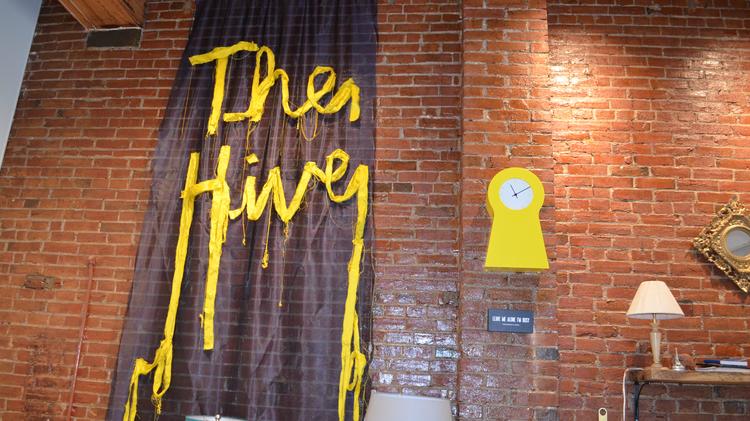
Earlier this month, the PULSE Contemporary Art Fair in Chelsea exhibited Macon Reed’s Eulogy for the Dyke Bar, a fully interactive installation modeled after lesbian bars, complete with a makeshift pool table and pink neon sign. Eulogy speaks to the current moment of anxiety in the LGBTQ community—one that puts young metropolitan queer women, among them Columbia students, at the crosshairs.
“Most queer people I know are aware that dyke bars are closing all over the place and kind of express some sense of sadness, but aren’t actually doing anything about it or going to them,” explains the New York-based Reed about her piece. “And so I just wanted to push at the head conceptually to the next stage, so that we could sit with what that would feel like.”
America’s lesbian bars are closing. As it stands currently, there are only four operating lesbian bars in New York City: Cubbyhole and Henrietta Hudson both in the West Village, Ginger’s Bar in Park Slope, and Bum Bum Bar in Woodside.
The reasons for lesbian bar closures are as complicated as lesbian identity itself, but Heather Dockray, writing for Brooklyn Based, identifies three major causes: Queer (non-heterosexual) women as a demographic are statistically poorer in a city landscape that is increasingly gentrifying, the LGBTQ community (especially women) is “assimilating” to mainstream culture and bars, and lastly, queer women are largely moving away from the label of “lesbian” entirely.
For Columbians, there are also several logistical factors at play. When it comes to finding queer woman-centric nightlife, Columbia College senior Vanessa Sauter acknowledges that even getting to the bars is an ordeal. “Especially for a Columbia student, it’s very difficult. … Distance is a huge issue, and being able to find that network—being able to get into that community—is very difficult, too,” she says.
 |
| Photos from Macon Reed's installation 'Eulogy for the Dyke Bar' |
Columbia College sophomore Sam, who has asked to use her first name because she isn’t out to her parents, agrees. She points out that it's challenging to find lesbian bars “that other people want to go to and that are close enough,” since the closest lesbian bar to Columbia is Cubbyhole in the West Village.
And then, of course, there are the legal restrictions that complicate college nightlife in general.
“I’m also not 21,” Sam admits.
Another frustrating reality that impacts queer women specifically, however, is that with only four bars catering to a queer female demographic, the experience range is limited.
“I really honestly don’t like it,” School of General Studies senior Anna Demidova says about Cubbyhole. “It doesn’t really work with my aesthetic.”
Cubbyhole is a small, crowded dive with a cash bar that students say tends to attract an older, more affluent clientele.
“Cubbyhole has been around for a long time, and it’s in a very well-off area, so it tends to attract more like: lesbian, lives in a house, has a good job, et cetera,” explains Anne, a former Spectator staffer and Barnard junior who has asked to use only her first name because she’s not publicly out.
Sauter seconds this evaluation of Cubbyhole.
Unlike many lesbians even one generation ago, Demidova feels more or less comfortable in ostensibly heterosexual nightlife spaces. “For the purposes of partying, it doesn’t really matter,” Demidova shrugs. Although she adds, “In terms of socializing and catching up with people I know already, I would rather probably go to queer events.”
However, when it comes to queer events and spaces, there is always inevitably an element of politics at play.
Out of everyone I interviewed, only Demidova identified herself primarily as a lesbian; everyone else elected to use the term “queer,” a term that reflects gender or sexual nonconformity more broadly. For Demidova, the difference between “queer” and “lesbian” is mostly a matter of the general population’s familiarity with the terms.
“At work, if I’m talking about what I’m going to do on the weekend, if I tell someone I'm queer, they’re like, ‘So what is that? What does that mean?’” she explains. “If I tell them I’m a lesbian, they’re like ‘Oh, all right. I get it.’”
But among today’s LGBTQ youth, the popularity of “queer”—a term that was once a homophobic slur—as an identity label is rapidly increasing. For Anne, that means: “I date anything except cis men.”
Cis, or cisgender, refers to individuals whose gender identity corresponds to the sex they were assigned at birth. The language Anne uses to identify herself reveals both her time and place in queer history. In other words, the popularity of terms like “queer” and “cisgender” is relatively new and much more prominent among millennials.
This growth in the language of queer identities both reflects and impacts the changing ways in which queer people, particularly queer people who associate or have associated with womanhood in some capacity, now come together.
“We have had historically a lesbian community, and what’s come up now is a transition into queerness,” Sauter explains. “I think that there’s sort of an expansion of identities, an expansion of experiences. And at the same time, it’s causing a lot of conflict about where we actually belong and how we actually come together.”
This intergenerational and inter-identity conflicts prove major concerns for Reed in her Eulogy for the Dyke Bar installation, which she paired with four days of supplementary programming including a critical panel and a trivia night.
“There’s so much fighting between generations around gender and experience and queerness,” Reed bemoans.“I felt like instead of trying to make a specific political platform, that if I could bring people into a space to just listen to each other, that it would kind of generate a sense of healing and collective experience.”
“I definitely hear some from older queers pretty often that they’re amazed by a lot of the work that young queers have done, and also they’re really sad to see how we’re fighting each other all the time,” she elaborates.
And for all the generational disagreements about gender identity, second-wave feminism, and the term “lesbian,” Columbia’s queer students speak highly of their predecessors and the work they did to create and protect lesbian-centric spaces.
“The former generation went through an incredible amount of violence so that queer women of our generation [can] enjoy the kind of freedom that we have now,” Sauter says. “The loss of these bars is a loss to a site that has historically been so empowering to the community. It’s a tragedy.”
“Whenever you enter that kind of space … you’re at this intersection in a present that is much more accepting to certain identities, but you’re literally standing at the place where that change took place many years ago,” Anne agrees. “It’s honestly just a feeling of gratitude that we can be ‘out and proud,’ more or less, in this space.”
I ask Reed, who is currently 34, how long she’s been going to lesbian bars. She laughs and admits that even she wasn’t hugely involved in the spaces she depicts. “I’ve never been a huge dyke bar-goer. I think that those spaces were already starting to decline as I was coming [of age].”
“Part of this is honestly looking at these spaces and realizing that they’re going out before I’ve had the chance to really, really understand and experience them,” Reed explains. “The generation under me will probably not have much of a sense of what those spaces were like at all.”
For Sam, this disconnect from the history of lesbian bars is painfully immediate. “I want to go to them, but I feel like they might close by the time I’m 21,” she says.
Sam says she is concerned about the difficulty of finding like-minded people in a largely heteronormative world. I wonder out loud about how a queer woman might find her peers without established spaces like bars.
She is not optimistic. “You basically don’t,” she sighs. “In a university setting, there are queer clubs, but outside of that, I don’t see too many ways.”
And while Sam is involved with queer groups at Columbia, she certainly has her qualms with the queer spaces on campus. She thinks that existing resources, like the Stephen Donaldson Lounge, Columbia’s LGBTQ lounge in the basement of Furnald Hall, are inadequate.
“The gay lounge at Columbia is a closet, and we definitely need more than a closet,” she points out.
Sauter expresses concern that the way people communicate in student queer groups—which are in many respects the younger generation’s experiments in creating more inclusive queer spaces—is difficult to access.
“I think that what’s happening in the queer clubs on campus, that are supposed to be open to anyone who identifies or has some sort of experience with queerness, is that we are continuing to use a jargon that is very impenetrable to people just coming in,” she says.
This vocabulary, like the terms “queer” and “cisgender” defined earlier, reflects the rapidly changing ways in which LGBTQ youth are conceiving of their identities. And in that regard, the states of Columbia’s and Barnard’s queer student groups might predict the future of queer identity in New York.
“Barnard used to have a club on their campus that was specifically for lesbians; I think that lesbian is literally in the name of the club,” Sauter relates. “And then, like I said, this sort of solid claim to lesbianism slowly started to dissipate.”
But Reed remains confident in a brighter future for queer identities. “I just trust that queers will do the work to arrive at the language that feels the most right for people,” she says, “we haven't found it all yet, so it's difficult to organize spaces around identities that are in flux.”
In the face of a changing queer geography in New York, female-focused or -friendly queer dance nights, most found in Brooklyn, are growing in popularity among queer millennials. Anne, Demidova, and Sauter all describe the kinds of parties they enjoy as more attuned to their interests than the traditional lesbian bar.
“The parties in Brooklyn tend to attract younger 20-somethings who can be a lot more versatile in the way they express themselves and the way that they live and their professions,” Anne continues.
As perhaps might be expected, word of mouth about these parties spreads mostly via the Internet. For this generation of queer youth, the Internet is forming a huge role in how they shape and navigate their identities.
Reed recalls a moment from the critical panel she organized for Eulogy for the Dyke Bar concerning these new modes of communication. “Shelly Weiss talked a lot about how she mostly only went to dyke bars because she was doing political organizing in them. You’d have a conversation during the day; it wasn’t only about the loud dance party. That is something that maybe you could say is now happening … on the Internet in different forums.”
Are today’s queer youth using the Internet for the revolution and the Stonewall Inn for their downtime? Very possibly, but even this, Sauter regrets, feels like an incomplete experience; for her, having a physical space to rely on for companionship and a sense of home is crucial.
“It’s hard to be on a schedule and really feel like you do need a community. There’s something to be said about just knowing that there’s a place you can go to and be surrounded by people who are like minded,” she explains. “And I think Cubby[hole], to a certain extent, is that.”
The importance of having a fixed space focused on queer women—whatever it means be queer and to be a woman at this historical moment—is about more than community in the abstract political sense for Sauter; it’s also about more mundane sociability.
She compares the need for lesbian (or queer feminine spectrum) bars to sports bars, an institution that seems to be doing all right even in the age of the Internet. “I [might] go to a sports bar because I like sports and I like to drink beer and I like to hang out with my bros or whatever,” Sauter describes. “You want to find a space with like-minded people. And if there is a space with like-minded people, you’re more likely to go there.
In some senses, these spaces are easier to create in the “laboratory” of the liberal arts college than in the hectic and ruthlessly capitalist landscape of Manhattan. Sauter recalls a trip to Vassar College several months ago.
“I went to a ‘quegger’— a queer kegger—that was exclusively for queer women,” she recounts. “It was a senior house on campus that was full—I mean literally full; there were people waiting outside to get in—of queer women that just wanted to be with each other.”
Whatever the future form of queer female and/or feminine spectrum spaces is, Sauter insists that this future must exist.
“This question that we have of, should we have these spaces?—why aren’t we doing it?” she asks. “I think it’s clear that we do need these spaces.”