Showing posts sorted by relevance for query Chicago. Sort by date Show all posts

Monday, May 2, 2011

Star Gaze

Star Gaze
Star Gaze (or Stargaze)

Location: 5419 North Clark Street, Chicago, Illinois, USA

Opened: 1998

Closed: January 1, 2010

Star Gaze got off to an illustrious start, as it was voted "Best New Business of 1999" by the Chicago Gay and Lesbian Chamber.

By 2006, Star Gaze had been inducted into the Chicago Gay and Lesbian Hall of Fame. Owners Mamie Lake and Dustin Fermin, it was said, "seem never to have said no to a request for support, whether it was to hold a fund-raiser at the bar or to assist in a personal crisis. They have walked with many of their customers though whatever was occurring in their lives and have always lent a listening ear and an offer to help." Among the organizations they had supported over the years were Test Positive Aware Network (TPAN), the Royal Imperial Sovereign Barony of the Windy City, and the comedy group Hysterical Women. Star Gaze was also the annual sponsor for the Lesbian Community Cancer Project's "Coming Out Against Cancer" benefit and other fundraisers for that organization. It also sponsored events for POW-WOW (Performers or Writers for Women on Women's Issues), Chicago Black Lesbians and Gays, the Literary Exchange, and Gerber/Hart Library.

And that's not going into Star Gaze's league sponsorship of three Chicago Metropolitan Sports Association teams in softball, basketball, and football.

Here's how A Field Guide to Gay & Lesbian Chicago described the Star Gaze that same year (2006):

The fact that Star Gaze posts flyers supporting women in labor unions attests to their blue-collar lesbian leanings. Not every dyke who comes to Star Gaze can route your drain or calibrate your brakes, although if you like that kind of gal, you will not be disappointed.  As one of the few nearly exclusively lesbian bars in the city, Star Gaze is popular with local lesbians who want to grab a beer and a pool game in a friendly, casual environment. Friday nights feature salsa music and dancing, and the Latina butches and femmes come dressed to the nines. On Saturday nights, the DJ spins a hodgepodge of music to shake your hips too.

By August 2009, the press was reporting that Star Gaze was in trouble. Though some snobs dissed it for its supposed butches-singing-karaoke reputation, it was still recognized that Start Gaze was Chicago's "only option for lesbian-catered nightlife in a male saturated gay scene." Rumors started that it was soon to be turned into a sports bar.

And then, by the end of New Years Eve, the Star Gaze was gone. As Rex W. Huppke reported in the Chicago Tribune, times finally caught up with Chicago's last full-time lesbian bar:

Mamie Lake was away from her Andersonville bar and social hub for Chicago's lesbian community for a total of only 14 days from the day it opened in 1998 to last call in the wee hours of this new year.

 "I opened the bar knowing there was a need for it," said Lake, 62. "It went big time. We had people moving into the neighborhood because of the bar. It was like a gay Mayberry."

For more than a decade, the bar — Star Gaze — had been an icon in the gay community, so much so that many gay women still can't believe it's gone. It was, by many accounts, the last full-time lesbian bar in Chicago.

The economy contributed mightily to Lake's decision to close, but so did shifts in the way gay women socialize. As public acceptance of homosexuality has grown, women feel more at ease gathering in places besides bars.

"There are lesbian book groups and other kinds of social spaces now where people can find each other," said Jennifer Brier, associate professor of history and gender and women's studies at the University of Illinois at Chicago.

Amy Maggio, a longtime Chicago gay and lesbian activist, agreed that there are other options.

"Maybe 20 years ago, when people were not as out and about, there were a number of lesbian bars in Chicago," she said. "It was one of the only ways to gather. I think now there are so many different opportunities and so much more openness in society that the bars aren't as necessary as they once were."

Still, some feel the loss of Star Gaze will leave a significant void, particularly for women new to the city or those just embracing their sexuality.

"For a young queer woman coming out or just arriving here, someone looking for community where they feel comfortable, I don't know where that place is going to be anymore or where that one bar is," said Christina Santiago, manager of programming for the Lesbian Community Care Project at the Howard Brown Health Center in Lakeview. "This is a really big loss for Chicago's lesbian community."

For gay men, socializing has long been — and continues to be — centered on the bar scene. That's evidenced in Chicago by the numerous nightspots that line Halsted Street in the swath of Lakeview known as Boystown.

Just as the vultures come out when there's road kill, so the apologists come out after a womyn's space dies. Predictably, we must dismiss the old-fashioned lesbian bar as hideously hidebound and sing the praises of the Guerilla Girl Bar people and their bimonthly "take overs" of straight bars--for one stinking night. Like being "hobo" (homeless and poor?) is really a cool and groovy thing! (At least it's good enough for lesbians.) You just need to free your minds, girls! And don't worry your pretty heads about who's going to sponsor the women's softball team or the next Lesbian Community Cancer Project fundraiser! Not a big deal! Journalist Heather Shouse is in charge of the mandatory post-mortem this time.

Photo: The Star Gaze

Monday, October 24, 2011

Rose-El-Inn/Roselle Inn


Corner of Clark and Division Streets today
Rose-El-Inn/Roselle Inn

Location: 1251 North Clark Street (near West Division Street), Chicago, Illinois, USA

Opened: After 1933

Closed: Ordered closed December 24, 1934/ closed early 1935

From Out and Proud in Chicago:

After the repeal of Prohibition in 1933, the first bars catering exclusively to lesbians and gay men opened in Chicago. Among the best known were Waldman's, a gay male bar run by a married Jewish couple on North Michigan Avenue near East Randolph Street, and the Rose-El-Inn, a lesbian bar on North Clark Street near West Division Street.

And that is all I've been able to uncover about the Rose-El-Inn. I know that this general area continues to be a center of Chicago nightlife--and historically has been associated with much of Chicago's gay nightlife--but that's about it.

Update January 2012: Ah HAH! It appears there is an alternative spelling for this place: ROSELLE INN. We find additional information under this spelling at the Chicago History Museum blog:

Although 1933 marked the end of Prohibition, the Pansy Craze continued for almost another decade. But even as speakeasies were allowed to reclaim their status as bars, many queer–friendly spaces were shut down. The Ballyhoo Café, Dill Pickle Club, and two establishments frequented by lesbians, the Twelve Thirty Club and Roselle Inn, all closed in the mid-1930s. In October 1935, the Cabin Inn and the De Luxe Café were raided by the Chicago Police, who insisted that the drag queens “Put on pants or go to jail.” By the time Chicago entered the 1940s, the congeniality of Prohibition had past: a sharp line had been drawn between gay and lesbian bars and straight establishments.

Chad C. Heap in his book Slumming: Sexual and Racial Encounters in American Nightlife (1885-1940) further tells us that this nightlife "clean up" was launched by Mayor Edward J. Kelly in December 1934, and that by early 1935 "pansy" and lesbian entertainment had been virtually eradicated from the city's North Side:

Lesbian nightlife also suffered a major setback when two nightspots popular with both mannish women and heterosexuals--The Twelve-Thirty Club and the Roselle Inn--were shut down as part of the mayor's attack on "night clubs catering to women who prefer men's attire." Calling these cabarets "a disgrace to any city," Mayor Kelly vowed to purge Chicago of "every joint of such character" and announced that he would insist that the city council pass "an ordinance forbidding the impersonation of one sex by the opposite sex on any stage or place of amusement in the city of Chicago."

Also see the November 2005 article by Lucinda Fleeson on the "Gay 30s" in Chicago for a fascinating glimpse at gay and lesbian life during this time period.

Just to further complicate the naming issues: this place is referred to as the Roselle CLUB here (we're also informed that it was run by a woman named Eleanor Shelby). Or even as the Roselle ASSOCIATES CLUB here. Or even as just THE ROSELLE here. How about CLUB ROSAL as we we see it here? So pick a card, any card....

Photo: Corner of Clark and Division Streets today. "Much of Chicago's nightlife, including the Rush St. district and many bars and nightclubs are located close to the station." The station opened in 1943.

Tuesday, May 10, 2016

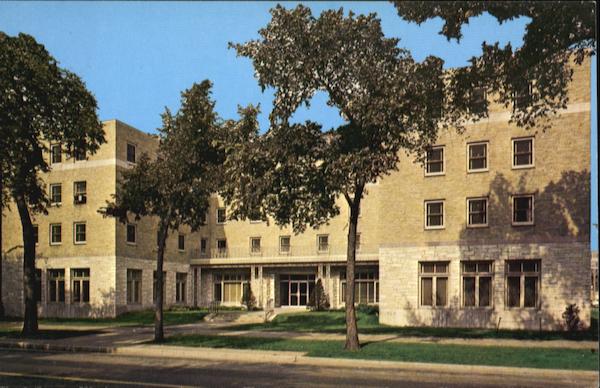
Eleanor Residence for Working Women and Students

Parkway Eleanor Club, 1550 North Dearborn Parkway Chicago Illinois
Former Eleanor Residence for Working Women
and Students
Eleanor Residence for Working Women and Students

Location: 1550 N. Dearborn Parkway, Chicago, Illinois, USA

Opened: 1898

Closed: 2001


We're often told that the loss of womyn's space is some inevitable result of "progress." The Cool Girls, we are told, don't even want these things anymore!
But by reading carefully between the lines, we see that the real story is typically one of betrayal and selling out to more powerful interests (usually money, especially moneyed males). And notice that once again, the opinions of the women most affected by these decisions are decisively ignored. That these spaces are meaningful to womyn is just not even deemed worthy of notice. And notice all the mysterious "research" showing women didn't want this residence, but they couldn't find even one woman to interview who agreed!
This particular womyn's space, the Eleanor Residence, was lost over 15 years ago, but all those themes are here.
Funny how the loss of all these "old-fashioned" women's residences over the last decades of the 20th century has paved the way for women losing spaces that would have been unthinkable just a few years ago--bathrooms, locker rooms, sports teams. And we are still being told we're out of step with the times, fuddy-duddy, hysterical, or right-wing if we object.

From the Chicago Tribune:

Door closes on an era
For 103 years, Eleanor residences provided group homes and built-in friendship for single women.
With the sale of the last one--on prime Gold Coast land--the board hopes to help even more women and girls.

October 03, 2001|By Barbara Brotman, Tribune staff writer.

Kathleen Darley walked through the lobby of the Eleanor Residence with the elegant posture of the ballet dancer she is. Spotting Susan Rodriguez, she gave her two thumbs up.
"You got it?" Rodriguez asked eagerly.
"I think so," Darley said.
Rodriguez grinned. "Oh, we've got to celebrate tonight."


Darley had just had a promising audition for her dream job, a role in the Joffrey Ballet's "Nutcracker," which she later learned that she had indeed won. And inside this dormitory-like building on the Gold Coast, she had just received one of the benefits of the Eleanor Residence: the support of other women.
For 103 years, Eleanor residences have provided inexpensive, dormitory-style housing for single women in Chicago. In its heyday in the early 1900s, Eleanor was a vast social organization. There were Eleanor banking facilities; an Eleanor League for girls; an Eleanor monthly magazine; and an Eleanor Camp in Lake Geneva.
Though originally intended for young women starting careers, the residence came to serve newly divorced and widowed women, visiting students and women re-entering the work force.
But the residences' era came to an end Sunday, with the closing of the only remaining facility, the Eleanor Residence for Working Women and Students at 1550 N. Dearborn Pkwy. Darley and
Rodriguez were among the last residents.
In June, the board of the Eleanor Women's Foundation voted to end its role as a provider of housing, and become a grant-making philanthropy. It decided to close the last residence, sell the prime Gold Coast real estate [emphasis added], and use the proceeds to support programs for women and girls.
The sale is being conducted through the real estate firm of Newcastle Limited, which is evaluating the sealed bids that have come in.
Where single women once could not sign their own names on leases, now they routinely get their own apartments, said Susan Leinwohl, the foundation's executive director and an Eleanor resident in the 1960s.
"We've maintained a fairly decent occupancy, but demand has generally been decreasing," she said. "We feel that we can provide much more service to women and girls with the money that we will receive from the sale of the building. This is such a wonderful thing; I am really excited about this."
Closing brings sadness, anger
The women who lived at the Eleanor, on the other hand, were saddened.
"You have a built-in support system here. I have friends I'll know forever," said Darley, 21, a Texan who decided to begin her dance career in Chicago rather than New York partly because of the Eleanor.
And because the Eleanor provided two meals a day--room and board was $21 a day--it freed her to devote herself to dancing. "You move into a new city, and you just don't have a lot of time and energy for cleaning house and making an apartment," she said.

"I was devastated" to hear of the closing, said Linda Keller, 37, a courtroom Spanish interpreter who lives downtown. She stayed at the Eleanor from 1997 to 1999 when she moved back to Chicago from Spain, and while there established the "Happy Table," where residents dined by candlelight and spoke only of upbeat matters.
"It was such an opportunity for women," she said. "It was unique. It was a microcosm. You gathered women of all races, walks of life, social strata and educational status, and we learned from each other."
Some of the residents were furious about the closing.
"This place is really needed," said Rodriguez, 48, a nail technician known professionally as Fergie, who moved to the Eleanor when her 26-year marriage abruptly ended.
She thinks the board members don't understand how many women make low incomes and find themselves in desperate need of a temporary place to live.
"These women all drive BMWs and Audis," she said. "I don't think they realize what it's like to be out there."
Stephanie Ponn, 28, who works in sales and fundraising for the Chicago Sinfonietta, said she felt betrayed by the Eleanor board.
"They want to give the impression that these are all professional women here," she said. "But there are vulnerable women here--a woman who came here after a divorce and was starting life over again, women who were abused, women who are getting over mental problems. They knowingly took these women in and said, `You can stay here for two years,'" and then closed the residence.
"Maybe they want to help women, but I think they've been very hypocritical with the women here."
She found an apartment, as did Rodriguez and Darley, but worries that she may have to take on an additional or different job to afford it.
The board's point of view
Leinwohl said the board made every effort to help residents find other housing. The Eleanor Residence gave them free room and board for the month of September, and allowed them to take the room's furniture if they wanted. The board gave residents and employees three months' notice, she said, and brought in an apartment rental agency to help the women find new living quarters. Women who preferred communal living were referred to the Three Arts Club, a similar facility a few blocks away. (The Three Arts Club is specifically for women artists; at present, it has no openings until January.)


The Eleanor Women's Foundation deliberately tried to screen out women who were unable to live independently, she said.
"We are not set up to handle social service type of problems," she said. "Our advertising has always been clear: We are a residence for working women and students." It was also clear, she said, that this was not a permanent housing option; after two years, women had to move out.
"People are somewhat disgruntled; change is difficult," she said. "But the Eleanor really and truly has an obligation to serve as many women in Chicago as they can. I understand those feelings, but I'm pleased we can move forward."
The Eleanor board is not abandoning women, but changing in order to serve more of them, she said.
Only 1.4 percent of philanthropic funds in Chicago go to programs specifically for women and girls, according to a 1992 survey by Chicago Women in Philanthropy; the Eleanor Women's Foundation hopes that the proceeds from the property's sale can add significantly to those funds.
"We have to be the best possible stewards of our money," Leinwohl said. "If there were a real need for this [type of housing], the YWCAs would still be in this business." The YWCA of Metropolitan Chicago closed its last residence in 1972.
Before making the decision, the foundation spent a year and a half examining the needs of the women it was serving.
"Our research tended to show that women wanted other kinds of options for housing," Leinwohl said. "They wanted their own kitchens; their own bathroom facilities; and this is a little touchy, but they wanted [to be allowed to have] men in their room."
The rule prohibiting men above the first floor was a holdover from the Eleanor Clubs' early days.
Darley, who had actually heard the Eleanor was a convent, liked it because it allowed her to wander around in her pajamas freely; her parents loved it.
The tearoom days
The Eleanor Clubs were founded in 1898 by Ina Law Robertson, a Washington state school principal who moved to Chicago to attend graduate school at the University of Chicago. She thought young working women new to the city needed help making the transition from rural to urban life. She named her organization Eleanor after Eleanor Law, a friend whose wealthy brother had willed his estate to Law and Robertson for philanthropic purposes--Robertson took "Law" as her middle name out of respect for James Law. She also liked the name Eleanor because it means "light" in Greek.
Eleanor was a way of life. In 1916, according to the book "Women Building Chicago 1790-1990, A Biographical Dictionary," the Central Eleanor Club's tearoom downtown served 58,000 people; more than 2,000 young women took classes there in gymnastics, folk dancing, millinery and English. By 1920, the club occupied nearly an entire floor in the Stevens Building in the Loop.
At one point, there were six residential Eleanor Clubs in the city. The Gold Coast building, built specifically as an Eleanor residence, opened in 1956 as the Parkway Eleanor Club.
Leinwohl lived there from 1963 to 1965, when the young women there wore gloves and pillbox hats to interviews, and began reading Betty Friedan's "The Feminine Mystique."
"I absolutely loved it," she said. "I loved it better than my college experience. I met a wider range of interesting people. . . . Oh, it was so much fun."
But she believes that by becoming a philanthropic organization, the Eleanor Women's Foundation is honoring the spirit of its founder.
"She saw a need in her time. Well, we see needs that are not being met today," she said. "We're coming full circle, but in a different direction.

Sunday, January 8, 2012

The Twelve-Thirty Club

1230 North Clybourn today
The Twelve-Thirty Club

Location: 1230 North Clybourn Avenue, Chicago, Illinois, USA

Opened: 1933, perhaps earlier?

Closed: Ordered closed December 27, 1934/gone by early 1935

Sometimes called the 1230, the Twelve-Thirty Club is usually mentioned in the same breath with the Roselle Inn. Both were Chicago "women's cross-dressing clubs" or lesbian bars which were closed on the same day by mayoral decree. From the Chicago History Museum blog:

Although 1933 marked the end of Prohibition, the Pansy Craze continued for almost another decade. But even as speakeasies were allowed to reclaim their status as bars, many queer–friendly spaces were shut down. The Ballyhoo Café, Dill Pickle Club, and two establishments frequented by lesbians, the Twelve Thirty Club and Roselle Inn, all closed in the mid-1930s. In October 1935, the Cabin Inn and the De Luxe Café were raided by the Chicago Police, who insisted that the drag queens “Put on pants or go to jail.” By the time Chicago entered the 1940s, the congeniality of Prohibition had past: a sharp line had been drawn between gay and lesbian bars and straight establishments.

Once again, both clubs are mentioned here:

After 1920 women who occasionally wore men's clothing and those who passed as men began to socialize more openly in cafes and night clubs. In Chicago two night clubs, the Roselle Club, run by Eleanor Shelly, and the Twelve-thirty Club, run by Becky Blumfield, were closed by the police during the 1930s because "women in male attire were nightly patrons of the places". Many of the couples who frequented these clubs had been married to each other by a black minister on Chicago's South Side.

And also in this article on Chicago's "Gay 30s" by Lucinda Fleeson:

Still, reformers demanded that Mayor Edward J. Kelly clean up nightlife, and they campaigned against strippers and female impersonators. Early in 1935, police padlocked the K-9 Club and the Ballyhoo. Two lesbian cafés, the Twelve-Thirty club, at 1230 Clybourn Avenue, and the Roselle Inn, at 1251 North Clark Street, were shut. In October 1935, police raided two State Street nightspots, the Cabin Inn and the De Luxe Cafe. "Put on pants or go to jail," police ordered the drag queens. For a while the black-and-tan cafés were allowed to continue their drag shows, but then they, too, were shut down. Police raided the Halloween Balls at the Coliseum. By 1935 Mayor Kelly had eliminated gay nightlife.

 Lastly, there is this reference:

1230 was a women's cross-dressing club in the early 20th century.  it was one of three clubs chicago mayor ed kelly ordered closed on december 27, 1934.

Not surprisingly, the Twelve-Thirty's twin sister, the Roselle Inn, was one of the other clubs cited in that shut down order.

As can be seen in the photo above, all physical remains of the Twelve-Thirty Club have been obliterated.

Wednesday, November 16, 2011

Palm Gardens

North Avenue, Chicago (1964)
Palm Gardens

Location: North Avenue, Chicago, Illinois, USA

Opened/Closed: Late 50s/early 60s, and probably open long before that

The Palm Gardens seems to be one of those bars that came to be a lesbian gathering space more or less by happenstance.

The only reference I have found to the Palm Gardens being a dyke hangout is a 1999 article in the Windy City Times. In this article, Sukie de la Croix interviewed a woman who was then 64 years of age regarding her memories of various Chicago lesbian bars in the 1950s. This is what she said about the Palm Gardens:

"In the middle of that bar ... a straight German guy who owned that bar ... in the middle of it, on the inside of the bar was an organ, and he used to play that organ all the time, and he must have had a lost love, really, because he used to sing the song, ... he couldn´t sing ... but this song held so much emotion in it, and it was called "I Laughed At Love." I´ll never forget that as long as I live. It was a real bright bar, it wasn´t dark like bars are, it was very bright, like German bars are bright. You went in there to drink and all these big bulldykes were in there. Again I was afraid, but I met a lot of the people in there and I met this guy who was very gentle, very, very nice. And whatever went on, he didn´t care. It´s not that he didn´t care, he let it go. It was one of the best bars I´ve been in. Looking back on it, I didn´t know it then. That guy really threw his whole heart in there. Everybody that went in there was like his kid, it was just wonderful. But I was young and to me it was a very rough bar. I can´t go rough."

The unnamed woman claims that this establishment was on North Avenue, but I'm having trouble finding independent verification of that--even though there is generally a fair amount of information on various Chicago eating and drinking establishments, even those of a certain vintage.

One POSSIBLE reference to this place MIGHT have been from 1911, in a report on Chicago area prostitution:

Bete solicited in front of palm garden on North avenue; said her father worked for street department, and don't give her any money or clothes. She goes with fellows for fifty cents; knows of no place to go except up the track near Division street. She said she was 17 years old. Speaks poor English. Has been in country five years.

Though lesbians and prostitutes have been linked historically, this still seems something of a long shot. (I can't help but wonder whatever happened to Bete though....)

However, we do find many other places in Chicago with similar names that were not on North Avenue.

The Lone Star Saloon and Palm Garden (1896-1903), State and Harrison Streets: This place was obviously out of business long before our unnamed lesbian came on the scene. This particular stablishment was owned and operated was managed by one Mickey Finn, of "Mickey Finn" fame. Yes, he was the one who was infamous for slipping drugs into the drinks of his patrons, robbing them, and then dumping them in alleyways to sleep it off.

Palm Gardens, Oakwood Boulevard: This was around in the early 1950s.


Gerri's Palm Tavern (1941)

Palm Garden, 97th and Cicero: This was operated by Lydia Valencik and her husband, also in the 1950s.

Madison Palm Garden matchbook
Gerri's Palm Tavern, 446 East 47th Street (1931-2006): This historic watering hole was located in the Bronzeville area, and was closely associated with Chicago's Black Renaissance and jazz.

And finally, Madison's Palm Garden, 60 West Madison Street.

No doubt, I missed a few other variations as well.  

Photo: North Avenue in Chicago, 1964; Gerri's Palm Tavern; Madison Palm Garden matchbook

Saturday, March 3, 2012

Augie & C.K.'s

3726 North Broadway today
Augie & C.K.'s

Location: 3726 North Broadway, Chicago, Illinois, USA

Opened: September 1979

Closed: 1980s

Augie's and C.K.'s were once separate Chicago lesbian bars that later merged into one. According to Sukie de la Croix, C.K.'s first opened at 1425 West Diversey around August 1974, but apparently moved to 2417 North Milwaukee by January 1979. Augie's also opened in 1974 at 3729 North Halstead.

Sukie also interviews two women--Joyce and Maria--about their memories of these places. We first hear from Joyce and her memories of Augie & CK's, which, as noted above, opened in September 1979:

"I used to go to CK and Augie´s, but I would get there very late in the evening. I worked in a place where we wore long black evening gowns and I would be in such a hurry to get to CK and Augie´s that I wouldn´t even change out of my gown. I´d hop in a cab and get down there half an hour, or sometimes 15 minutes, before they were going to close, and they´d still charge me a cover charge. Finally, after a while, I stopped going, because usually at that hour the gals that were in there were pretty well hooked up, and if you saw somebody really together you were afraid to go over and say anything to them, unless you knew them, or unless you knew someone who could introduce you. Women´s bars are not easy to get acquainted, you´re liable to get in a big fight."

Maria informs us that C.K.'s was the first gay bar she ever visited. We also hear about the butch-femme scene that still existed there, even in the mid 1970s:

"CK´s on Diversey, and it was before CK and Augie were together. I have a strong memory of walking into the bar. At that time, which I think was 䚚, there was a short period when you could drink at 19. They changed the law, and I was in that age group. So the first time I walked into CK´s I was alone. I had found out about the bar from a friend of mine in junior college. I walked into the bar and I was very nervous, and a woman at the door took a step back and she looked me up and down and she said, ´Well, what are you, a butch or a femme?´ And all I could say without losing a beat was, ´Well, I´m 19.´ And she put her arm around me, patted my back and said in a really patronizing way, ´Maybe next year when you´re older, you´ll have to decide.´ I never did decide. But she said that within earshot of the other women, so she was using me to make a joke. The other women were her audience. I later learned that the woman tended bar there and her style was to be very sarcastic. After a while people liked her humor, but if you were a stranger and walked in, it was more alienating than comforting. Her name was Phyllis."

And here are more memories from Maria:

"I was first introduced to that bar by a classmate; Judy was her name. Judy wore a black T—shirt to school with two women on it, and it was the first time I saw a T—shirt of that kind. It was clearly two women, I don´t think they were kissing but it was an outline of two women on her T—shirt and it was from Augie´s bar on Halsted. That was before I went to Augie´s.

"What I would like to say is that the thing about Augie´s and CK´s was the bars were small. At that time, women didn´t go out as much, so if you went out you were bound to run into the people you knew, because everyone was going to the same places. So there were groups of women who knew each other and there was a feeling of comfort about that, an extra closeness that I don´t see in the bars now. Some of it had to do with the technology; there weren´t videos at the time so there was a lot more conversation.

"At Augie´s there was a woman named Ellen who used to sing and play guitar there. She would change the names of songs. You have to remember I was 19 or 20, and this was the first time I heard a woman singing Neil Diamond´s ´Solitary Man,´ and she would change the name to ´I´ll be what I am, a solitary woman.´"

As it turns out, C.K.'s also played a pivotal political role in Chicago's gay and lesbian history--though not necessarily for right and honorable reasons. Back in the 1970s, it became a flash point for the hard-fought struggle against racial discrimination in Chicago's gay and lesbian bars. Tracy Behm in Out and Proud in Chicago (2008) explains:

When African-American lesbian activist Pat McCombs saw her Black and Latina friends face this [racial] bias in December 1974 at C.K.'s lesbian bar by being asked for more than white customers, she fought back in the way she had learned as a civil-rights activist--both in the streets and in the courts. She and others formed the Black Lesbians Discrimination Investigation Committee, picketing in front of C.K.'s, 1425 W. Diversey Pkwy. She called for a boycott, putting out posters and getting white lesbian attorney Renee Hanover to help. White lesbians also joined the picket lines, and the state liquor commission investigated.

On March 10, 1975, the Illinois Liquor Control Commission gave the bar a citation, according to The Chicago Gay Crusader, requiring owner Carol Cappa to appear before the commission to "show cause why her license should not be suspended or revoked." The commission dismissed the citation April 15 after Kappa and Hanover entered into an agreement for the complainants, calling for Kappa to serve all customers equally and to clearly post her identification policies.

As Behm goes on to state, "the carding policies at C.K's (which later merged with Augie's to become Augie & C.K.'s at 3726 N. Broadway, now the site of the bar Charlie's Chicago) were not unique. Dozens of gay bars over the years have been accused of keeping out people based on race or gender, having a 'quota' so as not to tip the balance in their bar."

Still, when Chicago Gay History interviewed the Cuban lesbian writer Achy Obejas, she identified Augie & C.K.'s as one of her favorite bars, though she did acknowledge that racial acceptance at this particular venue was one of the "key issues" she faced when first coming out:

Racism – a bunch of places, like Augie’s, banned people of color. It was a nightmare. General acceptance – this was back in the late ‘70s, early ‘80s.

On a more upbeat note, boimagazine tells us that Augie & C.K.'s was a "popular lesbian bar with the likes of DJ Charles Perkins, Sandy and Lora Branch in the DJ booth."

We also learn that Augie & C.K.'s once fielded a bowling team at Marigold Bowl, located at 828 West Grace Street.

There is still time to get in on Augie & C.K.'s first-ever reunion! According to the Windy City Times, it will be held on May 12, 2012, at the the L26 Restaurant and Lounge in the Chicago South Loop Hotel, 11 West 26th Street, 7 p.m.-3 a.m. All raffle proceeds will go to breast-cancer awareness.

Monday, October 24, 2011

The Patch

Women's band performing
at the Patch
The Patch

Location: 201 155th Place, Calumet City, Illinois, USA

Opened: 1971

Closed: late 2005/January 2006

The Patch was founded by Elizabeth E. Tocci, a prominent lesbian businesswoman and activist. She was inducted into the Chicago Gay and Lesbian Hall of Fame in 1994. Here is a selection from the Hall of Fame write-up:

Elizabeth E. Tocci
Elizabeth E. Tocci (known as "Toc") was born on Chicago's South Side and raised in the Pullman and Roseland neighborhoods, where she spent the first 28 years of her life. She opened her first gay bar, called the 307 Club, in 1963; since 1971, Toc has owned and operated The Patch in Calumet City, one of the oldest lesbian-owned establishments in the Chicago area or the country.

During the past 31 years she has provided a welcoming space for lesbians and gay men, beginning in a time when few such places were available, particularly for lesbians. "There were straight-owned establishments where gay people would go, but before I opened up there were no gay-owned places." The Patch has always been home to a diverse clientele: "Women drove down from the North Side, from the South Side; this was the only place going." Toc has also provided a venue for gay and lesbian performers over the years; singers such as Nancy Hill and Valerie James have regularly performed to crowds of enthusiastic women.

Here's how one typical Chicago-area bar guide described the place:

The Patch is the 2nd oldest lesbian bar in the country located in the Chicago land area. It has a neighborhood bar flavor, but they occasionally have live bands, etc. on Fridays/Saturdays. Karaoke is the 2nd & 4th Friday of each month and Free Pool & Darts on Thursdays.

(The oldest, by the way, was Lost & Found--which is also featured here at Lost Womyn's Space.)

Toc represented an endangered species--the old-school lesbian bar owner who was committed to giving back to the community. Again, according to the Hall of Fame:

Toc supports numerous causes, including the Changing Woman Center, a counseling center for victims of domestic violence and rape; the Calumet City Resource Center; and Chicago House. She has provided sponsorship of women's sports, offering financial and moral support for softball, basketball, flag football, and bowling teams. During the past year she helped raise money for the Windy City Athletic Association, to assist teams participating in the Gay Games. Recently Toc helped to establish PRISM, a women's group which focuses on education, financial planning, women's self-defense, legal rights of lesbian partners, and entertainment. The PRISM Post newspaper, initiated in June 1993, provides outreach to lesbians in the south suburbs.

That isn't to say that running a lesbian bar in Calumet City was all good times and good works--especially in the old days.

While Tocci has been honored by the Calumet City Chamber of Commerce for her many years of service to the business community, she has also had to confront harassment by homophobic members of the local population. The bar windows were broken out many years ago, and Toc has noted, "It's hard to come out here." She believes the atmosphere in the 1990s is more calm: "I know gay people who manage banks; gay lawyers come into The Patch. I'm gay and I'm proud. I don't know anything else."

Toc died in December 2010 at the age of 74. Her obituary mentions that The Patch had since been closed and torn down, but doesn't provide a date.

But a little more digging reveals that The Patch was sold to Nicole "Nikki" Maskaant around 1998, who continued the bar under the same name. According to the Windy City Times,

Due to health, [Elizabeth] Tocci had to sell, or even possibly close the bar. It could have ended there, but not only did Nikki buy the bar, she infused new life into it by bringing in entertainment and a younger perspective.

She kept Tocci on as a consultant and continues to provide the community with the traditional events Tocci's customers had enjoyed over the years. It's been a struggle, yet she is still dedicated to maintaining this South Side alternative to the community.
 
It was inspiring to see how Nikki also continued Toc's practice of generosity and caring. As she told the Windy City Times,
 
I also try to do or support a lot of charity work through my bar. That's very important to me. We do fundraisers to help fight breast cancer each year, and every Christmas I try to do something for those less fortunate than us and get as many of our patrons involved as I can. Last year we collected toys and clothes for families that couldn't afford them by having a Christmas tree at the bar. Patrons could select an ornament from the tree and buy for the child listed on the ornament by age, etc. Everyone brought everything to the bar and I delivered them. It was fun.

A few years later, The Patch was sold to Danielle Chayhitz and Tracy Kanowoton. They reopened it under the name  DiChanos in January 2006. This is one of the few times that I've seen a lesbian bar replace a lesbian bar--the only other example I can think of right off-hand is Sisters replacing Hepburn's in Philadelphia. But apparently, DiChanos lasted but a relatively short time.

Photo: Patch interior from myspace

Wednesday, November 6, 2013

Petunia's

Petunia's
2559 North Southport today


Location: 2559 North Southport, Chicago, Illinois, USA

Opened/Closed: Mid to late 1970s

So far, all I'm finding are random references to Petunia's.

St. Sukie de la Croix's Gay Chicago Timeline for June 1978 mentions that Petunia's was a lesbian bar that was holding a cookout to benefit Gay and Lesbian Pride Week.

Two years earlier, in 1976, it was also reported that Petunia's  was the "site of a benefit for the choir of Good Shepherd Parish, MCC. The funds raised will send Chicago's "voice" to the Universal Fellowship of Metropolitan Community Church's annual general conference in Washington D.C."

So it is clear that Petunia's was community-minded--like a lot of the old-time lesbian bars of that  period.

In a Chicago Gay History interview/survey with Paula Walowitz, she identifies the following as a "defining moment" in her life:

Going to my first lesbian bar (Petunia’s circa 1976) with another bi-curious friend and just standing against the wall all night, trembling and watching women.

There is also this random memory from Out & Proud in Chicago:

I went to northeastern, I think in the summer of '79, there was four of us, four women. I don't know how we got onto it, but we began to think about gay stuff, and had heard about these lesbian bars. I remember walking in-- it was petunia's on southport-- and I couldn't believe how many there were, that I knew, from school.

Mary York dead at 52. Notes from a 2007 interview
Mary York
And finally, in a 2007 interview with lesbian attorney Mary York, we see the following reminiscences:


'I'm sorry to say, I spent so much time in the bars, as far back as 1977, 1976 when I was in college … we used to come down to Chicago and we'd go to Petunia's, Marilynn's, Lost & Found, Augies, CK's. … [ There ] were a lot of women's bars at that time and that was the community. The stereotypes, the roles, the gender roles were much more defined. Then, women were either butch or femme. … Because I was younger I really didn't get involved in it too much and I wasn't a part of it but I certainly recognized it and saw it.'

(By the way, all of the other lesbian bars mentioned above have posts here at Lost Womyn's Space.)

Tuesday, July 9, 2013

T's Bar and Restaurant

T's Bar and Restaurant interior
T's Bar and Grill 

Location: 5025 North Clark Street, Chicago, Illinois, USA

Opened: 2001

Closed: March 2013

Here's an undated review of T's from Chicago Reader:

T's is a little of everything: a casual neighborhood bar, a sports bar (if there's a game on), and the closest thing Chicago's got to a lesbian bar. It's not exactly a beer bar, especially given the recent explosion of places with extensive tap lists, but they do specialize in double pints and variations on the Black & Tan like the Black & Blue (Blue Moon and Guinness) and the Black Magic (Magic Hat and Guinness). The food's better than average for a watering hole, with plenty of vegetarian and healthy options—balanced by stuff like garlic mayo fries and mozzarella sticks for those whose arteries need a little clogging.

"The closest thing Chicago's got to a lesbian bar"? But not not a real bonafide lesbian bar? 

More research was obviously necessary. 

It seems that T's conformed to a very old pattern commonly seen in women's spaces and lesbian spaces in particular: the "front" was dominated by the straights/gay males, while the "backroom" was conceded to the lesbians. 
T's Bar and Restaurant

Yelp has a variety of customer reviews which confirm this spatial arrangement to one degree or another.

From R.J. W., May 2007:

The perfect neighborhood bar in a great eclectic neighborhood.  From biker chicks to folks with kids, this is the perfect melting pot....

They have a girl's bar in back.  But I always felt welcomed. No attitude is the perfect description of T's.


From Erika G., June 2008:

Great place, great energy.The back bar was girls, girls, girls, but the other areas were mixed with all sorts of people. I got sort of a "beach bar" vibe from the back part, not sure why - but I really liked it, and will be back. The drinks were well poured, and the nibbles of food I snuck from two of the people in our party - well, I want to come back for more of that!!

From Yvonne B., February 2012: 

T's definitely holds it's own as a restaurant and bar. In fact, the surprisingly good food lands T's in the top 10% of it's class. Solid. What sets it apart (at least in my mind), is that it's my favorite lezzie hang-out.

Complete with good eats, yummy drinks, and a pool table, what more could a girl ask for? Oh yeah - that's right. Women! It's just a relaxed place to go and it seems as if everyone loves it. Although I haven't necessarily seen kiddos at T's, I've definitely seen all other types....

The front portion of T's has an expansive bar, but it definitely feels more like a restaurant with the good lighting from the large windows. The back portion is a spacious den: another bar, dim lighting, pool table, and a juke box to play some Melissa Etheridge as many times as you can afford.


From Iliana C., October 2008:

Great lesbian bar!  Walking by it we thought it was just a restaurant but then you get to the back and see the lovely sea of lesbians and alcohol.  I was told this was the place to be on Saturdays.  I wish they had a place like this in California.

Of course, there were always the complainers: 

From Kellie K., July 2009:

T's is just that.  It's a place that I often forget about.  Not because it's forgettable, however it's not really memorable either.  I will say that it's significant to have a decent place in the neighborhood for the girl-girl crowd to congregate.  With that said, T's is also friendly and welcoming for everyone.  The typical crowd at T's tends to be clique-ish, but I don't fault the place for that at all.

From Shannon K., October 2012: 

It's a lesbian bar, which as a lesbian I adore, but what I didn't adore was the bitchy ass lesbians who didn't want to share the pool table. I was informed the table was theirs for their night. Um ok. Who said so? Am I missing an unwritten (or written) rule that says first lesbians to claim the table own said table for the remainder of the night? Please advise.

From Nhung T., September 2011:

I have no idea why some Chicagons recommended this bar. Literally on a Sunday night it was full of Lesbians and it was dead. I have nothing against them because I have a few gay/lesbians friends, but I wanted to mingle. Get to know the crowd and have some fun. It was so low keyed, literally we took one shot, stayed for a little bit and just left.

But there were also loyal fans: 

From Stephanie H., August 2009:

T's is a friendly, laid back neighborhood, predominantly lesbian bar/restaurant. There's a pool table, a large outdoor seating area, a great jukebox, excellent food (turkey burgers!), and cuties running amok. What more could you want?

Chicago Bar Project also gave T's a great review: 

There aren't enough good things that I can say about T's Bar & Restaurant. I'm usually not a huge fan of gay bars and come from a city unlike Chicago where they're all pretty much the same and geared towards gay men. Instead, T's is all about the ladies! Whether you're there to play or just observe, you will not be disappointed with the selection.

Located at the southeast corner of Clark Street and Winnemac Avenue in Andersonville, T's is a lesbian's dream when it comes to eye candy—I swear that all of the city's attractive lesbians can be found at T's on any night of the week. T's front room is used as the restaurant area and also has a full-size bar. The back room sports a jukebox, pool table, smaller bar, and some tables but is mostly an open space meant for the crowds that pack the place on weekends. In summer months T's offers a huge outdoor patio that is often packed full, leaving the inside of T's almost empty. On any given night, and especially weekends, T's is typically 90% women with 10% being the gay men who love them. However, the quality of food attracts straight couples during the quieter weekday nights when T's mostly acts as a restaurant.

Unfortunately, T's ran into problems paying the rent, and they were evicted by their landlord earlier this year. See here and here

Monday, March 21, 2011

Lost & Found


From Quearborn & Perversion
Lost & Found

Location: 3058 W. Irving Park Road, Chicago, Illinois, USA

Founded: 1965

Closed: Early 2008

Until its closing, Lost & Found was considered Chicago's oldest lesbian bar. (Though this wasn't actually true. Go to the Chicago tab below, and you'll find several lesbian bars that were around before 1965, including two in the 1930s.) The original owners were Shirley Christensen and Ava Allen.

Kathy Berquist recorded the following bit of herstory on Lost and Found in 2007:

It wasn’t long after Shirley Christensen opened Lost & Found on a desolate strip of Irving Park Road in Albany Park that the vice squad began turning up. Cross-dressing was illegal in pre-Stonewall 1965, and the bar, which catered to women who liked women, was required by law to check that the pants of female patrons zippered in the back rather than in the front, the way men’s pants did. Ava Allen, who partnered with Christensen in 1973 and operates the bar today, says butch gals would have to go into the alley to turn their pants around and wear them backward all night in order to comply.

A Field Guide to Gay and Lesbian Chicago (2008) later described the atmosphere at the Lost & Found in this way:

You have to knock on the door to be buzzed in. Once you're inside, there isn't much that distinguishes Lost & Found from any other blue-collar neighborhood watering hole. The clockface featuring a sexy lady in a wet swim shit would be just as at home at Joe's corner tavern as at a lesbian bar. There is a pretty bar, with what looks like original lead-glass details, a pool table, a few dartboards, a jukebox with all the usual suspects, a lot of smoke, and a lot of paneling.

The Field Guide also characterized the crowd as mostly "older" women (35-plus), a "few younger gals hanging out, playing pool or what have you," and "a smattering of gay male friends."

In 2000, Kathy Edens shared with the Windy City Times her memories of the first gay bar she ever went to:

"It was Lost and Found. I was working at a hospital and I was 23 then. I had no clue, I was totally naive back then. The girls that I worked with said, 'We want to take you out to different kinds of places.' They didn't say it was a gay bar, they didn't say anything. So they brought me into the Lost and Found when it was located on the corner of Irving Park and Sacramento. So we were in there about 5:30 and there were about five of us, drinking Black Russians. Then one person comes in and another person comes in, and I'm looking around and thinking, 'Man, is that a guy or a girl?' I was just very, very latent. So they said, 'It's a woman.' So I said, 'Oh, with her cigarettes wrapped up in the sleeve of her T-shirt like that?' They said, 'Yes.' Still, nothing registered. These other women I was with were all lesbians and I didn't have a clue."

The Lizard's Liquid Lounge is now operating at the same location, and it is said that many of the old Lost & Found regulars "still hang out to talk about days gone by."

Photo: from Quearborn & Perversion, a documentary about Chicago's LGBT community, 1934-1974