We are often told that the desire for women's space is somehow racist, middle-class, colonialist, transphobic, etc. Absolutely not true. In fact it's often demanded by poor women, women of color, and women outside North America or Europe.
This fantastic piece makes an eloquent argument for women's space within an African context.
From Miss Milly B:
COLUMN // IN THE VILLAGE OF WOMEN – THE IMPORTANCE OF CLOSED SPACES
In the Village of Women
In the face of the daily, grinding violence meted out on women like murdered lesbian Motshidisi Pascalina, why should it come as a surprise that black girls are demanding their own spaces?
In the Samburu region of Kenya there are four villages inhabited and run by women only. One day in 1990, a Kenyan woman named Rebecca Lolosoli left her husband and village after she was beaten by the men in the village for speaking out against the rape of Samburu women by British soldiers.
It was this – and the fact that Samburu girls and women are forced to undergo genital mutilation, marry old men, and stay in marriages bonded by beatings and hard labour – that led to her and 14 other women leaving their homes to establish Umoja, a new village where no men were allowed. In the 26 years since, Umoja has become a place where women run their own affairs, look after their own land, rear their boy and girl children, protect and feed one another, create their own economy and interact with men on their own terms.
They can hire male labour from other villages if they want. They can have lovers and relationships with men but are only allowed to conduct them outside the village, though there are many who have sworn off men completely. And another three matriarchal villages have been established in the region, some of which allow men to stay provided they follow the rules. Naturally, the response from men outside the villages has been violently negative, with men occasionally beating the women and stealing the profits they make from selling handmade necklaces to tourists.
What began as a response to violence has become a model for oppressed women to take control, to make safe spaces, to pursue their needs. To take is to stop asking. Which is also the motivation for the rise of black-female-only spaces around the world and in South Africa today. Except, in urban areas where female oppression is a little more sophisticated – disguised in legislation, corporate culture, bedroom culture, magazine culture, organized religion and so-called natural responsibilities like motherhood – women are yet to start their own towns.
Instead there are spaces like the Cape Town-based monthly event For Black Girls Only, in which hundreds of black women come together to talk about things only they understand as the most oppressed people, to buy and sell at black woman-owned market stalls, to picnic and to party. Of course, they are seeing resistance from those who don’t understand the need for them in contemporary racist, rapey, rainbow South Africa.
These kinds of spaces exist because we have the blood of Motshidisi Pascalina on our hands as a society. Non-black lesbians and gay men are not prescriptively mutilated and murdered for their sexual orientation. For them, there isn’t a term to describe a special kind of rape only performed on black lesbians.
These spaces exist so that black women don’t have to explain themselves and why they are angry, sad, traumatised, paralysed by an air that only they are forced to breathe. They exist so that black women can, for a few hours, exist outside the presence of a perpetual subjectivity to male and racial domination. They exist because of those who don’t understand why they need to exist.
What would a women’s village or town look like in South Africa if we had the resources and impetus to start one, which we do? I enjoy imagining this place because it’s important to envision what we want while we are fighting against what we don’t want.
Would it be a sanctuary or a retreat where women can spend six months or year at then go back to their regular lives? Or would be a forever place? What would the grounds to entry be? How would the racial dynamics that exist in South Africa be dealt with? How would we ensure that classism does not create an exclusive hierarchy?
There would likely need to be an entry-level course on unlearning how women see themselves through the eyes of men, an unlearning of patriarchy. The Constitution would be written by the villagers and revised every couple of years. Education would prioritize the role of women in world history, stories history books have deliberately left out. Courses on design, architecture and town planning would have a female approach to space. The cooking and the cleaning would be shared. Agriculture would be a subject under life skills. The village would be self-sustainable, placing food production, home creation, physical and emotional healthcare as its top priorities. Menstruation and the reproductive system would be honored in a monthly moon ritual.
The economy would be designed to suit the wellbeing of the villagers and the environment. A custom-created spirituality in which nature is central, would be the foundation of all the pursuits of the village. The villagers would decide on a system regarding the participation of men. The villagers would wear whatever they want to wear, express love in ways they want to express it. There would be no centralised power. It would be a colony of functional, organised roles and responsibilities. But most importantly, this village would exist with the intention of replicating itself as its fundamental purpose.
Milisuthando Bongela
This piece first appeared in City Press on Sunday 17 January 2016
Friday, March 25, 2016

Saturday, February 20, 2016
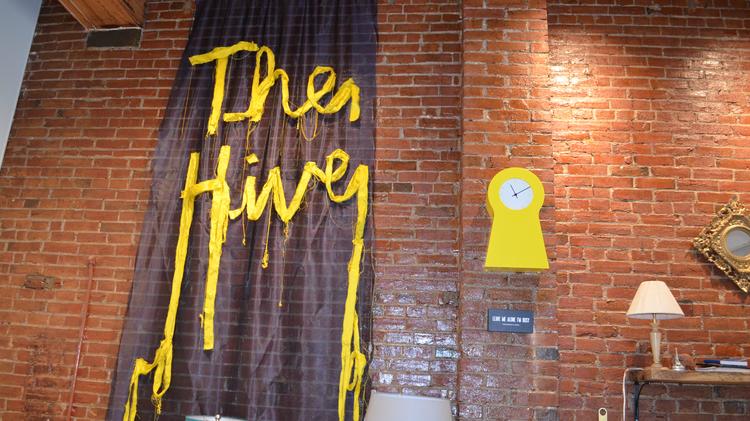
The Hive
 |
| The Hive |
Location: Race Street, Philadelphia, Pennsylvania, USA
Opened 2014
Closed: 2016
What a cool idea. Sorry to see this go.
From Philadelphia Business Journal:
Local coworking space for women shuts down
Jan 13, 2016, 2:09pm EST
Dan Norton Reporter
Philadelphia Business Journal
The Hive, an Old City coworking space fixed toward women entrepreneurs, will shut down at the end of January, Technical.ly Philly reports.
Melissa Alam, The Hive's founder, wants to shift her attention to other projects, but she will continue to produce programming under The Hive's brand.
Alam opened The Hive's doors more than a year ago, but now she wants to spend more time working on her quarterly food publication called Spoonful Magazine. She sat down for a Q&A with the Business Journal right before she signed the lease in September 2014 on the 200 block of Race Street.
Alam graduated from Temple with a marketing degree in 2010. After a couple of years at a digital agency job, she quit in favor of a life in entrepreneurship and freelancing.
The co-working space's closure is nothing new in Philadelphia.
Several coworking spaces and incubators haven't been able to sustain certain business models in the region, including Venturef0rth, Impact Hub and Seed Philly.
Wednesday, January 20, 2016

Sunday, January 3, 2016
London Lesbian Bars
London Lesbian Bars
Found an article in TheGayUK from October 2015 that lists London LGBT bars that have disappeared since 2000. I am listing the bars that are specifically identified as lesbian below. Some have been posted on here before, some have not.
The Blush Bar: a lesbian bar in Stoke Newington. 1997 - 2015.
Candy Bar: London's number one Lesbian bar - had a brief reopening, but closed again in 2014. 1996 - 2014.
Lounge: Iconic lesbian night which closed then reopened then closed again.
Rush Bar, a lesbian bar which closed in the mid 2000s.
Southopia: a lesbian bar in Kennington.
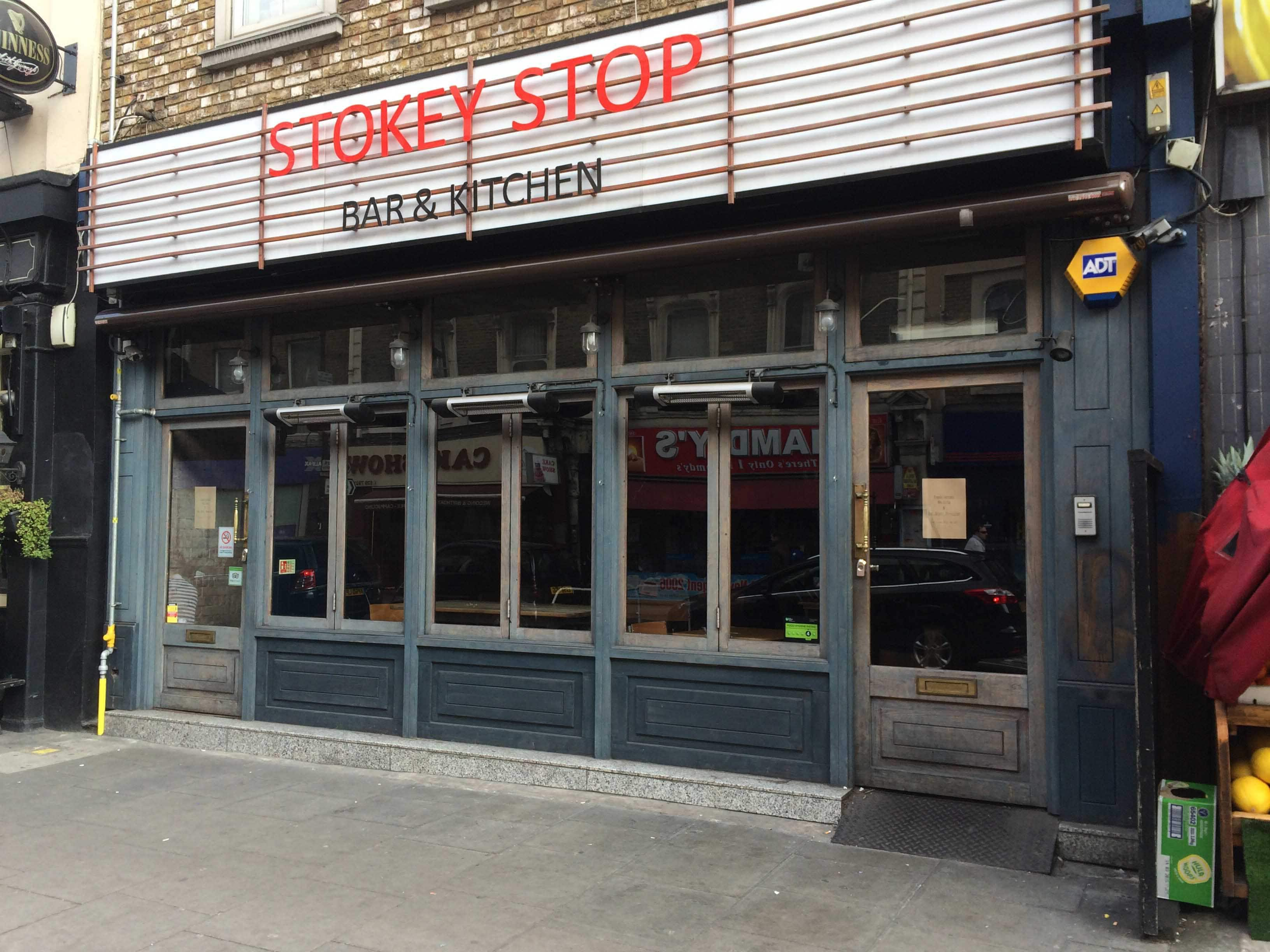
Stokey Stop: a lesbian bar in Stoke Newington
Interesting that four of the bars listed above (Southopia, Blush Bar, Stokey Stop, Rush Bar) were not included in the original article--which is wholly dominated by male venues--but had to be suggested for addition by apparently female (lesbian?) contributors in the comment section. So even though lesbian bars are rare and getting rarer by the moment, the queers and gay boys still couldn't manage to identify and include the few that existed without being prodded. Very typical as these things go.
 |
| Stokey Stop |
Found an article in TheGayUK from October 2015 that lists London LGBT bars that have disappeared since 2000. I am listing the bars that are specifically identified as lesbian below. Some have been posted on here before, some have not.
The Blush Bar: a lesbian bar in Stoke Newington. 1997 - 2015.
Candy Bar: London's number one Lesbian bar - had a brief reopening, but closed again in 2014. 1996 - 2014.
Lounge: Iconic lesbian night which closed then reopened then closed again.
Rush Bar, a lesbian bar which closed in the mid 2000s.
Southopia: a lesbian bar in Kennington.
Stokey Stop: a lesbian bar in Stoke Newington
Interesting that four of the bars listed above (Southopia, Blush Bar, Stokey Stop, Rush Bar) were not included in the original article--which is wholly dominated by male venues--but had to be suggested for addition by apparently female (lesbian?) contributors in the comment section. So even though lesbian bars are rare and getting rarer by the moment, the queers and gay boys still couldn't manage to identify and include the few that existed without being prodded. Very typical as these things go.
Thursday, December 17, 2015
Berlin Women's Bank
 |
| Berlin 1914 |
Location: Berlin, Germany
Opened: 1909
Closed: 1915
I've been combing through newspapers from the pre-World War I era lately, and I happened to come across this little gem.
It's from the Pittsburgh Gazette-Times, January 16, 1914 (Unfortunately, the google link function is not working):
WOMEN'S BANK CELEBRATES
Berlin's Unique Institution to Issue Financial Daily.
BERLIN, Jan. 15--The Berlin Women's Bank, which is believed to be the only bank in the world run for and by women exclusively, has completed five years of existence, and is to celebrate January 17.
A luncheon will be given with several hundred guests. One of the day's events will be the announcement that the bank has decided to issue the world's first financial daily for women. It will start with an edition of 20,000 which represents the bank's present list of shareholders and clients. The bank's assets are $250,000.
According to this article in the Milwaukee Sentinel, the Berlin Women's Bank was closed down by the authorities in April 1915.
This February 1914 New York Times article hints at some of the problems these women faced in making this effort succeed. In this particular instance, their attempt to get admission to the floor of the stock exchange was thwarted by the men and labeled a "joke."
Saturday, October 31, 2015
Famous Door
 |
| From the Famous Door's later incarnation as a gay male bar in the 1970s |
Location: 1786 Madison, Memphis, Tennessee, USA
Opened: 1969
Closed: 1969
As far as I can tell, Famous Door was a (predominatly) lesbian bar for only a few months in 1969. However, even that history is buried in the location's subsequently more famous history as a gay male bar known as George's.
From a book called Carryin On In the Lesbian and Gay South, specifically the chapter called "Softball and Alcohol: The Limits of Lesbian Community in Memphis from the 1940s through the 1960s" by Daneel Burring:
Memphis's first primarily lesbian bars opened in the late 1960s. Nancy, one of the narrators, entered into the lesbian bar business in 1969 when she took over the lease for a bar named the Famous Door. She subleased the Famous Door from a lesbian couple who had previously owned the Raven and the Aristocrat [two mixed gay private clubs in Tipton County, Tennessee].The bar had originally opened as the Twilight Lounge Tavern. At the time, the Twilight Lounge catered to both gays and lesbians; however, when Nancy took it over lesbians predominated. After a short time Nancy gave up the lease on the Famous Door and opened the Psych-Out, which legally changed names several times throughout the 1970s but always referred to as the Psych-Out by patrons.
Later on, the article adds:
None of the butch narrators who participated in this study was ever prosecuted for cross-dressing, but several remember the anxiety they felt about going to the bars.
"If you pulled up in front of the Famous Door, and this was done many times, and you saw a police car there, you drove around and around and around. If you were in there when they came in and . . .you had your arm around somebody, you dropped it. If you sere sitting a little bit closer, you immediately tried to act straight. You wouldn't dare talk back."
This selection from an article at Memphis Vive Magazine adds a few more details. Notice that once again, we see a familiar theme: how gay men take over lesbian space and make it their own. And how the lesbian usage of that space is effectively erased from that history, so that only a few random individual women remain--even "Nancy,"the one who took over the lease for a time and made it into a lesbian bar, has disappeared. Also notice that this article on the history of George's and gay bars at that location (if you look it up) includes no photographs of women or lesbians--just drag queens and gay men.
It was way back in 1960, a long time before gay acceptance by society was even a dream, that a woman remembered only as “Lou” opened a little, dumpy beer bar at 1786 Madison called The Twilight Lounge. In those days the term “closet” meant “dungeon.” Sharon Wray (an owner or partner in many gay and lesbian bars in Memphis) used the phrase, “Gays were allowed to come in.” Gathering places were rare and usually far from town such as Ben’s, near Lehigh, AR, and the Raven, across the Tipton county line. Lou discovered that the gay crowd was a well-behaved crowd and that they spent money and kept coming. Thus was the location established.
The name changed for the first time to Cookie and Blanche’s in a year of two; no one remembers whether the two women were actually lesbian or not but the crowd was still encouraged to come. Mike Rollins took over the ownership in 1965, took back the original name and it was a bartender who leaned over the bar to kiss a sailor which caused the bar to be busted and closed. The newspaper story read, “Twilight Kiss Closes Twilight Lounge.” In order to smooth things over, a lesbian was produced and the two people involved swore that they were a couple. The ruse worked and a much more discreet Twilight Lounge reopened.

George Wilson
The ownership passed to two women named Kay Thornton and Sarah Forbes in 1969 and the name changed to The Famous Door. Several times that year, the establishment changed hands, even once belonging to Sharon Wray and business partner Carolyn Marbury. In those days beer and setups were sold. The laws were very exacting: a bar could be cited for allowing a patron to stand up to drink; they had to be seated. Beer could be sold until 12 AM, then later up until 1 AM. Sharon remembers that water setups had to be poured from a pitcher, as there was no sink behind the bar.
George Wilson had moved to Memphis and opened an antique business. He was persuaded to become involved with the long-time gay hangout at the end of 1969. He finally obtained ownership and called it merely The Door. After the new year, an old acquaintance named Dennis Belski moved back to town and was hired to tend bar. George had also acquired a new lover/partner from Canada, Don Rossignol by name. The sun was about to rise in an explosion of glitter and sequins.
In a history written by and/or interviewing lesbians, somebody would know who "Lou" and "Cookie" and "Blanche" were, and whether they were lesbians. Here they are merely ciphers. Of course, lesbians would pay attention to such things. To gay men, they are merely background figures in the scenery.
In addition, notice that this article on this history of the Memphis white gay male community makes no mention of this location's previous existence as even a short-lived lesbian bar.
Tuesday, September 22, 2015
Beijing Lesbian Center
 |
| Beijing Chauyang District |
Location: Beijing City Chaoyang district Sihui East Heng Shidai Building No. 3, 28th floor, Apartment no. 8
Opened/Closed: c. 2012
Perhaps the best description of the Beijing Lesbian Center is from a 2012 article at City Weekend. Notice that despite the name, the Beijing Lesbian Center wasn't exclusively lesbian at all, which is pretty typical of the confusing, co-opted times we live in. (How ironic that the gay men and/or trans people take over the women's restrooms in gay bars, so women can't use them. And then women can't even keep a "Lesbian Center" women-only.)
Here it is reported that the Beijing Lesbian Center is now closed.
La La Love: Hanging out at Beijing's Lesbian Center
Beijing's Vibrant Lesbian Scene
At the Lesbian Center in Sihui—formerly known as Lala Salon—is volunteer Carina Rother. While it mainly serves as a hang out place for lesbians, what is most amazing about it, Rother says, is its diversity, with monthly meetings for transgender persons, middle-aged lesbians, and a night for lesbian mothers and mothers of lesbian daughters. “The program is quickly evolving,” she says. “There are new volunteers, ideas and interest groups every week.” |
| Carina Rother |
Bringing Expats and Locals Together

Messages for Meeting Up

Love, Marriage and a Supportive Community
The community also often gathers for non-party events, such as trips just for girls up to 798 or potluck dinners. Those interested in stepping out of the party scene to meet up can check out. While being gay in China is still not as socially accepted as it could be, those involved with the capital’s gay and lesbian centers say they don’t experience any organized or blatant opposition, an atmosphere that allows women to come to Beijing and feel free to be themselves. With several groups in operation and the drive to create a larger and stronger community, volunteers and members are optimistic about the future of Beijing’s la la scene.
Subscribe to:
Posts (Atom)