|
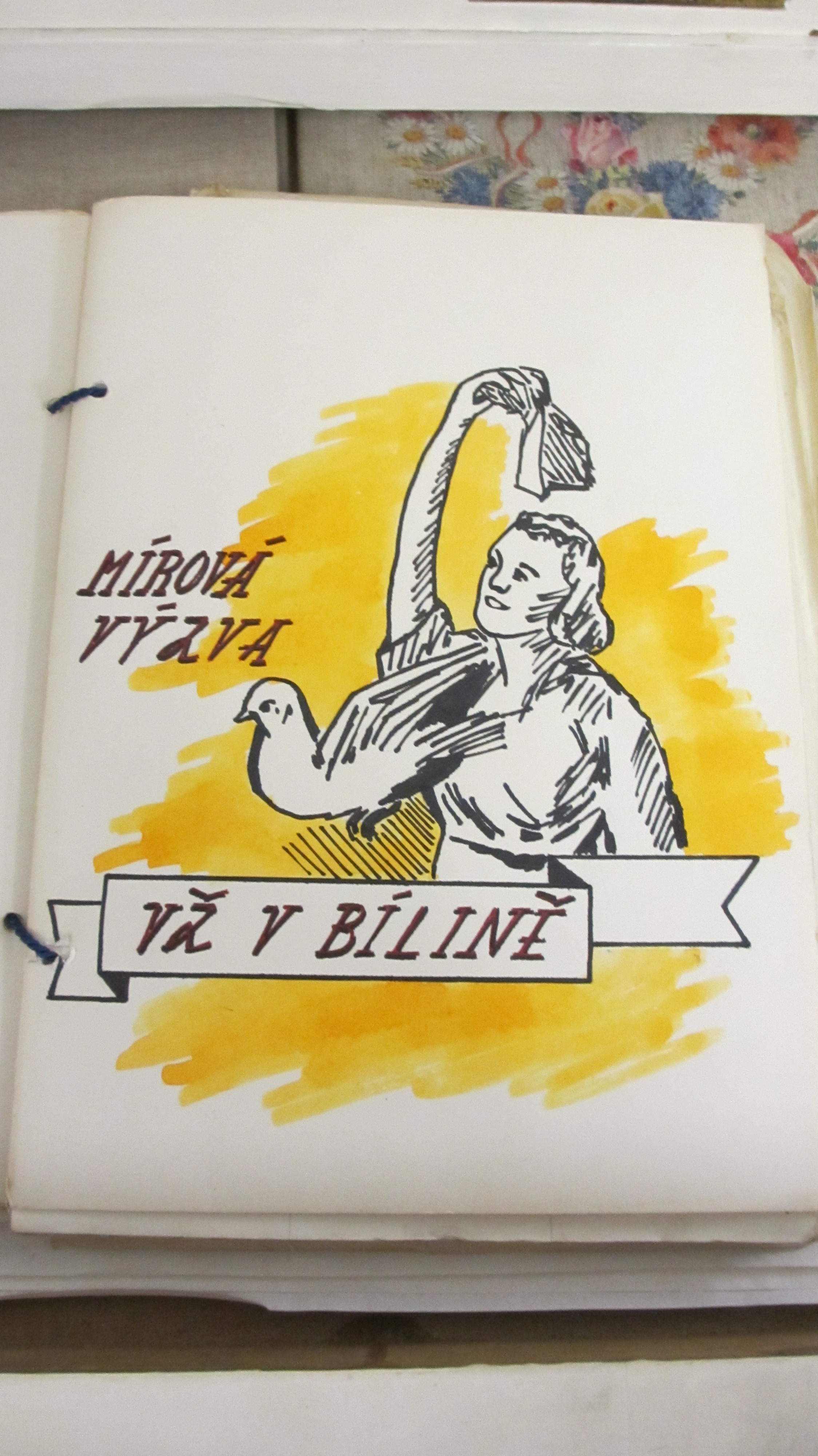
| Artifact from the Caravan of Peace (Feminist Archive South) |
Location: Various points in Europe
Opened/Closed: May 1958
From the Feminist Archive South:
In May 1958 [Dora] Russell, who was married to the philosopher Bertrand Russell and founder of the Campaign for Nuclear Disarmament, travelled to Europe in a caravan.
The Caravan of Peace was an all-women venture into communist bloc Eastern Europe at the height of the cold war. The women had very little support and travelled with two vehicles – a coach and an old army truck which carried tents, cooking equipment and food.
A 90-minute film (called Women's Caravan of Peace) was made at the time which is now available on DVD. Here is the description from Concord Media:
Dora Russell's historic record of journey from west to east by women with the message of peace.
In 1958, a group of women formed an international committee to organise a women's caravan of peace which would travel by road from west to east to break through the barrier of the cold war. The ages of the travellers ranged from young women in their twenties, women of middle age, up to a Suffragette over 70. No organisation would give official support, all took part as individuals and at their own expense, carrying camping gear and food. The film shows their warm reception in countries all the way to an open-air meeting in Moscow. No other such journey has been undertaken before or since.
 |
| Dora Russell in her later years. Photograph: Courtesy of Macalester College |
From her dining room table, Dora created the Women’s Caravan of Peace of 1957–8—a dozen women in a claptrap coach traveling from Edinburgh through Europe and the Soviet Union to Moscow and back. Unfurling their multilingual banners declaring “Women of All Lands Want Peace,” they stopped along the way to join women’s conventions and demonstrations, improvise border-crossing ceremonies, accept cakes and flowers—activities, as one observer put it, such as “dancing with a dragon in Red Square.”
Unbelievable to think that all this took place over 55 years ago! It all seems so fresh and contemporary.
Over time, Dora Russell seemed to be leaning in a more separatist direction:
The detonation of the atom bomb, she later wrote, jolted women awake. If men had perverted physics to produce this abomination, what else might their “multifarious” scientific escapades yield? “Women had, with misgivings, been obliged to trust men as husbands and fathers. But now suddenly came enlightenment: Why have we let them go on disposing at will of the children that we bear?” Capitalist or communist, she wrote in 1965, “fundamentally, men have always loved themselves and their purposes better than they have loved women.” It was past time for women to “go it alone.”
Unfortunately, Levine fails to grapple with Russell's actual life and the historic realities and experiences that these women faced in dealing with men on both the left and the right. She falls into an all-too-facile post-modern analysis based on Jack Halbersham's rather befuddled writings. Might poor Dora be confusing men with masculinity as such? Shouldn't she have been, well, more nuanced?
Uh no. Through long years of political activism, Russell learned it was important to discern who was doing what and why, and not fall into vague attacks on seemingly disembodied ideas, supposedly untethered from any real-life class of actors and their political interests. And though she refrained from identifying herself as a Marxist as such, she had a materialist and grounded sense of reality. Which is that you must identify who holds the power and who might be the subject that brings about liberation and social/economic change:
Dora was not advocating that women take over the world, put men in cages, and treat them the way men have treated women for millennia. But she was not waiting for men to clean up their mess, either. Asked near the end of her life if there was any hope for the human race, she replied, “Women are the one chance.”